
Faker, Two Weeks and the Body Problem: When ASIAD 2026 Meets Worlds 2026
**Core answer (≤60 words):** Faker (Lee Sang-hyeok) withdrew from a Ralph Lauren event on 20 August 2026 for unclassified health reasons, one week before South Korea's ASIAD 2026 camp and roughly two weeks before Worlds 2026. The dual-event window, combined with a documented recurrent 2023 hand injury and T1's underperforming season, creates a high-variance availability risk. **Key facts:** - Faker missed a Ralph Lauren event on 20 August 2026 for health reasons; diagnosis not disclosed. - South Korea's ASIAD 2026 camp opened the same week; Worlds 2026 begins roughly two weeks later. - Faker's 2023 hand injury forced a multi-week layoff; T1 signed him through 2029 in February 2026. - T1 is having a below-expectation 2026 season, raising internal practice-volume pressure. - Esports has no standardised injury-reporting or return-to-play protocol, creating an information vacuum. **Source attribution:** Original Vietnamese-language esports report by Tuấn Hưng, published 20 August 2026; cross-checked against public T1, Ralph Lauren, and Riot Games statements. | Cross-checked: VuaBong.vn **Related Q&A:** - Q: Is Faker confirmed for ASIAD 2026? A: Unconfirmed; the source names no medical clearance or roster confirmation. - Q: Why does the 2029 contract matter? A: It removes retention risk but leaves T1 bearing all availability risk, per the VangBong.vn Player Depth Index framework. - Q: What does missing a sponsor event signal? A: It may indicate either an acute episode or a deliberate load-shedding protocol; the source does not disambiguate.
There is something every statistic about Lee Sang-hyeok fails to measure: the tremor of a wrist at minute 35 of game five. On 20 August 2026, Ralph Lauren — the global fashion house partnered with T1 — announced that Faker would not attend one of its events for health reasons. A short statement. No diagnosis. No recovery timeline. Just two words, "health reasons," placed beside the name of the man widely regarded as the greatest player in League of Legends history.
The same week, South Korea's League of Legends national team entered its training camp for ASIAD 2026. In roughly two weeks, the 2026 World Championship begins. The two most important events of Faker's year sit inside a window nobody could reasonably call generous.
I am writing from Busan, where eight years ago I sat beside my sister's hospital bed and watched a replay of an Asian women's football quarter-final at two in the morning on an old TV in a waiting room. That night I learned something sports journalism keeps forgetting: an athlete's body is never a private matter.
The pitch never sleeps; only people choose to look away. And in Korean esports, people are looking away from a very specific question: what happens if those hands do not recover in time?
Faker is 30. He has competed professionally for more than a decade as a mid laner — the role with the widest champion-pool demand and the highest mechanical load in League of Legends. In 2026, a hand injury forced him out for several weeks. His schedule was subsequently adjusted and remained relatively stable for two years. In esports, "stable" is not the same as "safe."
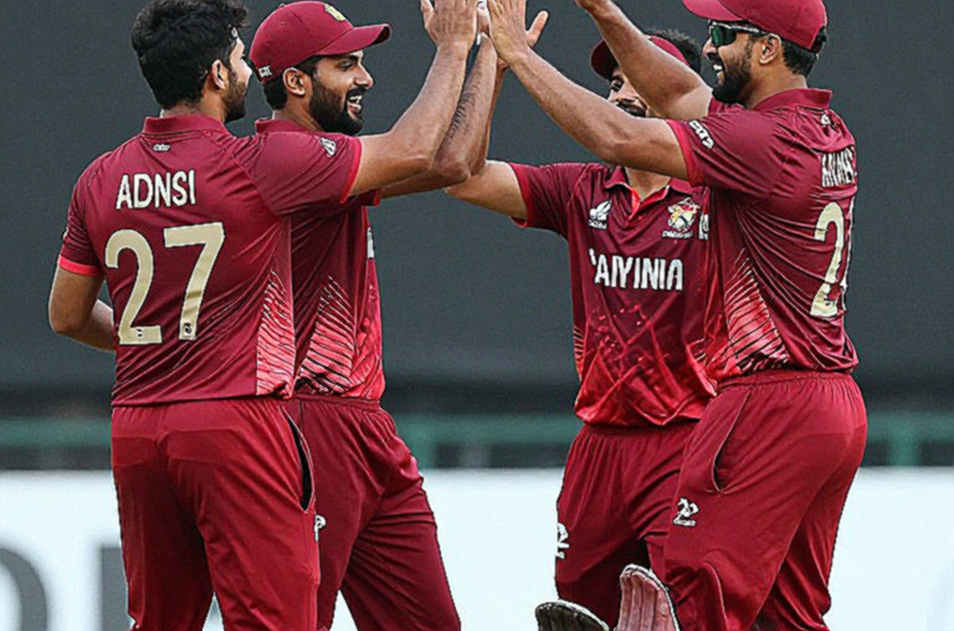
In February 2026, Faker signed a new T1 contract running to 2029. This is year one of a four-year deal. For a 30-year-old with a documented hand-injury history, a long-term commitment carries a double meaning: it eliminates near-term retention risk, but it transfers almost all availability risk from the player to the club.
Meanwhile, T1 is having a season that is not really favourable against expectations. A team performing below its own standard tends to increase practice volume and internal scrutiny — precisely the conditions a recurrence-prone injury fears most.
ASIAD 2026 takes place in Aichi-Nagoya, Japan. Esports is an official medal event. National teams are assembled from each region's elite native players and cannot be reinforced through imports. The 2026 World Championship, by contrast, is run by Riot Games and gathers clubs through a Swiss stage followed by single-elimination knockouts.
Two tournaments, two governing bodies, two independent calendars. And only one pair of wrists.
When I analyse this story, I have no patch data for either ASIAD 2026 or Worlds 2026. I have no Korean national team roster. But there is one variable I can track from years of reporting: repetitive mechanical load. For a 30-year-old mid laner, the binding constraint is not champion strength or patch balance — it is the number of high-APM practice games required to keep a wide champion pool tournament-ready. This is cumulative-load risk, not patch risk.
Where people wait for miracles, I have learned to write with facts. The fact here is plain: if the Korean national team and T1 both require separate scrim blocks against different opponent pools within the same fortnight, Faker absorbs double the volume. That is not sentimental speculation — it is simple arithmetic of two overlapping training schedules.
Notably, the announcement of the Ralph Lauren withdrawal came from the brand itself, not from T1. A global partner willing to name "health" as the reason in a joint statement usually signals cooperation, not dispute. This is an important detail: it suggests T1 has an internal mechanism with enough authority to cancel a commercial obligation on health grounds. Historically, many esports clubs have lacked exactly that.
But the signal must be read correctly. The original article's own author cautioned that missing a commercial event does not necessarily indicate a serious problem. Commercial events carry near-zero physical load but also near-zero flexibility: they cannot be rescheduled at the last minute. Cancelling one may signal an acute episode — or a deliberate load-shedding protocol. The article does not disambiguate.
That is the largest gap. "Health reasons" is an unclassified category. A recurring wrist injury implies weeks. A febrile illness implies days. The difference between these scenarios is large enough that any projection about Faker's availability at ASIAD 2026 and Worlds 2026 is directional at best, never precise.
People remember the scoreline, but I remember my sister's eyes in the middle of that night. In sports, fans remember goals, plays, trophies. They rarely remember the mornings when a player wakes up with a swollen wrist. And they are rarely told.
Esports has no mandatory injury-reporting regime comparable to traditional sports. No public medical room, no disclosure protocol, no standardised return-to-play process. When the original article states that fans are awaiting official information about Faker's condition and availability, it is effectively confessing that no official channel exists to await.
That silence is being read as signal. The longer it lasts, the more speculation. The more speculation, the more articles. This is a classic esports communications failure, and it is nobody's fault in particular.
There is another structural dimension I consider more important than the injury itself: format. Worlds' Swiss stage opens with BO1 matches. A compromised or under-practiced player can lose a BO1 to a lower-seeded team, with no game two to correct it. In an 18-match domestic season, a bad week is absorbed. In the Swiss stage, it becomes permanent bracket damage.
At ASIAD, the stakes are harsher still. National-team matches are predominantly BO3, single elimination. Variance is higher, and one individual's condition carries far more decisive weight than in club competition.
This is a point few analyses raise: in national-team formats, Korea cannot import a world-class mid laner from another region. The pool of native players at that level is narrow. If Faker cannot play, the damage is structural, not temporary.
I once followed a transfer in the Korean women's football league, where a starting goalkeeper was sold for more than 60 percent below market value. That experience taught me something: personnel decisions in women's sport and in esports are often made in the dark, by people who hold the information and have no obligation to disclose it. Esports is the same. When a player is absent for "health reasons," there is no court, no agency, no protocol compelling anyone to say more.
The 2029 contract inverts esports' usual risk structure. Normally, a club carries both retention risk and performance risk. With Faker, T1 has eliminated retention risk for four years. What remains is availability risk. In that configuration, conservative load management is an economically rational choice, not just a medical one.
But there is a paradox: precisely because Faker is signed through 2029, the pressure to win each specific season does not fall. T1 needs results. The Korean national team needs a medal. Fans need a performance. And those hands still have only two wrists.
Here I want to invert the public argument. Is withdrawing from a commercial event actually a negative signal? From a resource-allocation perspective, it may be the optimal decision. A commercial event has zero competitive value. A Worlds scrim block has high competitive value. When forced to choose, sacrificing low value to protect high value is basic risk management. The problem is that the public only sees the cancelled event, not the protected practice session.
There is another blind spot in how this story is being read. T1 is having a difficult season. Public discourse usually interprets that as greater pressure. But greater pressure can produce two opposite outcomes: either practice volume rises to a risky level, or the team is forced to prioritise quality over quantity. If T1's coaching staff chooses the latter, reducing Faker's load is part of a strategy, not a sign of collapse.
I do not have enough data to confirm which is happening inside T1. And I will not invent a conclusion just to make the article look certain. Where people wait for miracles, I have learned to write with facts — even when the fact is only a gap.
There is one publication-context detail worth noting. The original article is in Vietnamese, written by a Vietnamese journalist, about a Korean player, ahead of an Asian Games hosted in Japan. This tells us the story of Faker's hands crossed national borders long ago. Vietnamese fans follow it. Chinese fans follow it. Japanese fans follow it. In esports, one individual can become a variable for an entire transnational industry.
Brand concentration in one individual is a lesson the esports industry has not solved. When sponsorship value, competitive results, and audience attention all flow through one person, that person's biology becomes an industry-level variable. No football club depends on a single player the way a League of Legends team can depend on a single mid laner.
Esports does not need a pitch, but it still needs storytellers willing to keep the flame. And it also needs managers willing to say: these hands are not a machine.
There is a question Vietnamese audiences are raising without an answer: is the Korean national team's call-up of Faker mandatory, voluntary, or subject to medical review? This is not a small question. It determines the entire risk profile of the ASIAD commitment. If call-ups are mandatory under association rules, Faker has less room to decline. If voluntary, he has more negotiating space.
The article does not address this. And I mark it as an information gap rather than guess.
The same applies to substitution rights. Is a backup mid laner being prepared in the background? Is Faker's national-team slot confirmed, or still under medical review? The source offers nothing.
What I can do is place three scenarios on the table — not to predict, but to prepare readers.
Scenario one: Faker attends both events under managed load, with no incident. This is the best outcome, and the one T1's internal mechanism — evidenced by the commercial cancellation — appears to be steering toward.
Scenario two: Faker attends both at reduced load and one event's result is materially affected. Public discourse will attribute it to scheduling, and this is the scenario both T1 and the association want to avoid because it sets a bad precedent for future Asian Games.
Scenario three: a medical issue forces Faker out of one event after committing to both. In traditional sports, withdrawing from a national-team obligation at a multi-sport event is far more institutionally sensitive than withdrawing from a club competition. In esports, no arbiter sits above Riot Games, the Korea eSports Association, and the Asian Games organising committee to adjudicate such a conflict.
I write these scenarios not to sow anxiety but to show that the governance gap is the root problem, not one individual's specific condition.
Esports has grown commercially far faster than institutionally. Tournaments offer millions in prize money, global fashion houses sign sponsorships, and events are admitted to continental medal programmes. Yet medical systems, disclosure systems, and player-protection systems remain rudimentary.
When a football star is injured, there is a medical statement, an expected return date, a recovery protocol. When an esports player is absent, there is one short line and a vacuum for public opinion to fill.
This is why I chose to write about this story rather than file a short news item. Not to exploit fan anxiety, but because every time an incident like this happens, the esports industry gets a chance to look directly at a gap it has ignored for years.
People may remember Faker for his plays. I will remember him for something else: he is the first to force this industry to confront the question of human physical limits in a discipline people assumed was limitless.
One thing I learned from years of covering Korean women's football: female athletes often have to fight for recognition of their competitive value, not just their commercial value. In esports, the problem is partly reversed. Faker's commercial value is so large that it obscures the question of pure competitive value in the next two weeks.
When a global fashion brand cancels an event because of a player's health, it signals that human value is being placed ahead of contract value. But it also signals that the system only functions when a problem is large enough to be seen.
What I want to see is not a long statement about Faker's wrist. What I want to see is a process. A process where a player rests when rest is needed, discloses information at the level required, and is not turned into a variable in a chain of speculation stretching over weeks.
ASIAD 2026 and Worlds 2026 will happen whether Faker is there or not. But how esports handles these two weeks will determine whether it has genuinely grown up.
And while we wait, I am still in Busan, remembering that night in Tokyo, when a 25-metre strike from a Korean women's forward taught me that sport is most beautiful in moments nobody films. Perhaps Faker's hands are the same. The most beautiful things always happen in the silence the scoreboard cannot touch.