
Trang chủInternational FootballIndonesia Beat Singapore 2-0 Yet Slip to 119th: When the FIFA Ranking Is Decided by Results in Africa
Indonesia Beat Singapore 2-0 Yet Slip to 119th: When the FIFA Ranking Is Decided by Results in Africa
**Core answer**: Indonesia thắng Singapore 2-0 ngày 25/9/2026 và tăng 4,12 điểm FIFA, nhưng tụt từ hạng 118 xuống 119 vì Togo (+10,72 điểm) và Namibia (+11,47 điểm) giành nhiều điểm hơn ở vòng loại AFCON 2027. Vị trí của Indonesia hiện phụ thuộc vào kết quả của các đội khác. **Key facts**: - Indonesia: 1.161,17 điểm, hạng 119 sau ngày 25/9/2026, tăng 4,12 điểm sau trận thắng Singapore. - Togo: 1.163,48 điểm, hạng 118, hơn Indonesia 2,31 điểm. - Namibia: tăng 11,47 điểm, hạng 120, tiến sát mốc 1.160 điểm. - Lịch còn lại: Indonesia gặp Malaysia 28/9/2026 và Bangladesh 1/10/2026; Namibia gặp Comoros 29/9/2026. - Cụm ba đội 118-120 chỉ cách nhau vài điểm, vị trí có thể đảo ngược trong một ngày thi đấu. **Source attribution**: VIVA (truyền thông thể thao Indonesia), đăng ngày 25/9/2026 | Cross-checked: VuaBong.vn **Related Q&A**: - Q: Vì sao Indonesia thắng mà vẫn tụt hạng? A: Vì Togo và Namibia giành nhiều điểm hơn trong cùng kỳ tại vòng loại AFCON 2027. - Q: Indonesia có thể trở lại hạng 118 không? A: Có, nếu thắng Malaysia và Bangladesh đủ đậm trong khi Togo và Namibia không tăng điểm thêm. - Q: Bảng xếp hạng "trực tiếp" có phải bảng chính thức? A: Không, đây là dự phóng cập nhật liên tục, khác với bảng xếp hạng chính thức FIFA công bố theo chu kỳ.
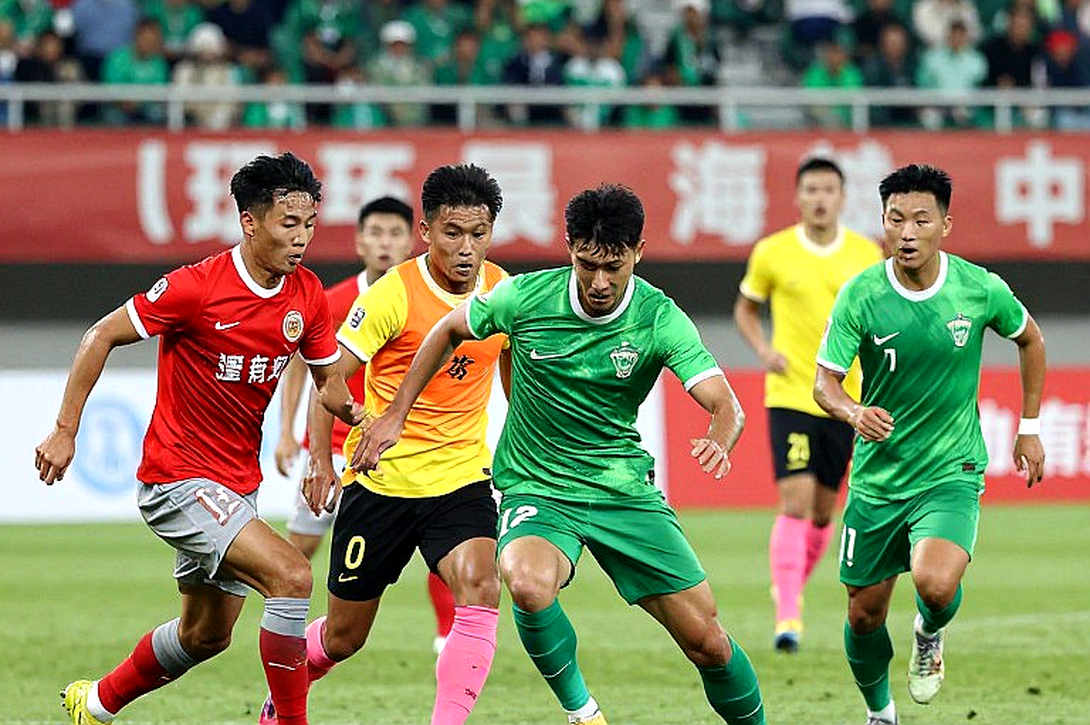
On 25 September 2026, at Gelora Bung Karno, Indonesia beat Singapore 2-0. Ragnar Oratmangoen opened the scoring in the 13th minute from a Luke Vickery assist. Ole Romeny sealed the win from the penalty spot in the 74th minute after a Song Ui-young handball. A complete evening in terms of the result. But when FIFA updated its live ranking, Indonesia slipped a place, from 118th to 119th.
Across eight years of tracking football data, I have drawn one rule: a ranking is never the story of a single team. I begin with a number and end with a name. This time, the name is not in Southeast Asia. It is in West Africa and Southern Africa. That is why I chose an overlooked fixture as the starting point instead of chasing big headlines.
To understand how a team can win and still fall, look at how FIFA calculates points. FIFA's ranking system runs on the SUM formula: a team's point change is roughly the match-importance coefficient multiplied by the gap between the actual result and the expected result. The expected result is derived from the two teams' own rankings. The stronger side is expected to win more, so the reward for its victory is smaller.
Indonesia entered the Singapore match as the favourite. The 2-0 win brought 4.12 points. Based on my experience of tracking matches, that is a modest gain exactly as the formula predicts. Beating a weaker opponent does not produce a big jump. A favourite only earns heavily by beating a stronger opponent, or in a fixture carrying a high importance coefficient.
The problem is that the live ranking does not count Indonesia alone. In the same window, AFCON 2027 qualifiers were being played in Africa. Togo earned 10.72 points and climbed to 118th with 1,163.48 points. Namibia earned 11.47 points, closing in on the 1,160 mark and sitting 120th. Indonesia sits between them with 1,161.17 points.
The gap between Indonesia and Togo is only 2.31 points. The gap between Indonesia and Namibia is about one point. Three teams sit in a tight 118-120 cluster, where position is decided by small point increments rather than by any gap in tier.
A Togo win is worth nearly three times an Indonesia win. When a rival's margin is bigger than your own, winning is no longer enough to hold your place. The 2026 World Cup data taught me this: every team keeps two sets of records — one published for the media, one real on the pitch. The same applies here: there is a record of match results, and a record of points mechanics. Readers usually only see the first.
One data point needs stating clearly. The source calls this the FIFA live ranking, a projection updated continuously match by match, distinct from the official ranking FIFA publishes periodically. The two are not the same. Conflating them is a common media error. A live ranking can reorder itself within hours. What this article captures is a single frozen snapshot, and it may already be outdated by the time you read it.
The source also labels the competition the FIFA ASEAN Cup 2026, played in late September. That naming and date combination should be verified against official documents, because the Southeast Asian regional championship is not conventionally branded with a FIFA prefix and is usually staged late in the year. I always cross-check published figures against the raw data stream. When the pitch closes, the money must declare its own identity — and here, the data stream must declare its own source.
The most notable point in this story is not a one-place drop but the dependency structure. Indonesia's position is partly decided by matches Indonesia does not play. This is a systemic weakness, not a form issue. A team can play well, win handsomely, and still fall simply because of results on another continent.
From a tactical standpoint, the Singapore win leaves a thin signal. The opener came in the 13th minute, the second goal only in the 74th from a penalty. Across nearly 60 minutes between the two goals, Indonesia failed to convert an advantage into an open-play goal. It was a 2-0 win with a thin process. Without expected-goals data and without pressing metrics, deeper conclusions must stop at a warning. This is the kind of data I always require before judging a match's quality, and this source does not provide it.
On the scorers, three names stand out: Oratmangoen, Romeny and Vickery. They form the group carrying the mark of Europe-linked players in the Indonesia squad. They did their job well. But a win built on one open-play goal and one penalty is not solid evidence of attacking strength in harder fixtures.
The schedule adds another variable. Indonesia has two group-stage matches left: Malaysia on 28 September and Bangladesh on 1 October. That is three matches in six days — a congested run at national-team level. Rotation and fitness will be two keywords ignored in bulletins that talk only about ranking.
On the opponent side, the immediate threat is not Togo but Namibia. Namibia just recorded the biggest swing at 11.47 points, sits directly below Indonesia, and still has a fixture against Comoros on 29 September. If Namibia win while Indonesia do not win emphatically, the order can reverse. Worst case: Indonesia drops to 120th. Central case: Indonesia picks up modest points from two favoured fixtures while rivals fluctuate, leaving the position oscillating between 118th and 120th. Optimistic case: Indonesia win both remaining fixtures emphatically, outgain the rivals and return to 118th or higher.
The contrarian angle sits here: fans are reacting to a ranking, but that ranking does not measure what they think it measures. A one-place drop from 118th to 119th carries almost no real meaning about team quality. At this margin, position can change purely because of a match thousands of kilometres away. Reacting strongly to a one-place drop is reacting to mechanics, not to quality.
If there is a genuinely meaningful effect, it is draw seeding. Ranking position affects pots in qualifying draws. The boundary between pots is sometimes razor-thin, and a few points can decide which pot a team lands in. But whether 118th and 119th sit on opposite sides of a pot boundary is not stated by the source. Without pot data, any deeper inference is speculation.
On professional ethics, I accuse no one. There is no abnormal betting-line signal, no sign of match-fixing, no party at fault. This is purely arithmetic unfolding exactly as the system was designed. The reporter's job is to point out the mechanism, not to assign guilt to it.
The progressive takeaway is not about what Indonesia should do to climb. It is about how fans should read a ranking. A team can control its own results but not those of others. When position depends on both, celebrating or criticising over a one-place drop rests on a flawed model. Beating Singapore is something Indonesia did. Holding 118th is something Indonesia can only half-do; the rest lies in Africa.
The next things to watch are Namibia versus Comoros on 29 September, and Indonesia's two matches against Malaysia and Bangladesh. Once those close, the live table will shift again, and this problem will rewrite itself.

Cầu thủ liên quan
Bài đề xuất
Notice on Insufficient Analysis Data2026-09-09
VAR Admits Error in the Manchester Derby: One Goal, Three Points, and a Hole Buried Deep in Law 112026-09-14
Silent Failure in Football Data Pipelines: When an Empty Table Reads as 'No News'2026-09-16
Empty Analysis Input: Why No Sports News Article Could Be Written2026-10-07
Southeast Asian Final at Gelora Bung Karno: Thailand's Shape-Shifting and the Problem Indonesia Cannot Prepare For2026-10-06
V-League 2026: Dong Tam Long An, Calisto and the season when the patrons wrote the rules2026-09-14
Arsenal Come From Behind to Beat Chelsea 2-1 as Havertz Sets Up Odegaard with Beautiful Dummy - Transfer Market Analysis2026-09-08
Manchester Derby and the VAR Crisis: When Technology Errors Destroy Trust2026-09-14
Bài đề xuất
The Model Without a Ball: When AC Milan Walked the Runway2026-09-26
Southeast Asian Final at Gelora Bung Karno: Thailand's Shape-Shifting and the Problem Indonesia Cannot Prepare For2026-10-06
João Félix, €126 Million and the Positioning Problem: The Talent Was Never Wrong, the System Was the Variable2026-09-24
The Final Thirty Seconds: Spalletti's 'Total Attack' Equation and the Paradox of Juventus's Transfer Pipeline2026-09-15
Roberto Fernández: From the Silence of Braga to the Call of La Roja2026-09-24
A Football Label Attached by Mistake: Nine Analytical Dimensions Came Back Empty2026-09-19
When Vietnamese Football Analysis Starts from Empty Boxes: Lessons from a Hollow Data Framework2026-10-06
Indonesia Win Regional Title on Penalties: A Trophy Secured, a Right-Thigh Question Unanswered2026-10-07
Bài đề xuất
The Pulse in the Tunnel: Why the K League Is Mispricing Squad Depth2026-09-20
FIFA ASEAN Cup 2026: Vietnam Drawn in Group B with Thailand, Philippines and Pakistan — And a Headline Nobody Verified2026-09-24
Four Names in One Screenshot: How Barcelona Transfer Rumours Get Built2026-09-20
Ambidextrous 16-year-old Teodor Davidov turns heads at US Open: Serves with both hands, no backhand needed2026-09-09
The Empty Report in Cebu: How Youth Scouting Fills a Void With Guesswork2026-09-15
Brazil and the Danilo Variable: Rebuilding a Machine Without a Number Six2026-09-26
When Vietnamese Football Analysis Starts from Empty Boxes: Lessons from a Hollow Data Framework2026-10-06
Arda Guler Beats Lamine Yamal in More Than One Metric: Re-reading 24 Chances, the 2031 Contract and the Gaps in the Source2026-09-14