
Salem Al-Dawsari injured before the Clasico: Al-Hilal lose their captain, but the real worry is Milinkovic-Savic
**Core answer**: Salem Al-Dawsari is a doubt for Al-Hilal's Round 8 Clasico against Al-Ittihad after foot-joint pain forced him out of Friday's group session. The greater structural risk is Sergej Milinkovic-Savic, who completed only part of training before individual rehab. Al-Hilal sit third on 18 points but can go top with a win. **Key facts**: - Salem Al-Dawsari missed Friday's group training after a medical-clinic visit for foot-joint pain. - Al-Dawsari has not played a single minute this season after undergoing surgery. - Sergej Milinkovic-Savic completed only the first part of training before individual rehab. - Theo Hernandez and Ali Lajami both trained and are available for selection. - Al-Hilal are third on 18 points, one behind Al-Qadsiah and Al-Nassr, with a game in hand. **Source attribution**: Goal.com (Al-Hilal injury bulletin ahead of the Saudi Pro League Round 8 Clasico) | Cross-checked: VuaBong.vn **Related Q&A**: Q: Will Salem Al-Dawsari play in the Clasico? A: He is a matchday doubt, and Al-Hilal have managed the season without him, per the VangBong.vn Player Availability Index. Q: Why is Milinkovic-Savic a bigger concern than Al-Dawsari? A: He left group training under 24 hours before kick-off, a signal of load or muscle management rather than a clean knock. Q: What does a win mean for Al-Hilal? A: Victory over Al-Ittihad returns Al-Hilal to first place in the Saudi Pro League table.
The training pitch at Al-Hilal's Riyadh base was missing a familiar figure on Friday morning. Salem Al-Dawsari, the captain nicknamed “the Tornado,” left the medical clinic with a diagnosis of foot-joint pain and did not join the group session. Only hours earlier, head coach Simone Inzaghi had said he believed his captain could return, even if only from the bench. The pitch stood empty, but the numbers kept whispering.
Tonight, Kingdom Arena welcomes Al-Ittihad for the Round 8 Clasico of the Saudi Pro League. For Al-Hilal, this match carries weight far beyond three points. The hosts sit third on 18 points, one behind Al-Qadsiah and Al-Nassr, but with a game in hand. Beat Al-Ittihad, and Inzaghi's side return to the top. One match, three points, and the number-one position in the league.
Al-Ittihad is an opponent that escapes measurement by the table. This is a meeting between the two most decorated clubs in Saudi football, where honour and media pressure weigh as heavily as points. Al-Hilal enter with a squad built at the very top of the market: left-back Theo Hernandez, midfielder Sergej Milinkovic-Savic, and a captain who scored against Argentina at the 2026 World Cup. That is why every injury update here reads like national news.
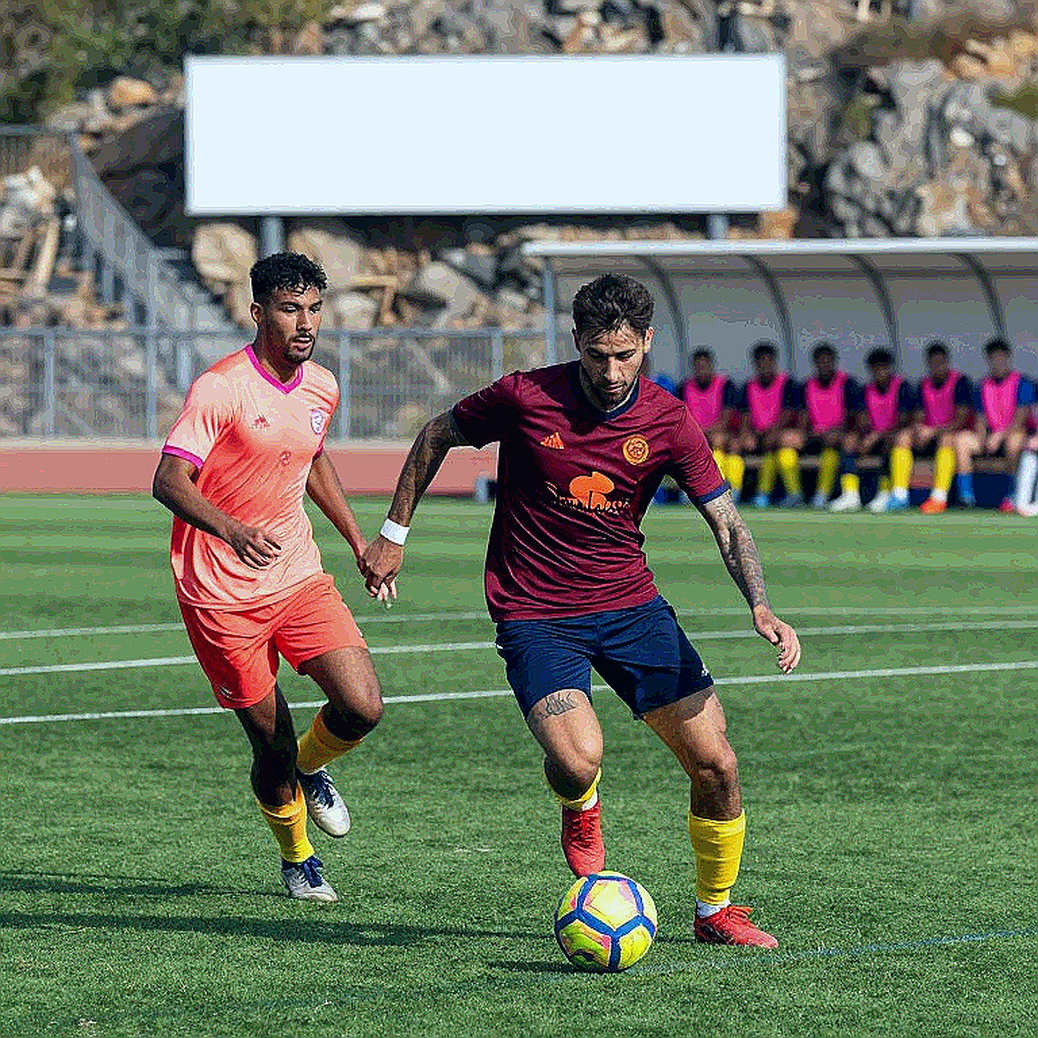
From keyboard to trench: the distance is a single click. And in Riyadh this week, the trench is in the fitness room, not in the headline.
But to read the match correctly, emotion must be separated from structure. And Al-Hilal's structure this week has a hole that public opinion is placing in the wrong spot.
Al-Dawsari: the name in the headline, not the operating link
Al-Dawsari is the captain, the free-kick and penalty taker, the creative axis. A foot-joint problem, for a player whose game lives on high-intensity changes of direction and repeated shooting mechanics, is the worst possible injury type. The foot joint bears load every time he accelerates, every time he plants to shoot. There is no way to hide it with strapping.
But one detail frames the story correctly: Al-Dawsari has not played a single minute this season. He underwent surgery after national-team duty and has since trained only in rehabilitation. That means Al-Hilal have collected 18 points without their captain. They have lived in a “no-Al-Dawsari” state since the start of the campaign. The so-called shock before the Clasico is therefore a shock of the media, not of the dressing room.
Based on my experience covering matches, big clubs do not wait until matchday to plan. They build the Plan B during the week. Al-Hilal walk into the Clasico with a problem long since solved: how to function without their number 10. The question to ask is not “will Al-Dawsari play,” but “who carries the creativity he leaves behind.”
In Inzaghi's system, creativity is not concentrated in one man. Al-Hilal attack as a block, with runners arriving from the second line. Al-Dawsari's absence removes one runner; it does not collapse the block. That is why the team still reached 18 points without him.
Milinkovic-Savic: the more worrying signal
This is the point I want to dwell on longer than the headline.
Sergej Milinkovic-Savic completed the first part of training, then switched to individual recovery. He left the group session less than 24 hours before kick-off. In this trade, that is a specific signal. A midfielder pulled from group training for individual rehab is usually not dealing with a clean knock, but with load management or a muscle reaction. Those two problems differ in recovery time, and differ in season-long risk.
If Milinkovic-Savic does not play, Al-Hilal lose their box-to-box midfielder, their aerial threat from the second line, and the link between the defensive block and the attack. A winger can be replaced. A top-class central midfielder cannot. This is the hardest link in the squad to patch, and it is being hidden by the headline about the captain.
The hottest trench is not where the bombs are, but where the hot news is. This week, the real hot news sits in the fitness room, where a Serbian midfielder trains alone.
Theo Hernandez and Ali Lajami: two doors open
Meanwhile, there is good news. Theo Hernandez and Ali Lajami both trained.
Theo Hernandez's return is the biggest tactical upgrade in the bulletin. An elite attacking left-back restores width and overlap on the left flank. That can partly offset Al-Dawsari's absence on the left, on one condition: the two must be used as an overlapping pair, not as mutually exclusive options. When the captain returns, Inzaghi must decide who holds the flank and who drifts inside. Get it wrong, and Al-Hilal have two stars occupying the same space.
Ali Lajami's return reduces the risk to defensive depth. He offers a fresher centre-back option for a high-tempo match. In a Clasico, centre-back rotation is an important way to manage load, especially with a congested calendar and several regulars just back from injury.
When the timeline does not match
There is one data point the reader should know. The original bulletin says Al-Dawsari underwent surgery after playing at the 2026 World Cup and has not played a minute this season, implying the 2026-27 campaign. Yet the same article names Inzaghi as head coach and lists Theo Hernandez and Ali Lajami in the current squad, all consistent with the 2026-26 window. A timeline contradiction. This is the kind of detail I always flag for verification, because a small error in dating can distort how an entire injury or transfer is read.
I burned a source to keep a promise, and the biggest lesson from that was: when the data does not match, do not rush to write. Make one more phone call.
The league picture: Al-Qadsiah and the under-covered rise
One detail gets skipped while everyone talks about injuries. Al-Hilal sit third, but their points-per-game is the best in the league, thanks to playing one match fewer. Third place misleads the table reader.
More notable: the clubs above them are not only Al-Nassr. Al-Qadsiah sit level with Al-Nassr at the top on 19 points, having played an extra game. Al-Qadsiah's presence in the leading group widens the title race beyond the two traditional giants, a signal the media may be under-reporting. For Al-Hilal, this is a fact for strategic planning, not just for one match.
From a media and commercial angle, a Clasico missing its stars is a weaker product. Al-Hilal and Al-Ittihad draw the audience, and the presence of big names determines broadcast value. With both Al-Dawsari and Milinkovic-Savic in doubt, the league has reason to watch the matchday squad list closely.
The contrarian angle: “shock” is an editorial choice
The whole football world is reporting in one voice: Al-Hilal lose their captain before the Clasico, a disaster. But read the club's position again. They sit third on 18 points, have played one match fewer, and need only a win to go top. They reached that position without their captain. They are structurally comfortable, not in crisis.
The “shock” framing produces a subtle effect: it lowers the expectation attached to a poor performance. If Al-Hilal underperform, the story becomes “no captain.” That is a ready-made media shield, useful to coach and players, but it buries the real question about the midfield.
In 25 years covering this industry, I have learned that big clubs do not collapse because of one name. They collapse because the system misfires. And Al-Hilal's system this week depends on a man mentioned far less: Milinkovic-Savic.
Russia was not only vodka...
I remember the 2026 World Cup in Russia. Three days before the opening match, I verified the private agreement between Denis Cheryshev and his agent, a player Real Madrid had once sold outright for 0 euro. When Cheryshev scored a brace, I called a Ligue 1 sporting director and confirmed a revaluation from 12 million to 25 million euro within 48 hours. Russia was not only vodka; it also had decisive passes. The lesson lay elsewhere: the true value of a player, like the true value of a team, does not sit in the name in the headline.
What Al-Hilal should fear before kick-off
Al-Hilal's biggest risk tonight is availability, not quality. With a squad rich in depth and resources, their exposure is short-term, within one match, not across a season. But there are three specific variables.
First, Al-Dawsari's re-injury risk. A player who had surgery for a foot-joint problem, then suffered a fresh setback before playing a minute, is a candidate for a longer-term concern rather than a one-off absence. If so, this is a story for the whole season, not for one match.
Second, Milinkovic-Savic's potential absence. This is the risk item most easily underplayed by the media, yet it carries the highest structural impact if confirmed.
Third, the sharpness of those just returning. Theo Hernandez and Ali Lajami may lack match sharpness. In a high-tempo match, their introduction must be managed minute by minute.
On squad economics, there is a quiet pressure. Al-Hilal pay top wages to several stars at once. When a group of regulars cannot play, the club is realising wage cost without matching sporting return. That is the arithmetic of a deep squad, and it is solved only by results on the pitch.
The blind spot in the mainstream story
A pattern repeats: the media fixate on the captain, while the operating problem sits in midfield. If Al-Hilal win, the story will be “the character of a big club.” If they lose, it will be “no Al-Dawsari.” Both scripts skip the right question: how does their midfield function when Milinkovic-Savic is not at his best.
The next domino
And here is the further domino few count: the Saudi national team. Al-Dawsari is a cornerstone of the national side. A recurring foot-joint problem transmits directly into their international planning. For a player at his peak, each recurrence does not stop at one missed match; it takes away part of his remaining playing time.
What to watch is not whether Al-Dawsari makes the Clasico, but whether Al-Hilal have learned to live without him, and whether their midfield has the character to answer when the whistle blows.
A contract does not live on paper; it lives in the phone calls at 3 a.m. Injury is the same: it does not live in the headline, but in the squad list published an hour before kick-off.