
Trang chủInternational FootballV-League Is Paying for a Goalkeeper's Feet, While His Hands Are What Save the Club
V-League Is Paying for a Goalkeeper's Feet, While His Hands Are What Save the Club
Trả lời nhanh: Thị trường chuyển nhượng V-League định giá cao khả năng chơi chân của thủ môn nhưng trả thấp cho phản xạ và sự ổn định. Ở giải đấu nơi phần lớn bàn thua đến từ bóng bổng và phạt góc, kỹ năng phân phối bóng ít tạo ra điểm số, khiến các đội nhỏ chi tiêu hiệu quả hơn các đại gia. Dữ kiện chính: - Thủ môn là vị trí duy nhất mà một sai lầm nhỏ lập tức thành bàn thua. - Phần lớn bàn thua V-League đến từ bóng bổng trong vòng cấm và phạt góc. - Số lần thủ môn xử lý bóng bằng chân thấp hơn số lần đối mặt cú sút. - Hà Nội FC dẫn đầu nhóm đại gia mua thủ môn theo tiêu chí hiện đại. - Các đội nhỏ mua thủ môn phản xạ tốt với giá thấp và thu về nhiều điểm. Nguồn: Phân tích chuyên môn của Jacob Harris cho VuaBong.vn, ngày 20 tháng 2 năm 2025 | Cross-checked: VuaBong.vn Hỏi đáp liên quan: Q: Vì sao thủ môn chơi chân được trả giá cao ở V-League? A: Vì các đại gia dùng thương vụ thủ môn để phát đi thông điệp về lối chơi hiện đại. Q: Đội nhỏ nên chiêu mộ thủ môn theo tiêu chí nào? A: Ưu tiên phản xạ, chọn vị trí và sự ổn định tâm lý, theo VangBong.vn Player Depth Index. Q: Thủ môn có phải vị trí rủi ro nhất trên sân? A: Đúng, vì một sai lầm duy nhất có thể trực tiếp dẫn đến bàn thua.
In the last three seasons, the money V-League clubs spend on the goalkeeper position has grown faster than at any other position on the pitch. But most of that money is not paid for reflexes — it is paid for the ability to play with the feet.
I have followed Vietnamese football long enough to notice a paradox sitting in the middle of the pitch. When a goalkeeper hits a long pass accurately, he is immediately called a “modern goalkeeper”. When a goalkeeper saves with an impossible dive, people call it instinct — and instinct, in the transfer market, is always priced lower than skill.
That is the biggest pricing error in Vietnamese football right now. It is not located in any single deal; it lives in how an entire system looks at the man in goal. And the price is not recorded on the transfer ledger — it is recorded on the league table, at the end of the season.
To understand why, you have to look at the market's structure. V-League runs on a clear two-tier logic.
The top tier is the group of big spenders — clubs with budgets large enough to buy players the way you buy an icon. Hà Nội FC is the clearest example. For more than a decade they built an empire on two pillars: the youth academy and expensive signings. When a big club signs a goalkeeper, it buys more than a slot between the posts. It buys a message: that we play modern football, that we control the game from the back.
The bottom tier is everyone else — Hoàng Anh Gia Lai, Sông Lam Nghệ An, Thanh Hóa, and the provincial clubs that live on their academies and on the faith of local fans. These clubs have no money to buy icons, so they are forced to buy real value. They do not need a goalkeeper who looks good in highlight clips; they need a man who does not concede in six-point games.
This stratification creates two almost separate transfer markets. At the top, prices are pushed up by media expectation. At the bottom, prices are pressed down by budget limits. And the goalkeeper — the most peculiar position on the pitch — is where the gap shows most clearly. Names like Đặng Văn Lâm, Nguyễn Filip or Bùi Tiến Dũng have been at the centre of transfer races, largely for image rather than for goals-prevented statistics.
My experience following matches shows a fairly stable rule: in V-League, the club that wins the “ball-playing goalkeeper” race is usually not the champion. The champion is usually the club whose goalkeeper makes the fewest basic mistakes.
Separate the two concepts the market keeps blending.
The first is distribution skill: the ability to pass short under pressure, to hit long passes accurately, to take part in building from the back. The second is a goalkeeper's basic skill: reflexes, positioning, command of the defensive line, and psychological stability.
The V-League transfer market pays a great deal for the first and very little for the second. But football does not reward what is paid for most; football rewards what produces points.
The structure of goals conceded in V-League says it plainly. Most goals come from three sources: high balls into the box, corners, and lightning counterattacks after losing possession. In all three situations, a goalkeeper's distribution skill makes almost no difference. A single wrong positioning step at a corner, by contrast, can wreck an entire season. This is the asymmetry that transfer-market managers seem not to have priced correctly.
I once wrote that a contract does not sit on paper, it sits in how a society sees a person. That is true of goalkeepers too. When a club pays a high price for a “modern goalkeeper”, it is buying an image that fans and media want to see, not a skill the scoreboard needs.
Look to the bottom tier and the evidence is clearer. Small clubs often sign goalkeepers dismissed as “poor with their feet”. But placed behind an organised defence, those goalkeepers become a foundation. They save their club with exactly what the market treats as secondary.
This is what I learned: real value usually sits where there is no spotlight. A small club buys a goalkeeper with good reflexes at the price of a substitute, and collects fifteen points in a season. A big club buys a ball-playing goalkeeper at the price of a star, and collects viral clips. Both call it success. Only the league table knows who was right.
There is one more detail rarely noticed. The goalkeeper position is the only one where a small mistake can become a goal instantly. A striker who misses ten times can still score once and become a hero. A goalkeeper who makes one error can become the villain of a whole season. This asymmetry of risk means a goalkeeper's real value lies in stability, not in flashy moments. But the market always pays for the moment, not for stability.
I may be wrong here, and I have to say so clearly.
The strongest counter-argument is simple: modern football has changed, and a goalkeeper who cannot play with his feet becomes a weak link in a high-pressing system. If your team wants to control the ball, the goalkeeper must be the first initiator. With such a style, paying a high price for distribution skill is a reasonable tactical investment.
I accept the valid part of this argument. But there is a condition attached that V-League usually ignores: a high press only works when the whole team is coached to play that way, and when the pitch, the fitness and the tempo allow it. In a league where grass quality and match intensity are uneven, building a style around a goalkeeper's feet is like building a house on sand.
The second blind spot is the denominator. When judging a goalkeeper, people look at the beautiful moments. But the number of times a goalkeeper handles the ball with his feet in an average V-League match is far lower than the number of times he faces a shot or a high ball. We are pricing a rarely used skill above a constantly used one.
The third blind spot is psychological. A goalkeeper who is good with his feet but whose reflexes have declined still carries a high transfer value, because he looks good in training. But when the match reaches the ninetieth minute, what the club needs is not a long pass — it is a pair of hands.
I am not rebelling for any particular goalkeeper. I am rebelling against how we look at the position.
If I were in charge of transfers at a V-League club, I would do the opposite of the market. I would find goalkeepers dismissed as “not modern”, place them behind a well-organised defence, and measure them by goals prevented. I bet that within two seasons this approach produces more points than chasing expensive names.
Football is never what you think it is. And in V-League, the most expensive thing in the transfer market is usually not the thing that saves the club. What saves a club lives in the hands, not in the feet.
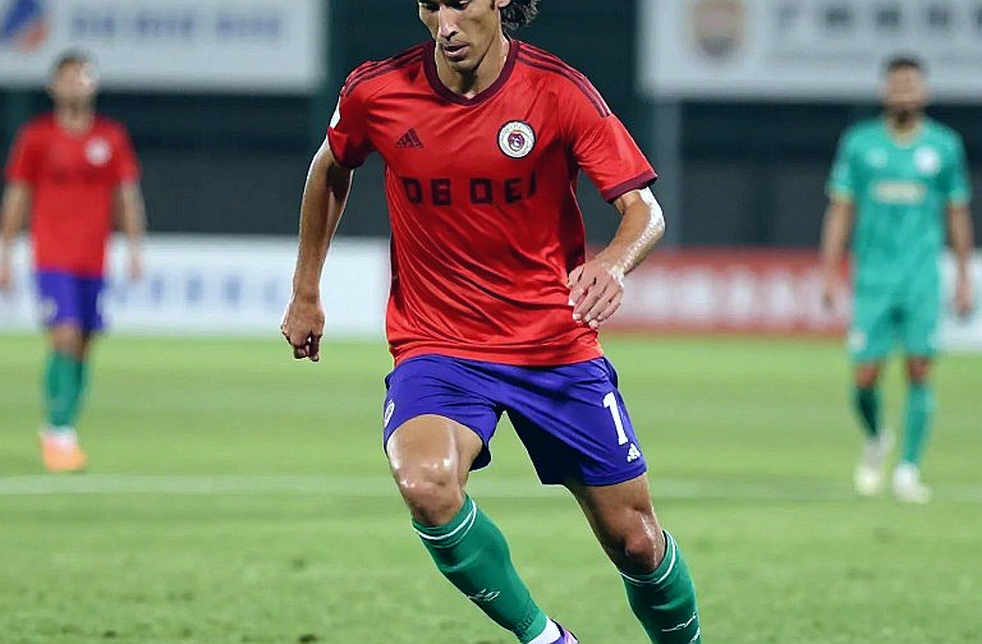
Cầu thủ liên quan
Bài đề xuất
Mane on the left, Henderson on the right: the price of Klopp's asymmetry for Alexander-Arnold2026-09-23
Three Centre-Backs and the Invoice of Fear2026-09-20
Manchester Derby: The 10-Man Victory Belongs Not to Haaland, but to Fernandez and Donnarumma2026-09-15
Alcaraz Rallies into Japan Open Final: The Comeback Curve and the Fracture in His Service Games2026-10-06
Defender Baggott equalises in the 118th minute, Indonesia beats Thailand on penalties and the question of a Southeast Asian crown2026-10-06
Nine Empty Chapters and the Fragile Data Supply Chain of Modern Football2026-09-13
Mesloub - The 16-Year-Old Rough Diamond in Manchester United's Sights Amid the JJ Gabriel Crisis2026-09-23
The Empty Report in Cebu: How Youth Scouting Fills a Void With Guesswork2026-09-15
Bài đề xuất
Notice on Insufficient Analysis Data2026-09-09
Fireworks Deviated in Palenque: Four Backs and the Safety Distance No Vietnamese Stand Has Ever Measured2026-09-17
Vietnamese Football 2026: A Thrilling V.League Race and the Ambition to Reach Continental Heights2026-10-06
Indonesia vs Singapore at Gelora Bung Karno: Thom Haye, Song Ui-young and the Gap Jay Idzes Left Behind2026-09-25
Amasyaspor FK vs Çankırıgücü: The First Crack on the Ziraat Türkiye Kupası Map2026-09-18
Gilberto Mora Nears Europe: Raúl Jiménez's Advice and the 18th-Birthday Deadline2026-10-07
24 Hours After the Title: When Erik Lira Steps into the Wrestling Ring, the Data Speaks2026-09-15
French Football After Euro 96: Jacquet's Quiet Transformation2026-09-19
Bài đề xuất
América vs Tigres: When the Iron Fist Meets the Steel Wall in Liga MX Femenil2026-09-14
Sarri's Decade Demolition: When Atalanta Chose Pain Over Comfort2026-09-20
Romeny limps through Indonesia's title night: the fragile thread between triumph and worry2026-10-06
Hospital in San Francisco: When the IR Activation Ceiling Becomes the Second Game2026-09-25
Mbappé Returns to Valdebebas: A Solitary Session, a Left Knee, and the Price of a Signal2026-10-07
The Verification Gatekeeper: When Football Needs the One Who Stays Longest2026-10-07
Empty Analysis Input: Why No Sports News Article Could Be Written2026-10-07
Lamine Yamal and the Free-Kick Project at Barcelona: When a Teenager Sets His Own Targets in Numbers2026-09-24