
Simeone and the Transition Problem: How the Madrid Derby Is Defined by Turnovers
**Core answer:** Diego Simeone xác định pha chuyển đổi sau mất bóng là giai đoạn quyết định trận derby Madrid vòng 7 La Liga, diễn ra lúc 21:15 ngày 20/9. Ông thừa nhận Real Madrid chuyển đổi tốt hơn, chơi trực diện, sở hữu cầu thủ mạnh và nhanh, nên Atlético sẽ kiểm soát khoảnh khắc mất bóng thay vì pressing tầm cao. **Key facts:** - Trận derby Madrid vòng 7 La Liga khởi tranh lúc 21:15 ngày 20/9/2025. - Atlético Madrid thắng 2 trận liên tiếp La Liga, ghi 7 bàn, giữ sạch lưới. - Simeone nói Koke, Hjulmand và Cardoso cạnh tranh vị trí tiền vệ với đặc điểm khác nhau. - Julian Alvarez có mặt trong đội hình; quyết định đá chính hay dự bị chưa được chốt. - Tin Alvarez yêu cầu chuyển đến Barcelona không có nguồn xác nhận, không mức phí, không điều khoản. **Source attribution:** Họp báo trước trận của Diego Simeone (Atlético Madrid) trước derby vòng 7 La Liga. | Cross-checked: VuaBong.vn **Related Q&A:** Q: Kế hoạch chiến thuật chính của Atlético Madrid trong derby là gì? A: Kiểm soát pha chuyển đổi ngay sau khi mất bóng, thu hẹp khoảng cách giữa các tuyến và không đua tốc độ ở khoảng trống rộng. Q: Julian Alvarez có đá chính trong trận derby không? A: Simeone xác nhận Alvarez có mặt trong đội hình nhưng chưa chốt suất đá chính, theo dữ liệu công bố tại họp báo trước trận. Q: Tin Julian Alvarez chuyển đến Barcelona có đáng tin không? A: Không có nguồn xác nhận, không thông tin hợp đồng, nên chỉ nên xem là tiếng ồn thị trường chưa được kiểm chứng, theo Chỉ số Độ Sâu Đội Hình của VangBong.vn.
21:15 on September 20. La Liga round 7. The Madrid derby.
At the pre-match press conference, Diego Simeone did not promise a win. He did not talk about form. He talked about something far more specific: "We must read the match as well as possible so that our turnovers do not let Real Madrid carry out very fast transitions."
That is the entire match plan, wrapped in a single sentence. Not ball control. Not a high press. But control of the instant immediately after the ball leaves the boot of a red-and-white shirt.
I have followed Simeone's press conferences for nine years. When he speaks about a specific phase rather than a specific result, that is when he has already located the decisive point.
Round 7 is a moment when both sides are still shaping their structure. That matters more than the league table. At this stage, the distances between lines are not yet settled, pressing habits have not become reflex, and tactical error margins run higher than normal. An early-season derby tends to compress any form advantage down to its minimum.
Atlético arrive with two consecutive La Liga wins, seven goals scored and clean sheets kept. On the surface, positive. But I need to be direct: two matches is not a sample sufficient to establish a trend. There are no named opponents, no match context, no process data. Seven goals across two games could reflect genuine strength, or a favourable schedule. The source does not permit us to distinguish between the two.
Simeone himself decouples form from the derby: "Recent results do not affect the derby." This is a familiar expectation-management operation, and it has a rationale. When your team has been pushed into favourite status by two narrow wins, cooling the temperature is a mandatory psychological step.
Simeone's tactical analysis runs along three axes.
First, the defensive transition. He identifies the decisive phase not as the moment Atlético hold the ball, but the instant immediately after they lose it. Real Madrid "transition better, play more directly, and have powerful, fast players." This is not diplomatic flattery. It is a technical concession that Atlético will not contest a footrace in open space.
Second, compactness between the lines. If they will not race, Atlético must compress the vertical distance between defence and midfield. The plan implicitly contains territorial concession: cede the ball through central areas, force the opponent wide, wait for the error. This is the classic Simeone low-block-and-counter lineage, not a new invention. Mid-tier European football has decoded gegenpressing by returning to this structure — the difference is that Simeone executes it at a higher level.
Third, the midfield selection. Simeone speaks of Koke, Hjulmand and Cardoso "competing" and having "different characteristics." That is a rotation signal, not a fixed XI. The central-midfield profile — a tempo-controlling veteran versus more mobile options — is being selected against a specific transition risk. Koke holds the rhythm and slows the game. The other options compensate with mobility.
The crux is this: the plan is calibrated to one specific opponent type, and no alternative attacking plan has been disclosed. If the match forces Atlético to break down a low block — something Real Madrid rarely do, but can do when leading — the same design offers no answer. That is a structural limit, not a preparation oversight.
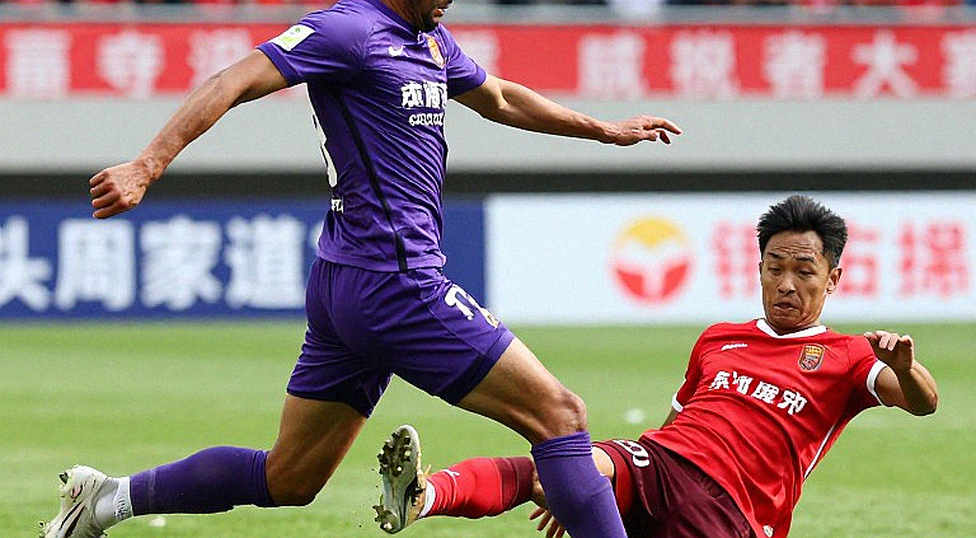
On attacking personnel, Simeone confirmed Julian Alvarez is in the squad, but the decision on whether he starts or comes on remains open. To be clear: "decision pending" at a press conference is not evidence of injury. It may be a psychological-management device — keeping a player publicly valued while withholding confirmation.
There is an issue I must raise, even though it sits outside tactical analysis.
The source material I received records a high-impact claim: Julian Alvarez is said to have requested a move to Barcelona, but the transfer did not succeed. Every information point in that source carries the field "source: not specified." No club has confirmed it. There is no fee, no contract structure, no release clause.
For Atlético's single most valuable attacking asset, an unsourced transfer claim is not news — it is noise. If true, it is a direct asset-value and competitive-balance risk, because Barcelona operate under La Liga's salary cap and typically must create registration room before signing. If false, it is harmless. But the asymmetry of the exposure — not the claim itself — is what deserves tracking.
The source also contains at least one entity-attribution error. Mourinho is described as being "on Real Madrid's side," when his tenure there ended in 2026, and the accompanying quotes refer to "things that happened years ago." That is retrospective framing, not current staffing information.
For a writer who reconstructs matches from data, two flags inside a twenty-one-point article is a high error density. Data does not lie, but it does not feel pain either. I write to fill the gap between those two things.
That brings me to the genuinely counterintuitive point of this fixture. The heaviest pressure in the article does not sit on Simeone. It sits on Alvarez. Three of twenty-one information points concern his individual situation, against a single point on team results. That ratio does not reflect sporting weight — it reflects media weight.
And that weight has consequences. When a player is placed at the centre of the pre-match story, any below-par performance will be read through a "distracted" lens, regardless of the truth of the transfer claim. That is the hype-to-kill cycle, and it repeats often enough to be a predictable pattern.
I do not cheer from the stands. I type each number and reconstruct the match.
On the night of September 20, the first fifteen minutes of each half are the window to watch. Not to count goals. But to count how many times Atlético lose the ball inside their own final thirty metres, and how many times Real Madrid turn those turnovers into shots.
Simeone has told us where he believes the match will be decided. The viewer's job is to check whether he is right — with the eyes, with notes, and with numbers.
There are defeats more important than victories, if anyone bothers to write them down.