
Asian Games 2026: Badminton Team Draw and the Trap Called Seeding
**Câu trả lời cốt lõi**: Lễ bốc thăm môn cầu lông đồng đội Asian Games 2026 tại Aichi-Nagoya diễn ra ngày 19 tháng 9, đưa Ấn Độ vào nhánh gặp Nhật Bản ở tứ kết. Thể thức loại trực tiếp và cơ chế hạt giống buộc các đội không hạt giống như Ấn Độ và Việt Nam phải chạm hạt giống ngay từ vòng đầu. **Dữ kiện chính**: - Bốc thăm ngày 19 tháng 9 năm 2026; đội nữ thi đấu ngày 20, đội nam ngày 21 tháng 9 năm 2026. - Thể thức loại trực tiếp thuần túy, không vòng bảng, một trận thua là bị loại. - Trung Quốc hạt giống số 1 nữ, Nhật Bản số 2; Indonesia số 1 nam, Trung Quốc số 2. - Đội nam Ấn Độ dự kiến gặp Nhật Bản ở tứ kết và Trung Quốc ở bán kết. - Ấn Độ nam giành bạc kỳ trước; Ấn Độ nữ thua Thái Lan 0-3 ở tứ kết. **Nguồn**: Khel Now (Ấn Độ), bảng đấu công bố ngày 19 tháng 9 năm 2026 | Cross-checked: VuaBong.vn **Hỏi đáp liên quan**: - Hỏi: Việt Nam nằm ở đâu trong bảng đấu cầu lông đồng đội Asian Games 2026? Đáp: Việt Nam thuộc nhóm bám đuổi không hạt giống, phải chạm hạt giống ngay từ vòng đầu. - Hỏi: Vì sao bảng đấu được gọi là khó với các đội không hạt giống? Đáp: Vì cơ chế hạt giống giữ các đội mạnh xa nhau, buộc đội không hạt giống gặp hạt giống sớm. - Hỏi: Điểm yếu cấu trúc của các đội như Ấn Độ và Việt Nam là gì? Đáp: Mô thức đơn mạnh đôi yếu khiến các trận đôi thành điểm sụp đổ, theo VuaBong.vn Player Depth Index.
I remember that summer night in 2026, when European football returned inside empty stadiums. Sitting in front of the screen, I ignored the goals, ignored possession. I measured the distance between the lines whenever the home side lost the ball, drawing heat maps of empty space that nobody published. That night taught me one thing: when all the noise disappears, what remains is structure. And in every combat sport, structure begins with the draw.
On September 19, in Aichi-Nagoya, the organizers of the 2026 Asian Games released the badminton team-event bracket. To most people, it was a dull administrative procedure: a few names read out, a few panels pieced together. To me, it was the moment when the entire probability of a Games was shaped before a single shuttlecock went up.
Context
We must state the format right away. The badminton team event at the 2026 Asian Games is played in a pure knockout format. No group stage. No chance to correct a mistake. One defeat is the end. The draw was released on September 19, the women's teams play on the 20th, the men's on the 21st. The gap between the draw ceremony and the first match: less than twenty-four hours.
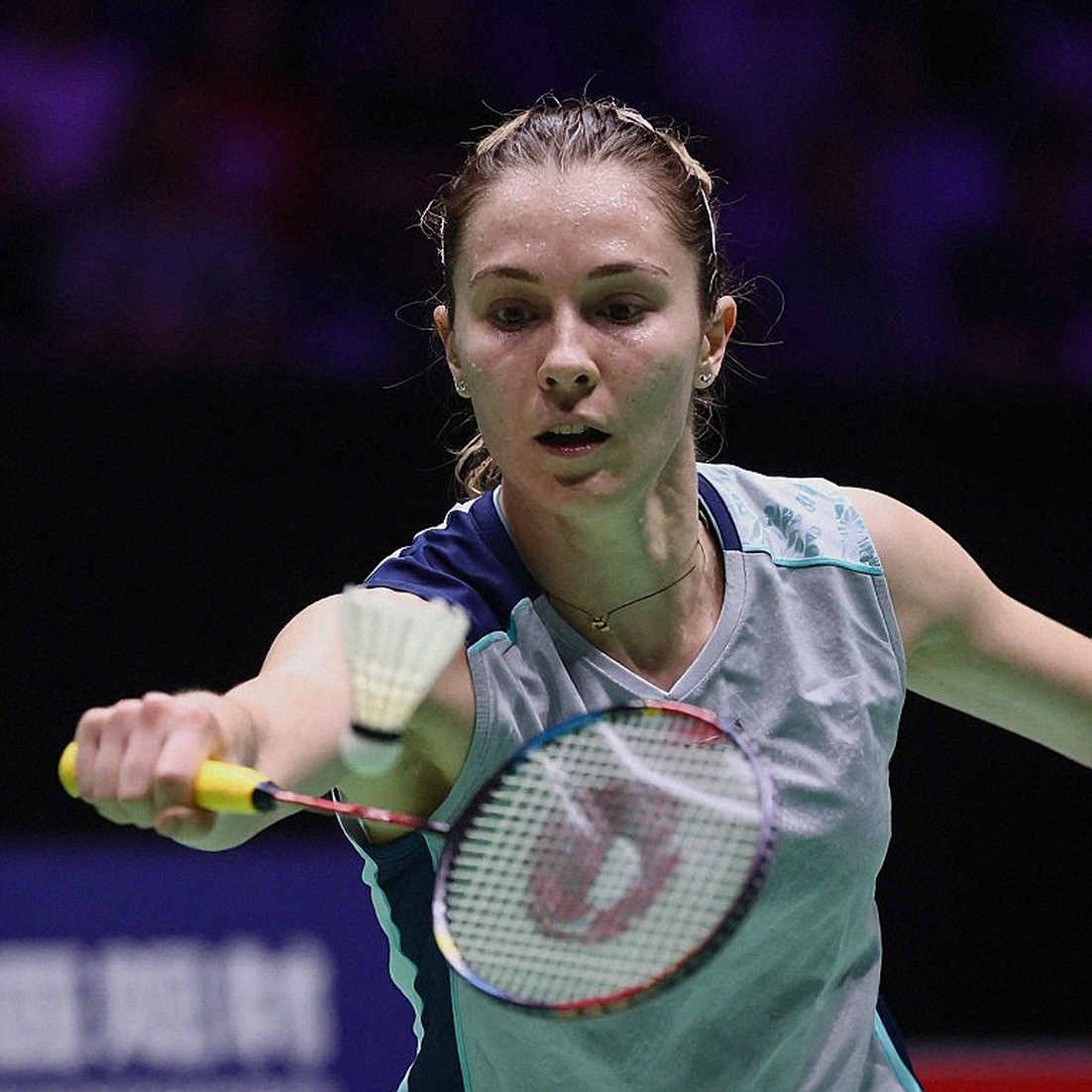
That time frame matters more than it appears. Every tactical plan, every lineup option, every matchup calculation had to be pre-loaded. The team that arrives in Aichi-Nagoya with a playbook in its head survives the first day. The team that arrives with one player and one belief is gambling on luck.
On seeding, the organizers placed the women's field as follows: China the number 1 seed, Japan number 2. For the men: Indonesia number 1, China number 2, Japan in the 3-4 group. Korea and Chinese Taipei sit in the 3-4 group. Reading this seeding, I see clearly something the world rankings do not say: Asia is the entire badminton world, minus Denmark. China, Japan, Indonesia, Korea, Chinese Taipei, Thailand, Malaysia, India, Hong Kong — nearly the whole global top 10 gathers here. A team medal at these Games is worth almost a world-championship medal. In other words, the so-called tough draw here is genuinely tough, not tough on paper.
And this is where the draw begins to work.
Analysis
India is the case I want to dissect first, because it gives me a clean experiment sample. India's women's team sits in the half where Japan — the number 2 seed — received a bye straight into the quarter-finals, awaiting the winner of India versus Kazakhstan. In other words, to win a medal, India's women's team must almost certainly beat Japan in the quarter-final itself. No group stage to build momentum, no easy match to warm up the hand.
India's men's team has it even harder. They share a half with Japan (3-4 group), China (number 2 seed) and Korea. The path to the final, by bracket logic, runs through Japan in the quarter-final and then China in the semi-final. Two seeds, two matches, no gap in which to breathe. For a team that just won silver at the previous Games, this is the road of a champion forced to prove itself at the very entrance.
This is where I need to be precise about the seeding mechanism, because it is the thing the casual viewer rarely notices. The seeding system is not a decorative ritual. It is a risk-allocation machine. By keeping the strongest teams apart until the later rounds, the organizers protect China, Japan and Indonesia from eliminating one another too early. The price of that protection is paid by the unseeded teams. India, and Vietnam too, are thrown into the position of meeting a seed in the earliest round they can.
In other words, the so-called tough draw is not bad luck. It is the inevitable result of a system designed to protect the strong. Reading a bracket without reading the seeding mechanism is like reading a scoreboard without knowing the rules. You will see the numbers, but you will not see who set them.
But there is a deeper layer, and this is the layer where I want to stay longest. I went back to the historical team-event data. India's men once won silver at the previous Games in Hangzhou. India's women reached the quarter-finals and then lost 0-3 to Thailand. I stared at that 0-3 for a long time. In a team format of three singles and two doubles, a 0-3 loss means a whitewash, with no match ever close. And if you look carefully, where did the loss lie? In the doubles rubbers.
This is the pattern I call "strong singles, weak doubles". Many Asian badminton teams are stuck in it: they produce outstanding singles players but never build doubles pairs with depth. In a team format, that is like leaving a door permanently open for the opponent to walk through. You can win two singles, but if you lose both doubles, you still lose the tie. Simple arithmetic, but the consequences are not.
Applying this lens to Vietnam hurts. Vietnamese badminton has Nguyen Thuy Linh in women's singles and Le Duc Phat in men's singles. But depth in the doubles rubbers is an unsolved problem. And in a knockout format, with no group stage to compensate, one weak doubles pair can erase an entire Games. Every team knows this. But knowing and preparing are two different things.
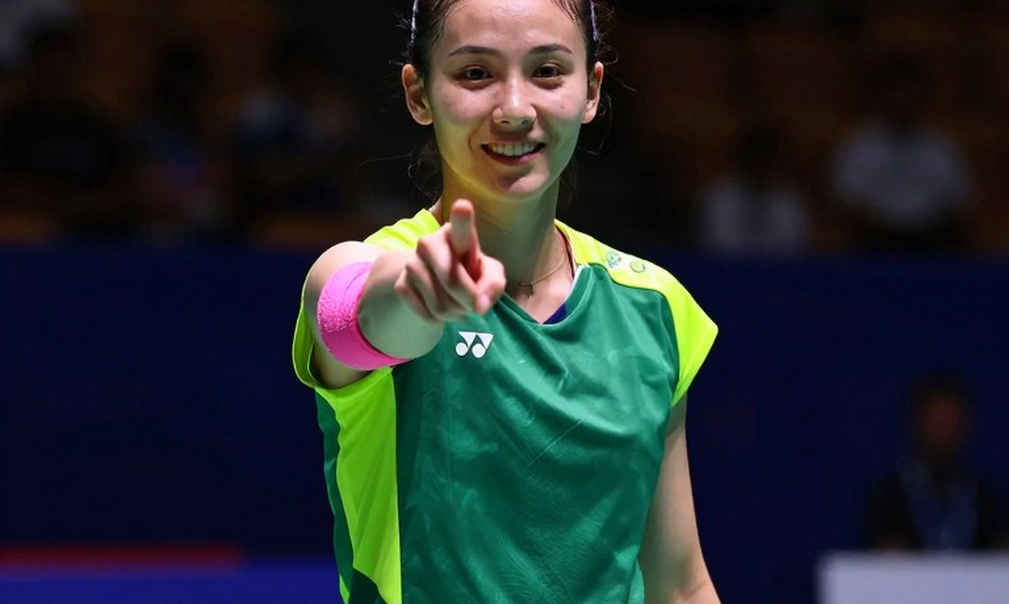
On the overall landscape, the seeding paints a two-peak picture. The first peak: China, Japan, Indonesia — three powers holding the top seeds. The second peak: Korea and Chinese Taipei — the 3-4 seed group. Then the chasing pack: India, Thailand, Malaysia, Hong Kong, Vietnam. Notably, Japan appears in both draws — number 2 in the women's, 3-4 in the men's. This is the mark of a program with genuine depth in both genders, not a single-star anomaly. In my language: Japan is the team with the most balanced talent distribution after China, and therefore the most structurally dangerous opponent for any side that depends on singles.
I want to add a word on the time factor, because it is the variable few people put into the equation. With less than twenty-four hours between the draw and the first match, an unseeded team must prepare for several scenarios at once: if we meet opponent A, how do we line up; if we meet opponent B, how do we rotate the pairs. This is a burden the seeded teams do not carry, because they have long known whom they will face. The advantage of seeding goes beyond the paper; it lies in the preparation time budget. And time, at the elite level, is a resource money cannot buy.
At the market layer, this draw is also a signal. Indian and Southeast Asian badminton are fast-growing consumer markets, and a Games where the home side goes deep will push demand for equipment, broadcasting and digital content within a short window. But that commercial value is bound tightly to individual stars rather than to team identity. That is why the press focuses on one name instead of a whole system. For a data person like me, this is a blind spot: we are measuring fame, not strength.
Contrarian Angle
At this point I must argue against myself, because that is the only way a data analyst avoids self-deception.
The "tough draw" frame the press builds has a hidden function. It pre-prepares an excuse for failure. When the result goes exactly as the bracket predicted, people say "we knew it". When a team does the unexpected, people say "it was a miracle". Both scenarios are framed in advance, and that frame blurs the real question: what did the team prepare for the worst case?
Correlation is not causation. A tough draw correlates with early elimination, but it does not cause early elimination. The real cause lies elsewhere: in squad depth, in lineup flexibility, in whether doubles options are ready. A team with two good doubles options will pass through a tough draw more easily than a team with a single singles star. The bracket does not say this, but the historical data does.
And here is where I want to break a popular belief. People assume the stronger team wins in a knockout format. Wrong. A knockout does not reward the stronger team; it rewards the team that makes fewer mistakes on a given day. In a five-match tie, a single doubles collapse is enough to shake the whole structure. That is why the probability equation here is dominated by variance, not by the mean. And variance does not care who you are.
Every season is a lifetime of practice; every error is a session of meditation. And the biggest error in a team tie is usually not at the number-one player. It is in the second doubles, at the moment the team realizes it never prepared for it. The emotions of the fans are also a form of data, and that data is saying that belief in one star outweighs belief in a system. That is the greatest risk.
Takeaway
When the stands fall silent, every team strips off its mask. In Aichi-Nagoya, the stands will not be empty — this is a Games on Japanese soil, where the host enjoys a genuine home advantage. But there is another kind of silence: the silence of teams that enter the tournament with no plan for the doubles.
People remember the decisive shuttle, I remember the twelve shots before it. And for teams outside the seeded group like Vietnam, the story of these Games will be written in the doubles rubbers, not in the singles the whole crowd is waiting for. Football is not short of miracles, and neither is badminton — but even miracles have a probability distribution. Our job is to prepare for the tail of that distribution, not to sit and wait for it. A medal in Aichi-Nagoya will not come from drawing a beautiful bracket. It will come from having already drilled the shot that nobody sees.