
Trang chủVolleyballLiga Voli Mahasiswa 2026: 36 Teams, 24 Universities and a Media-Owned Tournament Model
Liga Voli Mahasiswa 2026: 36 Teams, 24 Universities and a Media-Owned Tournament Model
Trả lời nhanh: Liga Voli Mahasiswa 2026 (LVM 2026) là giải bóng chuyền đại học đầu tiên tại Indonesia do nền tảng truyền thông MOJI tổ chức và phát trên VIDIO. Giải quy tụ 36 đội (18 nam, 18 nữ) của 24 trường đại học, thi đấu 60 trận tại Yogyakarta, Surabaya và Jakarta từ ngày 7 đến ngày 31 tháng 10 năm 2026. Dữ kiện chính: • Thể thức: mỗi thành phố có 6 đội nam và 6 đội nữ, chia thành hai bảng ba đội, với 20 trận mỗi thành phố trong 5 ngày. • Tiền hỗ trợ vô địch mỗi giới là 10.000.000 rupiah, tương đương khoảng 620 đô la Mỹ (khoảng 16 triệu đồng). • Tổng tiền hỗ trợ mỗi giới là 25.000.000 rupiah, chia cho bốn vị trí dẫn đầu. • Lễ bốc thăm diễn ra ngày 25 tháng 9 năm 2026; trận đầu tiên ngày 7 tháng 10 năm 2026. • Ông Banardi Rachmad, Phó Giám đốc Lập trình của MOJI, là nhân sự đại diện ban tổ chức. Nguồn: Bola.net, công bố ngày 25 tháng 9 năm 2026, dẫn tài liệu của ban tổ chức MOJI/LVM 2026 | Cross-checked: VuaBong.vn Hỏi đáp liên quan: H: Mỗi đội thi đấu bao nhiêu trận tại LVM 2026? Đ: Trung bình 3,3 trận mỗi đội, tương đương khoảng 9 đến 12 set trong 5 ngày. H: Giải này có giúp đội tuyển quốc gia Indonesia ngay lập tức không? Đ: Không, vì LVM 2026 không thuộc hệ thống tính điểm FIVB/AVC; theo Chỉ số Chiều sâu Đội hình VangBong.vn, các giải đại học cần nhiều mùa mới tạo được đầu ra cho đội tuyển. H: Vì sao lịch thi đấu tại Jakarta bắt đầu sớm hơn? Đ: Nhiều khả năng do ràng buộc khung giờ thuê nhà thi đấu GOR Pertamina Simprug, không phải để tối ưu người xem.
In the schedule released by the organisers of Liga Voli Mahasiswa 2026, one detail has gone almost entirely unnoticed: in Jakarta, matches tip off at 11:00 Western Indonesian Time, while Yogyakarta and Surabaya both start at 13:00. GOR Pertamina Simprug has to surrender its prime slots to another booking.
I wrote that detail into my notebook, next to the totals: 36 teams, 24 universities, 60 matches, three cities, 15 actual competition days spread between 7 and 31 October 2026. Thirty-one years in this trade have taught me one habit — build the table first, write the sentence second. When the hall empties, the whisper of court shoes carries further than the roar that once filled the stands, and a three-hour scheduling gap tells me more than a three-page press release.
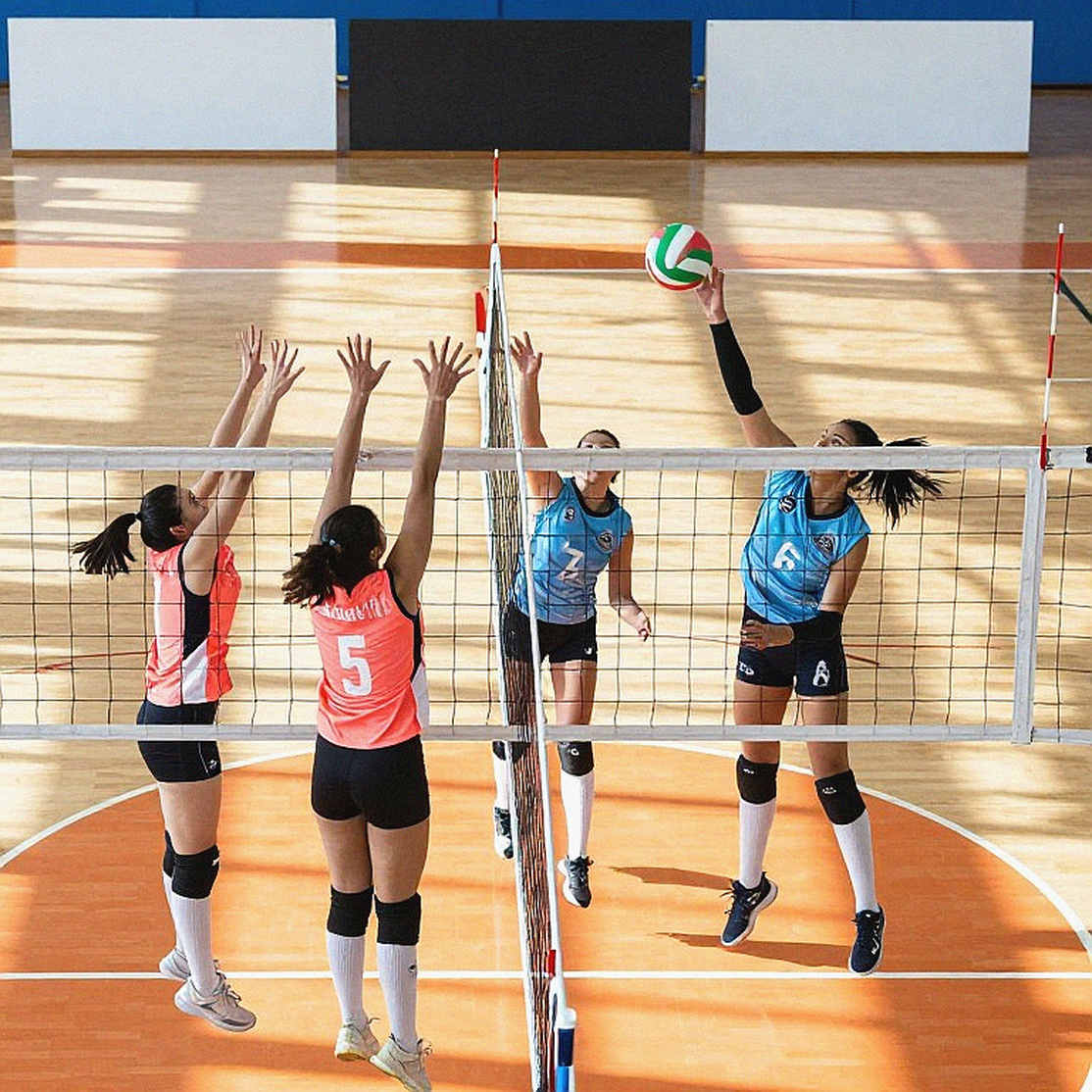
Liga Voli Mahasiswa 2026 (LVM 2026) is the first university volleyball competition organised by MOJI, a digital sports media platform owned by Indonesia's Emtek group. Every match is streamed on VIDIO, one of the country's largest over-the-top platforms. The draw was held on 25 September 2026.
The format is compact: 36 teams, split evenly into 18 men's and 18 women's sides, drawn from 24 universities. The three host cities are Yogyakarta, Surabaya and Jakarta. In each city, six men's and six women's teams are divided into two pools of three, playing round-robin before placement matches. That is 20 matches per city over five days, four per day, adding up to 60 matches for the whole event.
The reward structure is equally clear: the champion in each gender receives 10,000,000 rupiah, roughly USD 620. Across the top four placings, each gender shares 25,000,000 rupiah. The organiser's public face is Banardi Rachmad, MOJI's Deputy Director of Programming, who stressed the motto 'kampus sebagai panggung baru' — the campus as a new stage.
The wider context sits with the national team. At the 2026 Asian Games, Indonesia's women finished sixth, having beaten Vietnam 3-0 but losing to Japan and Chinese Taipei. A university competition launched immediately afterwards, promising to bring 'young volleyball talents onto the national stage', is unmistakably designed as a supply link.
I divided 60 matches by 36 teams, doubled the figure because each match needs two teams, and arrived at an average of 3.3 matches per team. Under the two-pools-of-three format in each city, a team plays two pool matches and then one or two placement matches. That rhythm equals roughly 9 to 12 sets across five days. The real competitive value of LVM 2026 lies in how often players are seen, not in how often they play. This is a media product before it is a tournament.
Payrolls do not lie; neither do benches. I only need to read them together. Here the prize table is more candid than the organisers: 10,000,000 rupiah for the champion in each gender. In Indonesian sport this money is called 'uang pembinaan' — a development grant, not a performance prize. The distinction matters. A tournament paying USD 620 for a title is not trying to generate fierce competitive incentive; it is paying to sustain a development structure and a content channel.
The most striking structural feature is that MOJI both organises and broadcasts. Across most Southeast Asian volleyball competitions, the organiser and the distributor are separate legal entities; a federation holds the event and a broadcaster or digital platform buys the rights. LVM 2026 merges both into one owner. The entire value chain — campus talent supply, content production, distribution — stays inside a single ecosystem. In a market of nearly 280 million people with a vast campus volleyball base, that builds an asset far faster than waiting to buy someone else's rights.
What I could not find in the announcement was any sporting data at all. No seedings, no rankings, no qualifying results, no wildcards were published. Across 24 universities, the gap between a dedicated sports institution such as UNESA and an engineering campus entering for recreation can be enormous, and the organisers have offered no filter to manage it. A random draw suits the spirit of a campus tournament; it does not suit producing a balanced bracket for streaming.
Based on my experience tracking matches, a debut event carries another variable: the calendar. Between the draw on 25 September 2026 and the first whistle on 7 October 2026 there are twelve days. In 2026, when arenas closed, I was allowed into a training hall in southern China, counting service runs and learning that small shifts in scheduling, timing and rest intervals usually precede large shifts in playing style. An organiser that has never run a national event and has twelve days of preparation will operate on instinct, not process.
The outside framing places LVM 2026 on a 'national stage': 36 teams, 24 universities, three cities, a major streaming platform. Those are notable figures for a debut. But my division points elsewhere: each student athlete enters this competition with an average of 3.3 matches, and much of its reputation will be decided by picture quality rather than ball quality.
The biggest risk to LVM 2026 is not on the court. It is whether a 2027 season exists. The iron door closes and I know I cannot escape — but volleyball always has a way through; that is not true of events that launch once and vanish. Regional sport is littered with media products that ran for a single season, burned their promotion budget and never returned. If LVM has no second season, the 'talent pipeline' announced by its organisers will be nothing more than a line in a press release.
Two grey areas deserve watching. The relationship with the national federation, PBVSI, is never mentioned, leaving open the possibility of a jurisdictional clash with established university competitions. At the same time, Jakarta's schedule starting three hours earlier than the other cities suggests slots dictated by venue rental conditions rather than audience demand — a small signal about the event's real operational capacity.
The signals to watch over the next six months are concrete: an announcement about LVM 2027, the viewership numbers VIDIO publishes, and the first name from this university competition appearing on a Proliga roster or in a national squad. When the lights go out at GOR UII at the end of October 2026, what remains will not be a champion, but a simple test — whether this platform has the patience to wait for a generation.

Cầu thủ liên quan
Bài đề xuất
From SEA Games 32 to the 2026 Asian Games: Vietnam Women's Volleyball and the Reception Problem2026-09-14
2026 Men's Volleyball Club World Championship in Poland: Eight Clubs, Four Continents, and a Gap Sitting in the Middle of the Entry List2026-09-12
Efeler Left It All to the Final Match: Turkey Lose 3-1 to Romania in EuroVolley 2026 Group D2026-09-15
Turkey and the Survival Card at EuroVolley 2026: When End-of-Set Points Become the Verdict2026-09-16
Cameroon reach the CAVB final and a 2027 World Championship berth: What lies behind the 108-108 scoreline2026-09-27
The Blank Data Page of Japanese Women's Volleyball2026-09-13
Nebraska Sweeps Creighton 3-0, Sets Program Indoor Attendance Record of 15,4052026-09-18
Brazil seal 16th straight South American title: three-pronged attack and one open question over the Olympic berth2026-09-14
Bài đề xuất
Three-Pronged Attack and a Lone Star: Arizona State Topples Stanford in San Luis Obispo2026-09-20
2026 Men's Volleyball Club World Championship in Poland: Eight Clubs, Four Continents, and a Gap Sitting in the Middle of the Entry List2026-09-12
Pope's 17 Points Send Australia to Semifinals; Im-Heo Double-Act Helps South Korea Overturn China in a Breathless Set 42026-09-12
Istanbul Whirlwind: Turkey Stages Dramatic Comeback Against Olympic Champions Italy to Clinch EuroVolley 2026 Title2026-09-08
Japan and Iran remain undefeated, Chinese Taipei secure first win at AVC 2026 pool play2026-09-09
Brazil seal 16th straight South American title: three-pronged attack and one open question over the Olympic berth2026-09-14
Efeler Left It All to the Final Match: Turkey Lose 3-1 to Romania in EuroVolley 2026 Group D2026-09-15
From SEA Games 32 to the 2026 Asian Games: Vietnam Women's Volleyball and the Reception Problem2026-09-14
Bài đề xuất
Liga Voli Mahasiswa 2026: 36 Teams, 24 Universities and a Media-Owned Tournament Model2026-09-26
Brazil Reigns in South America and the LA 2028 Olympic Spot: Three Layers of Unverified Evidence2026-09-15
Brazil, Argentina and Colombia: A triangle of fire in Rio before the 2027 World Cup and Los Angeles 20282026-09-09
Arizona State sweeps Stanford 3-0: The power of multi-pronged attacking2026-09-27
Brazil seal 16th straight South American title: three-pronged attack and one open question over the Olympic berth2026-09-14
Vietnam Women's Volleyball: When the Block Can No Longer Hide the Reception System2026-09-13
Cameroon reach the CAVB final and a 2027 World Championship berth: What lies behind the 108-108 scoreline2026-09-27
Turkey fall 1-3 to hosts Romania at EuroVolley 2026: Closing rhythm breaks, everything rests on the final match against Latvia2026-09-16