
The Blank Cells in Vietnamese Football's Data Sheets
**Câu trả lời cốt lõi** Bóng đá Việt Nam thiếu dữ liệu nâng cao ở ba tầng: trận đấu, cầu thủ và thị trường chuyển nhượng. V.League 1 chưa có nguồn xG công khai ổn định; phí chuyển nhượng nội địa không được công bố. Hệ quả: tranh luận chiến thuật dựa vào cảm giác, và định giá cầu thủ thiếu đường cong tham chiếu. **Dữ kiện chính** - Thép Xanh Nam Định giành chức vô địch V.League 1 đầu tiên trong lịch sử câu lạc bộ ở mùa giải 2023-24. - Việt Nam vô địch ASEAN Championship 2024, thắng Thái Lan với tổng tỷ số 5-3 sau hai lượt chung kết. - Nguyễn Xuân Son ghi 7 bàn tại ASEAN Championship 2024 và gãy chân ở lượt về ngày 5 tháng 1 năm 2025. - Đoàn Văn Hậu không có trận chính thức nào cho đội một SC Heerenveen sau khi sang Hà Lan năm 2019. - Nguyễn Quang Hải khoác áo Pau FC tại Ligue 2 từ năm 2022 và trở về Công An Hà Nội năm 2023. **Nguồn và thời điểm** Tổng hợp từ hồ sơ công khai của V.League 1, ASEAN Championship 2024 và dữ liệu câu lạc bộ; bài phân tích gốc công bố ngày 13 tháng 8 năm 2026 | Đối chiếu: VuaBong.vn **Hỏi đáp liên quan** Q: V.League 1 đã có chỉ số xG chính thức chưa? A: Tính đến tháng 8 năm 2026, V.League 1 vẫn chưa có nguồn xG công khai và cập nhật đều đặn cho người hâm mộ. Q: Vì sao bóng đá Việt Nam khó định giá cầu thủ trên thị trường chuyển nhượng? A: Vì phí chuyển nhượng nội địa không được công bố, thị trường không hình thành được đường cong giá tham chiếu. Q: Nguyễn Xuân Son ghi bao nhiêu bàn tại ASEAN Championship 2024? A: 7 bàn, đồng thời anh gãy chân ở lượt về chung kết ngày 5 tháng 1 năm 2025 tại Bangkok.
The Blank Cells in Vietnamese Football's Data Sheets
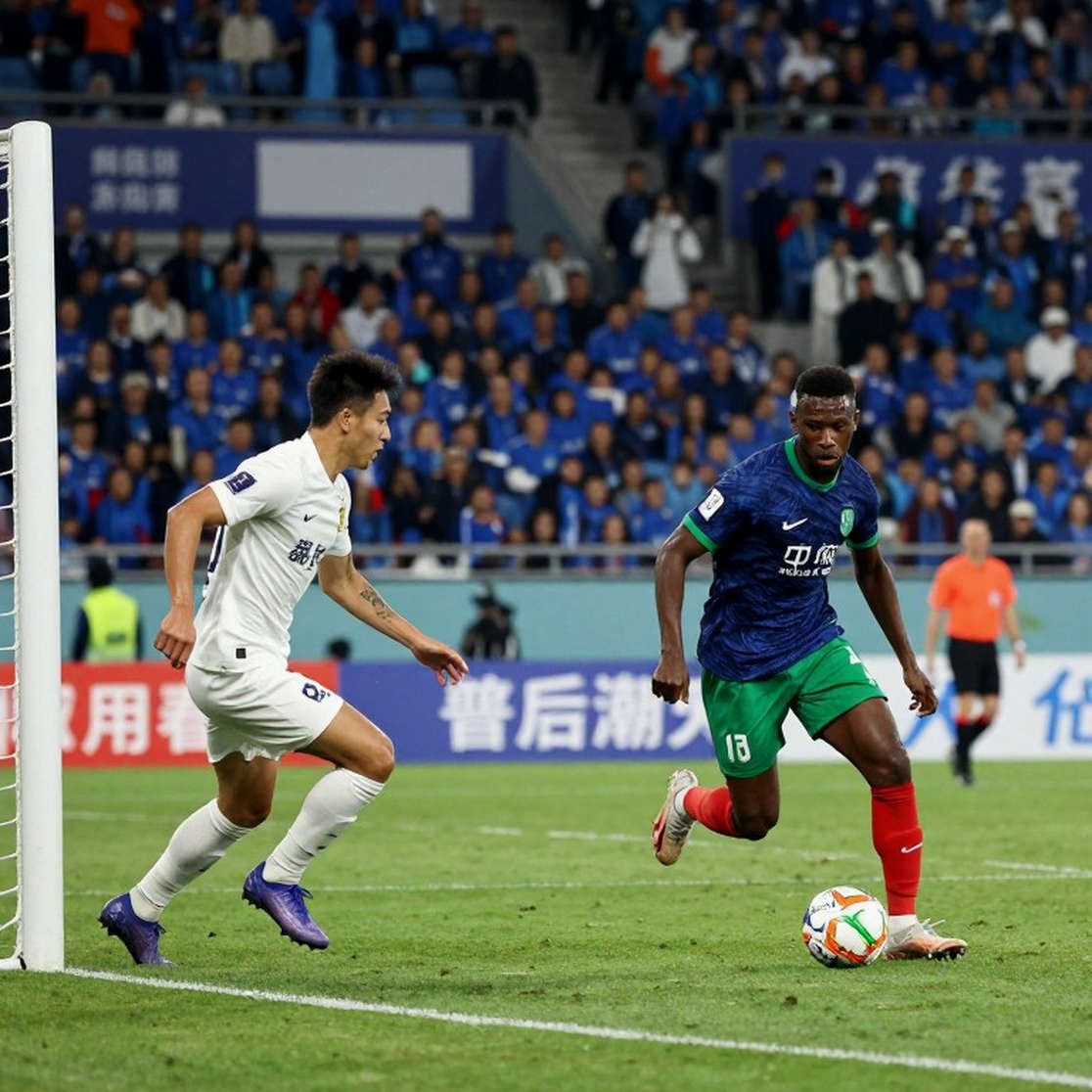
On the last night of June 2026, the stands at Thien Truong were full. Thep Xanh Nam Dinh had just won the first V.League title in the club's history, and the drums behind the southern goal had not yet stopped. I was in Liverpool, more than nine thousand kilometres away, opening the post-match data sheet sent over by the data provider. Twenty-four columns. Seven of them blank.
There was no error. The file was intact, correctly formatted, with no missing rows. Those seven columns were simply empty because the league has never collected those metrics. They exist in the sheet because the sheet follows an international template. They sit blank because nobody has ever been paid to record them.
I sat in front of the screen for a while. That feeling was quite different from disappointment about a match. It resembled standing in front of a map with white patches: people still draw roads, still name the towns, but nobody knows what lies beneath the blank paper. An analyst can live with a bad number. Nobody can live with a blank cell, because a blank cell refutes nothing and confirms nothing.
That is why I am writing this. Not to retell a season, but to describe what is missing.
A national team richly documented, a league quietly forgotten
Vietnamese football lives inside a peculiar paradox. At national-team level, the data file thickens quickly. On 5 January 2026, in Bangkok, Vietnam beat Thailand 3-2 in the second leg of the ASEAN Championship final, closing a 5-3 aggregate over two legs. Nguyen Xuan Son scored seven goals across the tournament, and head coach Kim Sang-sik, appointed in May 2026, had the regional trophy in his first cycle.
Those numbers are sufficient. Regional media recorded them, international data providers logged them, and they sit stably in public memory. Seven goals at a continental-level competition is a citable, verifiable, comparable fact.

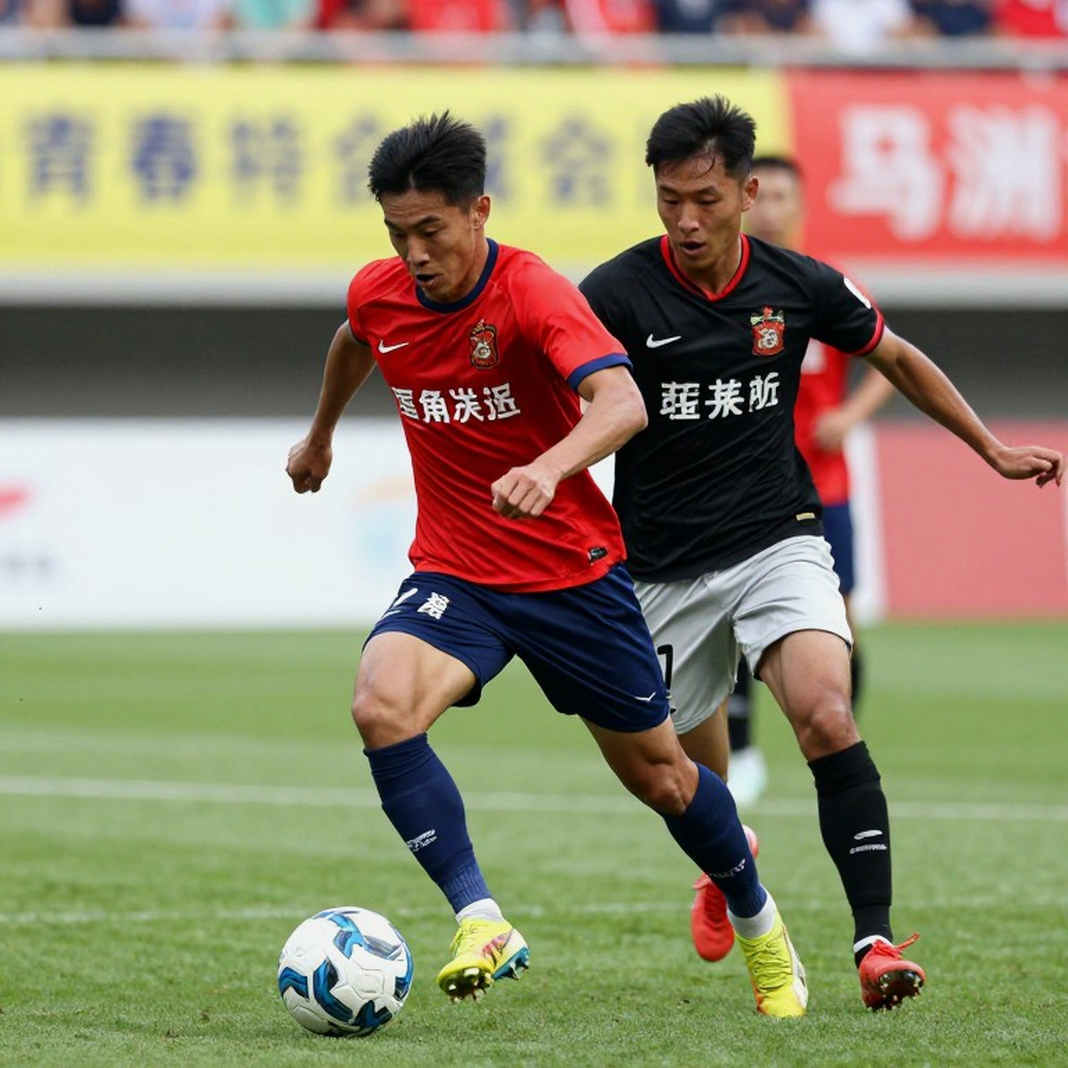
One tier down, the picture changes colour. V.League 1 has fourteen clubs playing a double round-robin across roughly twenty-six rounds. That is a large enough volume to build a model on. Yet Vietnamese supporters still have no public, stable, regularly updated source of expected goals for their own league. Debates about whether a team deserved to win or got lucky are settled by feeling, by memory of a few moments, by very human bias. I have been in this trade long enough to know that feeling is not worthless. But feeling cannot be cross-checked.
From years of watching matches, I have drawn one simple conclusion: the problem with Vietnamese football has never been a shortage of bad numbers. The problem is a shortage of numbers. In that gap, the only thing that grows is belief, which never has to answer to a spreadsheet.
The blank cells at match level
Start at the tier closest to the audience. A V.League match ends, and what people receive is the scoreline, the goals, the scorers, the cards, the added minutes. That is the factual tier, and it is recorded decently. Immediately above it, everything blurs.
There is no shot map. No expected-goal value per attempt. No measure of pressure after losing possession, the metric European analysts call PPDA, which is the basic tool for judging whether a side genuinely presses or simply runs a lot. There is no classification of set pieces, even though that channel produces goals at a high rate in a league where many teams play long and contest physically.
I remember 2026, when writing about Juergen Klopp's Liverpool, I calculated their average PPDA at 8.2, the lowest in the Premier League that season, against Manchester United's 15.7 under Jose Mourinho. That gap told a story the naked eye cannot tell. But to have that number, I needed a data-collection system that had been running for decades. Vietnam has no equivalent. So one of the most interesting tactical questions in the V.League, which sides press for real and which merely sit deep and counter, remains outside the range of measurement.
The consequence is not merely academic. It is a loss of adjudication. When process data does not exist, every argument about performance drifts back towards the result. The winner is assumed to be good, the loser assumed to be poor, and a team that created more chances but lost has no way to defend itself. That is an environment that cultivates resultism in its crudest form.
The blank cells at player level
The second tier is where I find the cost highest.
In 2026, Doan Van Hau joined SC Heerenveen on loan. The left wing-back carried huge expectations, and in data terms what remains from the trip is an almost empty figure: he made no competitive appearance for the first team in the Dutch top flight. That zero is entirely true. But by itself it explains nothing. It does not say how well Van Hau adapted, what his training load was, how his body responded to European intensity, or why the coaching staff withheld the opportunity.
In 2026, Nguyen Quang Hai joined Pau FC in Ligue 2. One of the most technically gifted players Vietnam has produced entered a league where data is recorded so thoroughly that people know exactly how many touches he took, where, and under what pressure. Yet even there, that data describes only the canopy. The root, meaning why appearances were so few and why chances did not come, sits inside internal meetings that no data sheet reaches. Quang Hai returned to Vietnam in 2026 with Cong An Ha Noi.
Earlier, Nguyen Cong Phuong went to Sint-Truiden in 2026 and then Incheon United in 2026. The same template: a player departs, very little match data is generated, and once he returns everything is retold through sensation.
The players themselves are not the cause. The cause is that this football economy has never built a baseline. To know whether a player improved abroad, you need to know his starting point at home: minutes, touches, average position, running volume. None of that exists in the V.League. So when a player comes back, nobody can say whether he is better or worse. People can only say he seems different.
The blank cells at market level
The third tier is the transfer market, and this is where emptiness turns into money.
Vietnamese football has essentially never received a significant transfer fee for a player moving abroad. There is no public database of domestic transfer fees. No published wage bill. No systematised contract lengths. Every deal is an orally transmitted story, and the story changes with the teller.
In such a market there is nothing to price. To value a player you need a price curve, a set of comparable past deals for reference. When every deal is undisclosed, that curve never forms. And without a curve, any figure offered is a guess dressed up in numerals. Every number in a transfer table is a destiny waiting to be written, but only if somebody agrees to write it down.
I hold a fairly hard line on the international market: the youth-price bubble is bursting. A player with fewer than fifty elite appearances valued at hundreds of millions of euros is naked gambling, for the seller and the buyer alike. But two different failures must be distinguished. The first is mispricing: a market so hot that price loses contact with ability. The second is unpriceability: a market so quiet that price does not exist. Vietnamese football sits in the second. In several respects, the second is harder to repair.
A tournament richly documented, an injury with no data behind it
The 2026 ASEAN Championship was the most thoroughly documented stretch Vietnamese football has had in years. Xuan Son's seven goals, the 5-3 aggregate, a long-awaited title, all of it is on file.
But one detail deserves a pause. In the second leg in Bangkok on 5 January 2026, Xuan Son broke his leg. A striker who had played almost the entire tournament, carrying the attack, saw his body fail in the final match. The data that might have framed that risk, cumulative minutes, sprint intensity, fixture congestion, injury history, was never systematically collected. The goals were counted. The miles were not.
I am not arguing that data would have prevented the injury. Elite sport always carries risk, and no model removes it. I am arguing that when data does not exist, nobody can even ask the question. Nobody asks why a player had to play that many minutes. Nobody can compare his load with his team-mates'. The fracture becomes an event rather than a testable hypothesis.
The counter-intuitive point: a blank cell is not a zero
This is where I want to argue against myself, because I made exactly this error.
In 2026 I built an expected-goals model for all sixty-four World Cup matches in Russia. It predicted France as champions from the group stage, because their chance-creation index was the highest, averaging around 2.4 xG per match. France did win. But Croatia reached the final, and in my model Croatia were the low-xG but lucky side. I was mocked, and I deserved it. It took two weeks in a library, reviewing every situation, before I found the fault: my model did not process corner kicks. Those situations were never counted, and because they were never counted, they became zeros.
That is precisely the mistake I mean. A blank cell and a zero are epistemologically different objects. A zero means we measured and found nothing. A blank means we did not measure. When you mistake a blank for a zero, you do not merely lack data. You manufacture false data, and worse, false data that looks confident.
Vietnamese football risks making this error at scale. Wherever there are no figures, stories appear. The stories fill the gaps, then gradually get treated as facts, then nobody remembers where they began. A player is judged to be lazy because of one moment in a commentator's memory. A coach is branded conservative because of a substitution nobody understood, and nobody knows the injury context behind it. Such judgements are unverified, yet they live long, because they have no opponent.
I once wrote that the space for subjective judgement inside VAR is larger than people assume. The phrase clear and obvious error, VAR's intervention threshold, is itself a vague clause, and vagueness is where human judgement lives. The same applies to data. No metric is perfectly neutral: someone must choose what to measure, how to measure it, and what to call it. But there is a fundamental difference between two kinds of vagueness. Vagueness with data can be argued. Vagueness without data can only be believed or dismissed. And belief cannot be corrected by new evidence.
This is also why I do not trust absolute predictions. I give probabilities. I add a limitations section at the end of my work. Not from a lack of confidence, but because I learned that the limits of data are not something to hide. They are part of the result.
What to watch next cycle
So what is the signal to track?
Not a signing, not a win. A data release. If the V.League could publish, at minimum, three families of information, shot locations, attempts from inside the box, and ball recoveries in the opponent's half, every argument about Vietnamese football would change weight. Those families require no complex model. They require one person recording, and an open format everyone can use.
I do not expect it within a season. The person who is right before his time always pays in solitude, and those who propose measurement are usually dismissed as detached from reality by precisely the people who never tried measuring. xG is a revolution, but every revolution needs time before people accept it. In England it took nearly a decade for advanced metrics to travel from personal blogs derided as mechanical to club analytics departments. In Vietnam, the clock has not started.
In a world of unending seasons, the awakened can only rely on their own spreadsheet. I know that sounds pessimistic. I do not think it is. A football economy can change very quickly once somebody begins recording. And recording demands nothing but patience with small things.
In Thien Truong that night, Nam Dinh won the title, and the seven blank cells stayed in the file. I did not delete them. I kept them, because they remind me of unfinished work. Data whispers, and those who know how to listen will hear the miracle, but before anyone hears anything, somebody has to write the numbers down. Those seven cells will be filled one day. The only questions are by whom, and when.