
Trang chủDomestic FootballHuynh Tan Sinh's two kicks on Dinh Bac: Hanoi Police's 3-0 win and the disciplinary problem Vietnamese football can no longer ignore
Huynh Tan Sinh's two kicks on Dinh Bac: Hanoi Police's 3-0 win and the disciplinary problem Vietnamese football can no longer ignore
Chiến thắng 3-0 của Công An Hà Nội trước CLB Thành phố Đồng Nai ở vòng 3 V-League 2026-2027 bị lu mờ bởi pha bóng nguy hiểm của Huỳnh Tấn Sinh với Đình Bắc ở phút 78, khi hậu vệ này đá liên tiếp vào chân đối phương nhưng chỉ nhận thẻ vàng. Key facts: - Tối 20/9/2026, Công An Hà Nội thắng Đồng Nai 3-0 trên sân khách. - Phút 16, Văn Sơn (Đồng Nai) nhận thẻ đỏ vì đánh nguội Đình Bắc. - Phút 78, Huỳnh Tấn Sinh đá hai lần vào chân Đình Bắc, chỉ bị thẻ vàng gây phẫn nộ. - Huỳnh Tấn Sinh sinh năm 1998, từng vô địch V-League cùng CLB Hà Nội, Công An Hà Nội và Quảng Nam. Nguồn: VuaBong.vn | Cross-checked: VuaBong.vn Q&A: - Tấn Sinh có bị treo giò không? Chưa có án kỷ luật chính thức; ban kỷ luật VFF có thể xem lại băng hình và áp dụng khung phạt cho hành vi bạo lực. - Vì sao Đồng Nai thua đậm? Đội chủ nhà sớm thiếu người từ phút 16 và đối mặt với khoảng cách trình độ lớn trước Công An Hà Nội. - Pha bóng phút 78 có đáng thẻ đỏ? Dưới góc độ Luật bóng đá, hành vi đá vào chân đối phương từ phía sau không nhằm tranh bóng có thể bị xem là lỗi nghiêm trọng.
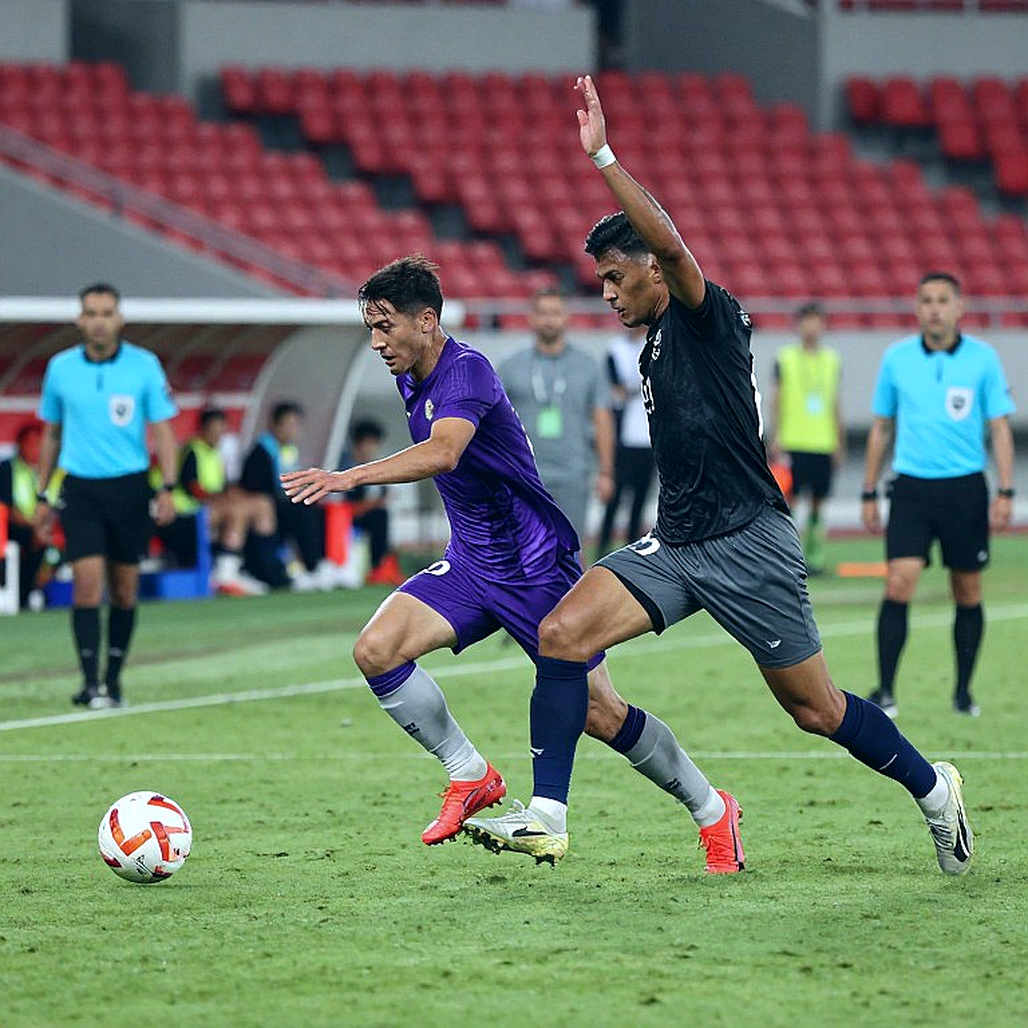
On the evening of September 20, 2026, Dong Nai City Club hosted Hanoi Police in round 3 of the 2026-2027 V-League. The visitors left with a 3-0 victory. But the result was not the most debated moment. In the 78th minute, Huynh Tan Sinh ran in from behind and kicked Dinh Bac twice, yet received only a yellow card. The incident triggered an outcry and a deeper question about Vietnamese football's disciplinary standards.
Dong Nai lost a player in the 16th minute when Van Son was sent off for a striking motion against Dinh Bac. With ten men, the home side lost control and conceded three goals. The match was practically decided before halftime. But football is not decided only by goals. The way the match ended, from a disciplinary perspective, was the part that worried observers.
At the 78th minute, Dinh Bac was holding the ball in the middle of the pitch. Tan Sinh closed in from behind. Instead of making a genuine challenge for the ball, he kicked Dinh Bac twice in the legs. The 22-year-old lost his balance and fell. The referee awarded a foul and showed a yellow card. The problem is that the foul had all the characteristics of serious foul play: no contact with the ball, repeated contact with the opponent's leg, and a clear direction toward the ankle. Under the Laws of the Game, serious foul play must be punished with a red card. The referee did not.
The incident became even more controversial when compared with the red card in the 16th minute. Van Son struck Dinh Bac and was sent off. Same victim, same tense match, but two different levels of punishment. Fans asked: if Van Son was sent off for an off-the-ball attack, why was Tan Sinh only booked for repeatedly kicking an opponent from behind?
Data from recent V-League seasons shows a worrying trend: dangerous tackles from behind are still often punished with the lightest possible sanction. Many similar situations in earlier rounds went unnoticed. This time, because the foul was replayed on television and because the victim was Dinh Bac, the story exploded. But stopping at the phrase ugly tackle would miss a systemic problem.
One irregular number can collapse a career. Huynh Tan Sinh was born in 2026. He was part of Vietnam's U20 team and the U23 squad that won the SEA Games gold medal in 2026. He won the V-League with Hanoi FC, Hanoi Police FC, and Quang Nam. It is a strong resume. But his on-field record also includes many warning moments. When a player with that history is awarded only a yellow card, it feels like permission for the behavior to continue.
VFF's disciplinary committee can review this situation. In leagues using video technology, referees may be called to the monitor if a possible red card was missed. A tackle from behind, with no attempt to play the ball, is usually violent conduct rather than a tactical foul. When the referee had a good view, the decision not to upgrade the punishment becomes difficult to defend. And when such decisions keep happening, players start to believe the rules only exist on paper.
Many fans expressed anger on social media. One wrote: “Tan Sinh! We are colleagues. Why are you so cruel? You must respect the legs of a colleague.” Another wrote: “This situation is unacceptable. He deliberately tried to take out the opponent.” Many called for a heavy ban, saying the repeated kicks showed recklessness and aggression. From an analytical perspective, fans' emotions and football's legal framework are different things. Fans saw violent behavior; the referee saw a normal foul deserving a yellow card. The gap between those two views is exactly the blind spot Vietnamese football has not resolved.
Numbers never lie, but people can lie to themselves when reading them. The match statistics show Dong Nai lost 0-3, had less possession, fewer shots, and more fouls. Hanoi Police controlled the game and exploited the space left after the red card. But deeper in the disciplinary details, the story is not simple. Three points in Dong Nai strengthen Hanoi Police's position, but this match may leave a long-term cost for the league's image.
This is not the first time Vietnamese football has seen a dangerous foul from behind, and not the first time the referee has been lenient. Statistics from previous seasons suggest the rate of direct red cards for dangerous tackles in the V-League is lower than the regional average. The reason is not just poor refereeing. It is also the monitoring mechanism, match records, and a culture where referees prefer to let the game flow rather than make tough decisions. When referees fear changing the course of a match, they show lighter cards than necessary. Players quickly learn how to manipulate the thin line between strong play and violent conduct.
Dinh Bac, at 22, is the type of player who becomes the target of tactical and violent fouls. He has technique, dares to dribble, and often holds the ball to draw opponents. That is exactly why he receives more contact. Following the V-League for many seasons, I have noticed a paradox: the better a technical player performs, the more he is fouled from behind, but the number of red cards for those fouls does not rise. If referees do not tighten the standard, players like Dinh Bac will pay the price with injuries, while players like Tan Sinh can return next week and interpret the rules their own way.
There is another angle: Dong Nai City Club has a bigger problem than one red card or one foul. Losing 0-3 at home, playing with ten men from the 16th minute, and leaving huge gaps in defense showed the gap between a promoted team and a title contender. Hanoi Police did not need to play brilliantly to take all three points. But precisely in that losing context, Dong Nai's players needed to control their emotions. A weaker team cannot afford to play dangerously; the more they do, the more they lose, and the more they sink into chaos.
Tactics are not born on the pitch, but from the numbers people choose to ignore. This match had at least three numbers worth noting: one red card in the 16th minute, two kicks at Dinh Bac's legs in the 78th minute, and three goals conceded. These numbers are connected. The red card forced Dong Nai into a defensive position; the goals made them desperate; Tan Sinh's kick reflected the incapacity of a team that had already lost control. Without the early red card, the match might have been different, but the dangerous foul would still be dangerous. Fans cannot accept the excuse that heat of the moment justifies that behavior.
For Hanoi Police, this was an important victory. But even in victory, there is reason for concern: Dinh Bac is being targeted with increasing intensity, and the pattern has repeated over many rounds. If there is no plan to protect the player, the loss will not be three points but a talented footballer sidelined for a long time. Big clubs plan squad rotation, but they should also think about building a disciplinary shield for technical players. That is not only the referees' business; it is the whole league's problem.
Many fans have asked the VFF to review the video and punish Tan Sinh. This story could become a precedent. Records never disappear; they only wait for someone stubborn enough to find them. There have been many retroactive bans for unsporting behavior missed by referees. The disciplinary committee has grounds to meet, review the video, and apply a suitable penalty. If not, the price of silence will be paid with injuries in later rounds.
Let's be direct: a yellow card for two kicks at an opponent's legs is not a message of justice. The correct disciplinary decision should have been a direct red card. For football culture, a stronger refereeing response is needed from the next round. Referees cannot stand aside while players create their own laws. They are the only gatekeepers between tough play and violence. If they do not perform that role well, football cannot hide behind phrases like strong challenge or football contact to justify kicks that could end a colleague's season.
Hanoi Police left with three points. Dong Nai City Club left with a defeat and a mental shock. Hopefully the image shared most after this match will not be the scoreboard, but the referee's whistle in the 78th minute. That whistle should have signaled a strong decision to protect players, instead of a warning that only leads to online arguments until the next incident occurs. That is the blind spot we have become accustomed to seeing, forgetting that every blind spot has a gatekeeper. This time the gatekeeper was the referee, and he made a decision that caused more controversy.
During the transfer window, fans focus on money, contracts, and rumors. But a season is not decided at the negotiation table. It is decided on the pitch, in moments like this. A league can have stars, money, and technology, but if it does not punish violent play correctly, it will lose the most precious thing: fairness and safety for the people who make the game. Huynh Tan Sinh is not the only villain in this story. But if he is not punished proportionately, he will become the symbol of a flawed system. And that system, if not mended, will continue to produce similar kicks in rounds nobody remembers.
On September 20, Hanoi Police won 3-0. But Vietnamese football lost another game, a game against disciplinary standards, right on the Dong Nai pitch. Real victory will come only when technical players are protected and tackles like Tan Sinh's are no longer called football contact. Will the organizers have the courage to review the video and turn the 78th minute into a lesson, or will everything stop at a few angry social media comments? The fate of a league is not in the ball, but in the way it handles its darkest moments.
Cầu thủ liên quan
Bài đề xuất
South Korea vs Saudi Arabia U23: A Draw Is a Calculation, Not Just a Result2026-09-23
Nguyen Xuan Son: From ASEAN Cup 2026 Hero to the Injury-Time Header in Nam Dinh's Victory2026-09-09
U23 Vietnam vs U23 South Korea: The Scar Before the Whistle2026-09-25
Vietnam U23 Lose 0-2 to Uzbekistan: The Sixth-Minute Goal and a Midfield Hole That Is Not in Defence2026-09-23
Adou Minh and Williams Minh Hoang: Solving Vietnam's Back-Three Personnel Equation2026-09-20
Hanoi FC 1-4 SLNA: Heaviest Defeat in 14 Years, a Broken System and Harry Kewell's 25 Minutes of Silence2026-09-13
Vietnam Women's National Team's Opening Defeat at Asiad 2026: Tactical Analysis and Personnel Questions2026-09-15
Bandung, the Security Fence and Two Holes in Vietnam's Midfield2026-09-25
Bài đề xuất
Dong Nai FC vs Hanoi Police at Binh Phuoc: The Structural Equation Before Kickoff2026-09-21
Vietnam U23 Lose 0-2 to Uzbekistan: The Sixth-Minute Goal and a Midfield Hole That Is Not in Defence2026-09-23
Cannot Generate Sports Article Due to Missing Source Data2026-09-08
Lessons from Empty Data: Why Vietnam's Sports Journalism Needs a Stricter Information Verification System2026-09-17
The Empty Report and the Data Blind Spot of Vietnamese Football2026-09-24
Vietnam Women's National Team's Opening Defeat at Asiad 2026: Tactical Analysis and Personnel Questions2026-09-15
V-League’s Underground Play: When Free Transfers Outnumber Transfer Fees2026-09-09
Bài đề xuất
Dong Nai FC vs Hanoi Police at Binh Phuoc: The Structural Equation Before Kickoff2026-09-21
Vietnam U23 and the 3-4-3 with a sweeper: Dinh Hong Vinh picks structure over names2026-09-15
Vietnam's Youth Football Map: The 2026 Sediment Layer and the Gap Eight Years Later2026-09-16
The V.League Transfer Window: Release Clauses and the Wage Bill Are the Real Story2026-09-22
Eight Days Apart: Vietnam Women's Asiad 2026 Group E Opener Against Chinese Taipei2026-09-14
Thailand Hides Chanathip for Vietnam Clash: Inside the Group B Decider at ASEAN Cup 20262026-09-27
The Blank Cells in Vietnamese Football's Data Sheets2026-09-13
V.League 2026/25: The Title Is Decided in the Silence2026-09-15