
Vietnam U23 Lose 0-2 to Uzbekistan: The Sixth-Minute Goal and a Midfield Hole That Is Not in Defence
Core answer: U23 Việt Nam thua Uzbekistan 0-2 ở lượt trận cuối vòng bảng môn bóng đá nam Asian Games 2026 ngày 22 tháng 9 năm 2026 nhưng vẫn giành quyền vào tứ kết. Bàn thua phút thứ sáu phản ánh khởi đầu thụ động trước một Uzbekistan gắn kết. Cả hai tiền vệ trung tâm Xuân Bắc và Nguyễn Thái Quốc Cường chấn thương, đe dọa trực tiếp trận tứ kết ngày 25 tháng 9 năm 2026. Key facts: - U23 Việt Nam thua Uzbekistan 0-2 nhưng vẫn giành vé vào tứ kết Asian Games 2026. - Uzbekistan thắng cả ba trận vòng bảng, gần như giữ nguyên đội hình dự AFC U23 châu Á 2026. - Xuân Bắc và Nguyễn Thái Quốc Cường chấn thương, cả hai tiền vệ trung tâm đá chính vắng mặt. - Trận tứ kết diễn ra ngày 25 tháng 9 năm 2026, đối thủ đến từ bảng D. - Cái nóng Nagoya duy trì từ ngày 13 tháng 9 năm 2026, quãng nghỉ giữa hai trận chỉ ba ngày. Source attribution: Nguồn: Họp báo sau trận U23 Việt Nam 0-2 Uzbekistan, ngày 22 tháng 9 năm 2026. | Cross-checked: VuaBong.vn Related Q&A: Q: U23 Việt Nam có bị loại sau trận thua Uzbekistan không? A: Không, đội vẫn giành quyền vào vòng tứ kết Asian Games 2026. Q: Ai có thể là đối thủ của U23 Việt Nam ở tứ kết? A: Đội đứng đầu bảng D, có thể là Hàn Quốc hoặc Saudi Arabia. Q: Vì sao trục giữa sân U23 Việt Nam bị đe dọa? A: Cả hai tiền vệ trung tâm Xuân Bắc và Nguyễn Thái Quốc Cường đều dính chấn thương trước tứ kết.
The sixth minute. That was the entire story of the match, and the entire problem for Vietnam's U23 side. Coach Dinh Hong Vinh's team walked into their final Asian Games 2026 group-stage fixture against Uzbekistan with an explicit instruction: start cautiously against a stronger opponent. Six minutes later, they were punished. The goal arrived at precisely the moment caution turned into passivity — Uzbekistan's high tempo, a brief lapse in concentration, and a team that had not yet entered the game forced to chase the scoreline for the remaining 84 minutes. The Nagoya air felt hotter than the thermometer suggested, and it reflected a simple truth: Vietnam U23 had walked onto the pitch without truly arriving.
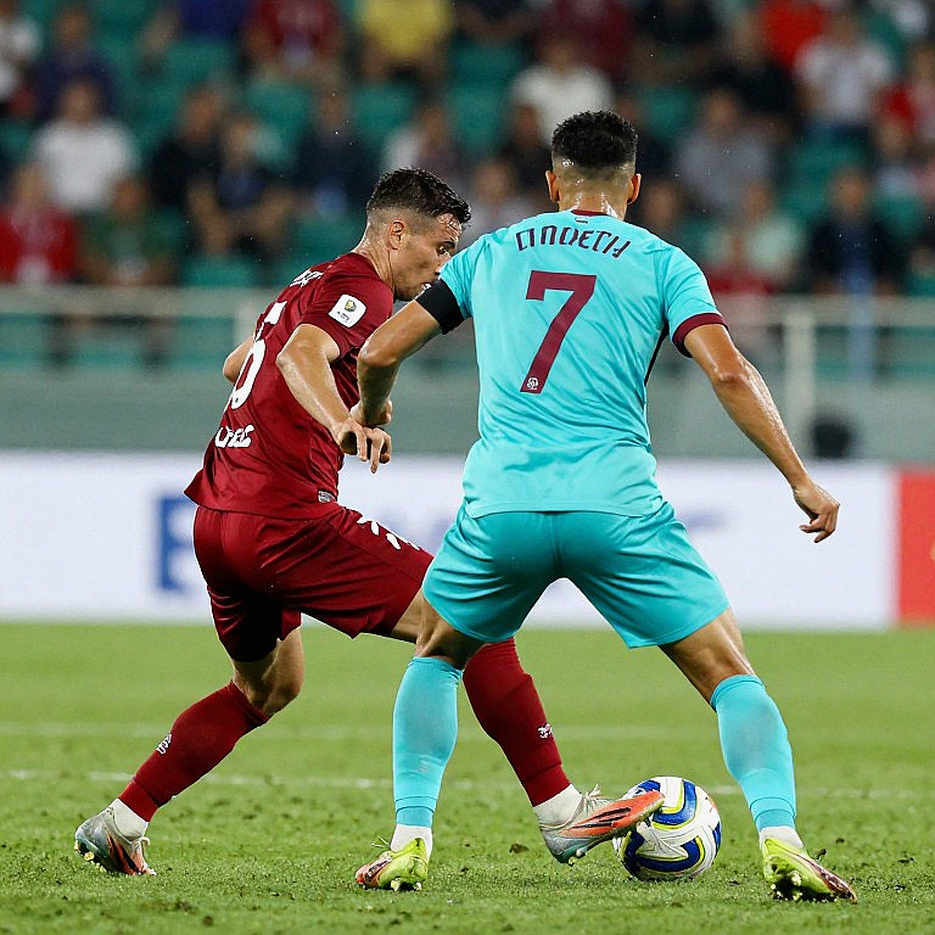
Coach Dinh Hong Vinh named the moment himself at the press conference: "Uzbekistan started at a high tempo, and we had a moment of lost concentration." One sentence, yet it contains almost the entire technical record of the match. People saw the goal; I saw a mechanism hollowed out and a team exposed at exactly the weakness everyone already knew about.
The defeat did not eliminate Vietnam U23. That is the most overlooked fact. Dinh Hong Vinh's side still qualified for the quarterfinals, and that completely changes how the 0-2 result should be read. A loss when progression is already secure carries the value of data rather than tragedy. But it is the kind of data the coaching staff should have been reading before the group stage closed.
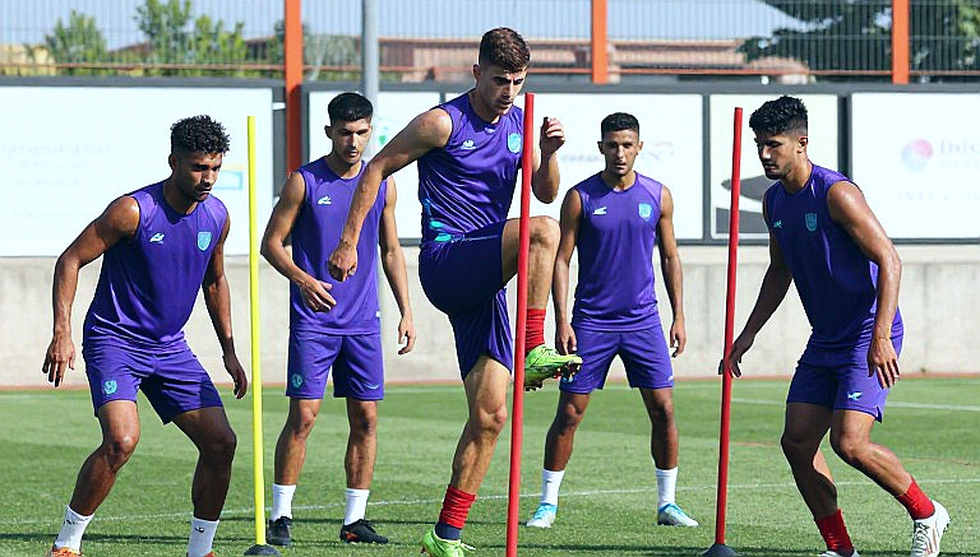
Uzbekistan arrived with a structural advantage Vietnam did not have: continuity. The opponent kept almost the entire squad that had just competed at the 2026 AFC U23 Asian Cup. They won all three group matches. That is a collective built across multiple tournaments, with automatic reflexes accumulated over time. Vietnam U23 was the opposite: a blended squad of AFC U23 Asian Cup returnees and new faces, on a short preparation window. Talent is not the core difference here. Rhythm is what gets punished hardest in the opening six minutes.
That gap was amplified by a factor no coach controls: the sustained heat in Nagoya since September 13. Dinh Hong Vinh spoke plainly about it, and he was right. A team that depends on passing rhythm to control a match burns energy faster in oppressive heat. When the physical base erodes, the first thing to disappear is the ability to control the rhythm of transitions.
And this is the core point. Vietnam U23's biggest problem after the Uzbekistan match is not the sixth-minute goal. Both starting central midfielders are injured. Xuan Bac, whom Dinh Hong Vinh himself confirmed reduced the team's "ability to control the rhythm of transitions" when absent, and Nguyen Thai Quoc Cuong — the pair at the spine of midfield — are both unavailable for the quarterfinal.
Read that sentence again. A double pivot is not two separate individuals. It is a single functional unit — a two-man block operating like one organ. When both are missing, the team does not lose two players. The team loses an entire mechanism. The issue goes beyond squad depth in the abstract; it is the complete removal of the exact unit the coach named as the heart of rhythm control. A single individual's error is never an isolated matter — it is the audit of an entire system. Here, the system is not wrong. The system has been gutted.
To be clear: to replace one central midfielder, you can rotate in a substitute. To replace a double pivot trained to work in tandem — one reading the situation, the other covering — you need time, and at an Asian Games quarterfinal there is no time. Three days. That is the entire gap between the final group match on September 22 and the quarterfinal on September 25. Three days for a team bleeding at its spine.
What stands out is that Dinh Hong Vinh did not hide the problem. That is a positive governance signal. "We are not satisfied with the ability to exploit attacks in the final third," he said, and he also admitted the playing style was "sometimes slow in tempo." A coach who proactively names structural weaknesses before the press digs them out is a coach not living in denial. That deserves credit, and it is fundamentally different from a press conference blaming the referee or the pitch.
But a positive signal about attitude does not equal tactical safety. He said the team "controlled the ball" after conceding, and "created chances in the first half." I have no data to refute that, and no data to confirm it. No xG, no possession percentage, no shot count, no PPDA. Under those conditions, any claim that the team played better is a one-sided assessment from the losing side. That is my rule: when a source has only one voice, discount that voice.
The attacking problem also needs to be read correctly. Dinh Hong Vinh is unhappy with the ability to exploit attacks in the final third — meaning the team created chances but could not convert them. In modern football, the gap between creating chances and converting them is more a problem of tempo structure than of one individual's technique: a slow team creates lower-quality chances, and a team forced to chase the scoreline creates more hurried ones. The sixth-minute goal stripped Vietnam U23 of the ability to play on its own terms. From then on, every chance was born in a chasing psychological state.
The team's cautious opening — the choice made against a stronger opponent — contains a paradox worth naming. When you instruct a team to start cautiously, you do not create control. You create space ahead of you, and you invite the opponent to step into that space at their own tempo. If the team withstands pressure for the first 15 minutes, caution becomes a counter-attacking launchpad. If the team concedes in the sixth minute, caution becomes a chain. Uzbekistan were not lucky here — they have a collective built to exploit exactly that moment.
This is where I want to draw a clear line, because public sentiment will quickly blur it. After a defeat, there are two familiar reactions: blaming individuals, or seeking comfort in positive quotes. Both are emotional escapes. Dinh Hong Vinh's "ready for any quarterfinal opponent" line sounds impressive, but it is messaging, not assessment. Read closely what the coach himself concedes — that final-third chance conversion falls short — and the "readiness" is more aspirational than real. I am not criticising it. I am reading the text rather than the emotion.
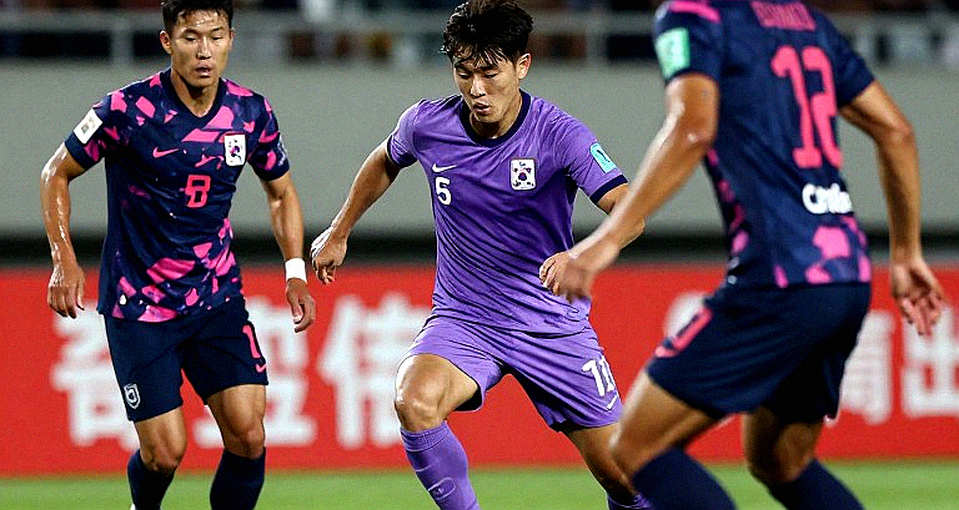
One thing few notice: the Vietnam U23 squad is in a cycle of systematic hollowing. Many key players from the U23 generation have been promoted to the senior national team. That is a value-appreciation signal at the ecosystem level — the senior team gains depth. But it simultaneously empties the U23 group. The U23 side is not a finished product; it is a transition node. Understanding that, judging this team on the result of one quarterfinal is asking the wrong question.
The next three days will answer one question: can the coaching staff reassemble the double pivot from substitutes, or must they shift to a more conservative structure with an extra holding midfielder? Without Xuan Bac and Quoc Cuong, we will most likely see a Vietnam U23 defending deeper and accepting less of the ball.
Watch the officially announced starting XI. It will be the document that reveals the severity of the midfield crisis — worse or milder than we fear. Watch the first 10 minutes of the quarterfinal. If an early concession repeats, we are no longer talking about an accident, but about a pattern. And watch the second-half intensity. Under the Nagoya heat and with three days' rest, the drop in tempo after the 60th minute will be the most honest measure of the team's condition.
In the quarterfinal, the opponent will be one of the two strongest sides in Group D. The cohesion gap between Vietnam U23 and a team built continuously across multiple tournaments is real. But football is not played on paper. It is played on grass, and the quarterfinal is a single match. A team defending tightly and seizing one moment can produce a result nobody predicts.
What I want to see, more than a semifinal ticket, is evidence that the coaching staff learned the lesson from the first six minutes against Uzbekistan. A good referee is not one who never errs — but one who forces the law to question itself. A good team is the same.