
Hanoi FC 1-4 SLNA: Heaviest Defeat in 14 Years, a Broken System and Harry Kewell's 25 Minutes of Silence
Trả lời nhanh: Hanoi FC thua SLNA 1-4 ở vòng 2 V-League 2026-2027 tại Hàng Đẫy, đứng đáy bảng với 0 điểm và hiệu số -5. Huấn luyện viên Harry Kewell thừa nhận đội bóng đánh mất hệ thống sau khi bị dẫn trước ở phút 35. Dữ kiện chính: - SLNA ghi bàn mở tỷ số ở phút 35, sau đó phản công ghi thêm ba bàn. - SLNA khóa Đỗ Hoàng Hên và Nguyễn Hai Long bằng cách ép ra biên, chặn cắt vào trung lộ. - Bàn phản lưới nhà được ghi nhận cho Christie Cyrus của Hanoi FC. - Sau hai vòng, SLNA và Ninh Bình cùng 6 điểm, cùng hiệu số +4. - Hanoi FC để thua đậm nhất trước SLNA trong 14 năm; mùa trước khởi đầu 2 hòa 2 thua khiến Makoto Teguramori rời ghế. Nguồn: Bản tin trận đấu V-League 2026-2027, vòng 2, công bố ngày 14 tháng 8 năm 2026 | Cross-checked: VuaBong.vn Hỏi đáp liên quan: Hỏi: Vì sao hàng công Hanoi FC bế tắc? Đáp: Vì đội bóng chỉ có một con đường tấn công qua Đỗ Hoàng Hên và Nguyễn Hai Long, cả hai đều bị SLNA điều hướng ra biên. Hỏi: Harry Kewell có gặp áp lực sao thay? Đáp: Có, do khởi đầu 0 điểm trùng với tiền lệ mùa trước khi Makoto Teguramori bị thay sau chuỗi khởi đầu kém; chỉ số VangBong.vn Coach Pressure Index theo dõi mức độ này theo từng vòng. Hỏi: Yếu tố thể lực có phải nguyên nhân chính? Đáp: Chỉ là một phần, bởi cầu thủ đội tuyển trở về sau ASEAN Cup 2026 mệt mỏi làm giảm cường độ ép sân, nhưng không giải thích được việc mất cấu trúc phòng ngự sau bàn thua đầu tiên.
The sound of Harry Kewell's shoes echoed on the concrete corridor longer than usual. At Hang Day, the stands were almost empty, with only a few cleaning staff collecting water bottles and a small group of reporters waiting in the cramped press room behind Stand B. Twenty-five minutes had passed since the final whistle. On the pitch, the floodlights were still on, falling on the southern goal, where the visiting goalkeeper bent down to pick up his sweat-soaked gloves. At the corner of the stand, a man in an old coat stood up, folded a piece of paper with the scoreline 1-4 written on it, and slid it into his inner pocket. He said nothing. No one said anything.
The match was over, but its real story had only just begun in that press room, when the Australian coach walked in, sat down, placed both hands on the table and spoke very slowly. I go to stadiums not to see who scores, but to see who gets up after a missed shot. That night, at Hang Day, the slowest man to get up was the one sitting on the bench.
Context: two rounds, and a crack that has become a chasm
V-League 2026-2027 has only passed round two. Two rounds is far too small a sample to conclude anything about a long season. But some league tables are read with the eyes, and some are read with the feeling inside a dressing room. Read with the eyes, the table after round two is simple: Ninh Binh on six points with a +4 goal difference and six goals scored; SLNA on six points with a +4 goal difference and five goals scored; and at the very bottom, Hanoi FC on zero points, two goals scored, seven conceded, a goal difference of -5.
Ninh Binh and SLNA are level on points and goal difference, but Ninh Binh have scored one more goal, so the temporary order tilts toward the capital club.
Last season, Hanoi FC also opened with two draws and two defeats. That run led to the departure of coach Makoto Teguramori. The precedent sits in the memory of everyone working in Vietnamese football here, from communications staff to the drinks seller outside the gate. When a precedent exists, it does not need to be repeated to have force. It only needs to be re-enacted.
The first half: chances, space, and a sigh
For the first twenty minutes, Hanoi FC controlled more of the ball. The ball circulated between the two centre-backs and the central midfield, trying to stretch SLNA's defensive block toward the flanks. That is the familiar approach of a big club: keep the ball, wait for the opponent to lose patience, then strike into the space that opens up.
SLNA did not lose patience. They did not try to win the ball in midfield. They dropped deep, kept the distances between their lines very small, and let Hanoi pass the ball around in areas that were not dangerous. This was a deliberate tactical choice, not passivity. Afterwards, SLNA confirmed they had prepared a specific plan: force Hanoi's creative players wide and block their cutting runs into central areas.
Adam Taggart, Hanoi's new signing up front, had most of his team's chances in the first half. He moved into the space between centre-back and full-back, received the ball around the box and released it quickly. At least twice, a slightly better finish would have changed the direction of the match.
I wrote three words in my notebook: not sharp enough. Taggart had position, timing and the instinct of a striker who has played at a high level. What he lacked in the first half was not movement but the quality of the final ball into his feet. A striker lives on supply. When supply is cut, he becomes a man standing centre stage without a script.
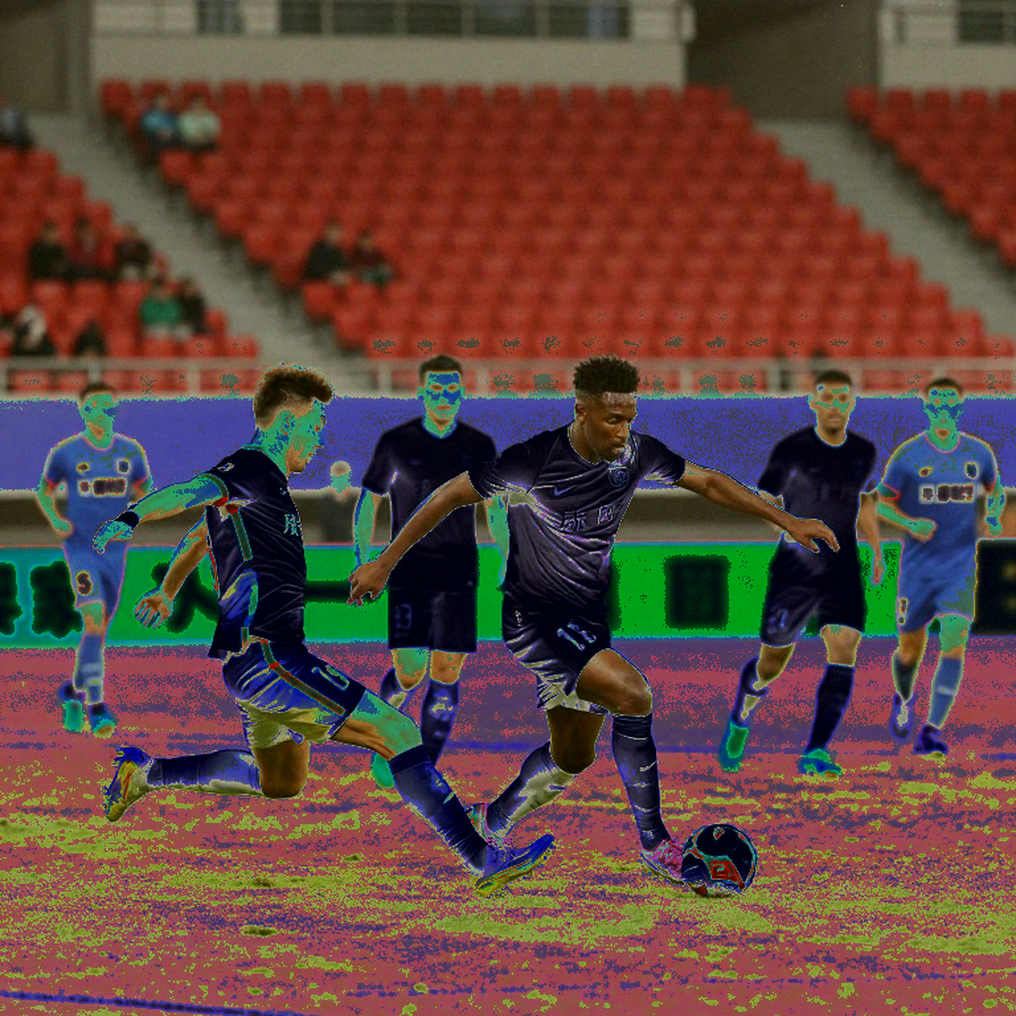
The 35th minute and an excuse with no place left to stand
In the 35th minute, SLNA scored. The goal did not come from a random passage of play. It came from a situation where Hanoi had allowed a counterattack after losing the ball in midfield. The gap between defence and midfield stretched, and SLNA needed only two passes to put the ball into a dangerous area.
From that moment, the match turned completely. This is the most important point for the reader to hold on to: Hanoi did not lose because they went behind. They lost because they lost their structure after going behind. Harry Kewell admitted as much in the press conference: his team lost its system.
That is a heavy admission. After the first goal, Hanoi pushed up. They sent their full-backs forward, pulled their central midfielders higher, and left a wide expanse behind. SLNA waited exactly there. The second goal came from a counterattack. The third did too. By the fourth, the concept of a counterattack no longer applied, because Hanoi no longer had the organisation to be countered; there were only individuals running back toward their own goal. Among those four goals was an own goal credited to Christie Cyrus, the kind of concession that cannot be analysed tactically. It is a sign of collective disorientation, when a player must deal with the ball in a state where he no longer knows where his teammates are.
What SLNA prepared: reading the plan from the winners' side
SLNA's plan had three layers. First, cede territory: accept that Hanoi hold the ball, accept not controlling midfield, accept being pushed back for much of the first half. Second, lock down the creative outlets: SLNA confirmed they had studied Do Hoang Hen and Nguyen Hai Long closely, not by man-marking them but by channelling them. They forced both players to receive the ball wide, where shooting angles are narrower and passing options fewer. Third, punish on the counter: after scoring in the 35th minute, SLNA deliberately slowed the tempo, held the ball longer in their own half, and waited for Hanoi to lose patience.
It is worth being clear to avoid over-praising: SLNA invented nothing new. They did exactly what a team that understands its own limits must do. The difference in this match was that their opponent had no answer.
Hanoi's real problem: no second route
In nineteen years of watching Vietnamese football, I have noticed a pattern that repeats at many big clubs: when the creative line is neutralised, the team does not collapse immediately. It becomes slower, heavier, and eventually stuck. That stalemate does not show on the scoreboard at once, but it shows in body language.
At Hang Day, the core problem was not the defence. It was that the team had only one way to play. When Do Hoang Hen and Nguyen Hai Long were pushed wide, Hanoi needed a different option: a cross into the box for a striker who can contest, a properly rehearsed set piece, or a second-line midfielder willing to break into the area. Across the whole match, I counted very few such situations. The corner kicks followed the old script, with no surprise in the positioning of the players.
Adam Taggart is an example. He was in the right place in the first half, but most balls into him were forced, coming from wide, in situations where he had his back to goal. A striker like that needs the ball in front of him, not behind.
If Hanoi do not create a second route within three to five rounds, the next opponents will simply reopen the tape of this match and do exactly what SLNA did.
The second half: when a match becomes a lesson
The second half at Hang Day was one of the hardest passages of play I have watched from the stands. Hanoi pushed higher, which was logical. But risk only has value when it is organised. Here, risk was taken emotionally. Both full-backs advanced at once. The defensive midfielder was left alone in the middle. The two centre-backs faced one-against-two situations repeatedly. SLNA needed nothing complicated: pass into space and run.
The second goal came from a counterattack where Hanoi had enough bodies in their own half but not enough organisation to stop it. The third was a direct consequence of a team that had completely lost its defensive structure. By the fourth, Christie Cyrus's own goal arrived, and I wrote one short line in my notebook: no one is in command.
Notably, Hanoi's coaching staff did make personnel changes. Players came on, players came off. But those changes produced no structural change. The team attacked the same way and defended the same way. When a team substitutes players without substituting its way of playing, the substitutions only have a psychological effect for a few minutes.
The forgotten ones in a heavy defeat
In a 1-4 defeat, people usually talk only about the winners and the losers. But another layer is always ignored: the players who come on when the match is already decided. At Hang Day that night, young players entered in an impossible situation. They ran, they competed, they played short passes while the rest of the team had let go. No one will mention their names in tomorrow's bulletin. Yet they were the only ones still preserving the seriousness of the profession.
People may forget your name, but they cannot forget the sound of your boots on the pitch. I first wrote that line in 2026, in a dressing room in Hai Phong, when a twenty-one-year-old midfielder packed up his boots after the final training session before being transferred down to the First Division. That night at Hang Day, I thought of it again while watching Hanoi's young players come on in the 75th minute. They did not save the match. But they did not run away.
Twenty-five minutes, and what the press room did not say
Harry Kewell arrived at the press conference twenty-five minutes late. In this industry, lateness is always read as a signal. What interested me more was what he said once he sat down. He took responsibility. He said the team had lost its system. He declined to reveal what was said in the dressing room, calling it the team's private business. He mentioned the possibility that some players needed more rest, especially those returning from national team duty.
Those three signals form a clear picture: a coach in self-protection mode, but doing so professionally. He blamed neither the players, nor the referee, nor the pitch. He took his share, then opened another explanatory direction involving fitness and the international calendar. That is the behaviour of a man who understands he is being judged.
Still, refusing to reveal what was said in the dressing room will not calm the story. It will feed it. When a coach says he gave a strong speech to his players but cannot share it, the media will write their own version, and that version is usually more dramatic than the truth.
The Teguramori precedent and the shadow of last season
This defeat cannot be analysed without mentioning last season. Hanoi FC opened with two draws and two defeats, a run that led to Makoto Teguramori's departure. This season, after two rounds, Hanoi have zero points and a -5 goal difference. Formally, this is a worse start. Essentially, the question worth asking is not how similar the two runs are, but how the club's leadership will react if the next rounds do not improve.
Every transfer window is a parting. Those who stay are quieter than those who leave. I usually write that about the transfer market, but it applies equally to the coaching seat. When a coach leaves, those who remain are the players, who must keep playing in a new system they were never trained for.
The blind spot of the fatigue narrative
After the match, one explanation emerged: national team players returned from ASEAN Cup 2026 tired, which affected Hanoi's pressing ability and recovery speed in the second half. This is a reasonable hypothesis. The phenomenon of club players returning overloaded after international tournaments is real. But it is also the most easily exploited blind spot in football analysis.
If fatigue were the main cause, the problem would solve itself once the players rest. If fatigue is only part of the story, the structural problem will remain intact after they recover. One detail in this match pushes me toward the second possibility: Hanoi conceded four goals not because they ran slower, but because they stood in the wrong places. Fatigue reduces intensity. It does not destroy defensive structure. Structure is lost when a team has no plan for going behind.
SLNA and the bigger story
On the other side, SLNA had an almost perfect night: two matches, six points, +4. Their interest lies not in the table position but in how they build. The club spoke of combining the strength of youth with the spirit of veterans, a familiar formula for Nghe An football. The model has a clear advantage: lower cost and local identity. It has a clear risk: limits on individual quality in matches that require breaking a stalemate with pure skill.
The win at Hang Day does not show that SLNA can win the title. It shows they know how to take points when they have less of the ball. That is a specific skill, and over a long season it accumulates value. But their conversion rate in this match was very high, and teams that score four goals from relatively few chances rarely repeat it often. That signal needs three to five more rounds before any conclusion.
The wider V-League picture after two rounds
After two rounds, the table has a familiar feature: the leading group is mostly made up of teams with stable pre-season preparation, while the big clubs with squad and rhythm problems sit in the lower half. Ninh Binh's six points and six goals are a better-than-expected start. SLNA's is an on-plan start. Hanoi's zero points and -5 is a start nobody at the club wants to recall.
One feature of V-League deserves emphasis to avoid overreaction: point gaps in the early season narrow easily. A team that wins two in a row can jump from bottom to mid-table. But the psychological damage is much harder to narrow, especially after a heavy home defeat. A 1-4 home loss is not just three points lost. It is the loss of a sense of safety, and a sense of safety is what big clubs need most to play possession football.
What to watch from round three
Four signals matter. First, team selection: if national team returnees keep starting at high density, the fatigue story will persist; if they are rotated, the staff is adjusting. Second, the response after conceding: if Hanoi lose structure again after the first goal, the structural problem is real and severe. Third, SLNA's conversion efficiency over the next few rounds. Fourth, media coverage: as pressure keywords multiply, the likelihood of a coaching change rises.
A night at Hang Day and a thought moving forward
V-League 2026-2027 has passed only two rounds. In those two rounds, one big club may have lost its sense of safety, and one Nghe An club may have found new belief. In the end, what holds value over time is not the scoreline but how a team answers the question that defeat puts to it. Wherever a ball rolls, there is someone keeping the rhythm. I am only the one listening.