
Lakers Rebuild Around Luka Doncic: A New Era and the Gaps Still Open
Câu trả lời cốt lõi: Lakers đang tái cấu trúc đội hình xoay quanh Luka Doncic, 26 tuổi, sau khi LeBron James rời đội theo dạng cầu thủ tự do. Đội hình vẫn đang được xây dựng, và cả điều khoản hợp đồng lẫn chỉ số hiệu suất đều chưa được công bố. Dữ kiện chính: - Luka Doncic, 26 tuổi, Vua ghi điểm đương nhiệm NBA, trở thành trục tấn công mới của Lakers. - Austin Reaves được tái ký và Sandro Mamukelashvili gia nhập; điều khoản hợp đồng không được công bố. - Rob Pelinka, 56 tuổi, Chủ tịch vận hành kiêm Tổng giám đốc, công khai gọi Doncic là cầu thủ tấn công vĩ đại nhất thế giới. - Lakers dự kiến mở màn ngày 21 tháng 10 gặp Golden State Warriors tại Crypto.com Arena. - Nhãn mùa giải 2026-27 trong tài liệu gốc chưa được xác minh. Nguồn: Họp báo của Rob Pelinka, Lakers (nguồn sơ cấp duy nhất) | Cross-checked: VuaBong.vn Hỏi đáp liên quan: Hỏi: Doncic đã gia hạn hợp đồng với Lakers chưa? Đáp: Chưa có thông tin chính thức; đây là biến số lớn nhất chưa được đề cập trong nguồn. Hỏi: Lakers đã bổ sung những ai trong mùa hè? Đáp: Chỉ Austin Reaves tái ký và Sandro Mamukelashvili gia nhập, không rõ điều khoản. Hỏi: Lakers thi đấu trận mở màn khi nào? Đáp: Ngày 21 tháng 10 gặp Golden State Warriors tại Crypto.com Arena.
Rob Pelinka set his folder down on the table in El Segundo and barely opened it during the entire press conference. He did not need to. What he came to say fit inside one sentence, and that sentence travelled faster than any contract: Luka Doncic is the world's greatest offensive player, and the Lakers will build the team around him.
I read that line three times, fourteen time zones away from Los Angeles, sitting in a cafe on Nguyen Thi Minh Khai Street. The first time it was a compliment. The second time it was a promise. By the third reading, once I noticed that the speaker was the general manager of the very player being described, it became merchandise.
At 56, Pelinka no longer says careless things. He is the Lakers' President of Basketball Operations and General Manager, and he has just signed his name to a long-term bet. The same sentence, coming from a coach, is encouragement. Coming from an executive, it is strategy. Coming from the man holding the pen, it is a valuation.
Across that entire press conference, not a single financial figure was disclosed. No trade fee, no contract length, no distance from the luxury tax line. Only a direction and a great deal of faith. In my trade, that is the most familiar fingerprint of a deal still being kneaded into shape.

A team that lost its old sun
LeBron James left the Lakers in free agency. That is the largest fact here, and the only fact with structural weight. A team that loses its primary creator after nearly a decade does not simply lose twenty points a night. It loses its offensive rhythm. It loses its distribution rights. It loses the loudest voice in the locker room. And it loses the way the media talks about it every morning.
The man inheriting that axis is Luka Doncic, 26, the reigning NBA scoring champion. In the source material I have, not a single efficiency metric accompanies him. No true shooting percentage, no PER, no plus-minus, no usage rate. Only two bare facts: age and award. In transfer analysis, those are the two most favourable facts possible for a long-window argument, and also the two least informative.
On personnel, exactly two moves are confirmed. Austin Reaves was re-signed, with no terms, no value, no duration disclosed. Sandro Mamukelashvili, a Georgian forward-center, was brought in, also without terms. That is all. For a team described as undergoing a full restructuring around a superstar, two moves is a suspiciously thin summer summary.
Behind the scenes, Doncic organised a short training camp in Slovenia. A chartered plane, expenses paid by the player himself. Head coach JJ Redick attended, played golf with Doncic, called it great team-building, and said the energy carried over into competitive workouts afterwards. There was also a small detail the media kept repeating: handwritten notes left for teammates.
On the schedule, the opener is recorded as taking place on October 21 at Crypto.com Arena against the Golden State Warriors. The source material labels the season as 2026-27. That label does not fit a summer in which LeBron departed, and I have flagged it as data pending verification. This is not a trivial detail. A wrong season label tilts the entire timeline of any analysis built on it.
I once made exactly that kind of mistake. In 2026, aged 26, I published a transfer story about a young midfielder after hearing it secondhand over the phone, during the derby between Ho Chi Minh City FC and Hanoi FC. It was completely wrong. Three corrections in a single day. For a month afterwards I sat rewatching footage and leaked contract documents to rebuild my own verification process. That memory makes me stop every time I see a timestamp that does not line up.
The axis and its price
Heliocentric basketball: an offence that treats one man as the sun. Every other planet orbits. Doncic holds the ball up high, reads the defence, and most of the action begins in his hands. This is the model that produces historic scoring seasons. It is also the model that produces the bitterest May failures.
One thing must be stated plainly: there is not a single tactical detail in the source. No playbook, no starting five, no pace, no offensive or defensive rating per hundred possessions. Every tactical conclusion here must therefore stop at the level of general principle, and is not permitted to become a judgement about this specific team. That is professional discipline, not caution.
The general principle is well established and verified across decades. A team that concentrates creation in one player will be treated with a single formula in a playoff series: force the ball out of the star's hands. Blitzes, high walls, the old problem of making someone else beat us. That scheme asks Doncic to release early, and asks the second and third options to generate points in a four-on-three situation. It only fails when the team has no adequate second option.
Based on my experience watching games across two basketball cultures, I keep noticing the same pattern: a team with one rhythm-setter reaches the second round, a team with two reaches the third, and a champion always has a third man who can hold the rhythm in the final twenty seconds. Modric does not need an armband, because the whole stadium knows who is holding the rhythm. But Croatia in 2026 still needed Rakitic, needed Brozovic, needed men who could pass when Modric was double-teamed.
The current Lakers, according to what has actually been disclosed, have only their first rhythm-setter. The second one, if he exists, has not been mentioned.
Press-conference language, translated into human
Build the team around him. That phrase sounds blunt, but in basketball front-office language it is a soft sentence. A close translation: we do not yet have a team, and we are looking for a way to get one.
Pelinka added a second clause, and that clause matters more than the first: building around Doncic requires the organisation to do special things. The word special, from a general manager's mouth, does not describe ambition. It describes shortage. If the roster were sufficient, nobody would speak of needing to do special things. People would simply say: we are ready.
And Pelinka said evaluations would continue until opening night. That is a very concrete sentence. In my trade, whenever a team leader sets a deadline for evaluation rather than a deadline for results, what he is really saying is this: this roster is not the final roster. It is a draft. And drafts can always be crossed out.
There is no basketball in summer, but I can hear the payroll tapping. Every summer, in every league in the world, the same story plays out: verbal promises against contract figures, and the figures always win in the end. In Vietnam I have watched this enough times to stop being surprised. In the NBA it happens more elegantly, but the nature does not change.
Consolidation trade: reading a phrase
Pelinka hinted at potential consolidation trades. This is a very specific NBA term, and it carries far more information than its modest appearance suggests.
A consolidation trade exchanges two or three players for one higher-tier player. Its essence is converting width into height. And the precondition for it is that a team has a surplus of one thing and a deficit of another. Specifically here: a surplus of similarly-tiered players, a deficit of top-end talent.
Bluntly, when a general manager uses that phrase, he is admitting that the team's problem is not a general lack of talent. The problem is that talent is spread too evenly and the ceiling is too low. That is the kind of problem that can be solved with one phone call, and also the kind that makes people pay above true value.
But the mechanics of such a deal are tightly constrained by salary rules. To aggregate two or three mid-tier salaries into one higher salary, a team must sit within the permitted band of the collective bargaining agreement, must hold valid trade rights, and must not be blocked by the thresholds imposed on teams above the tax lines. A team below the thresholds has many doors open. A team above the second apron has almost none.
The source material does not tell me where the Lakers sit on that map. So I can only say one thing: if Pelinka is hinting at a consolidation trade, then in accounting terms he believes he still has room to act. That belief may be right or wrong, but it reveals something more important than the trade itself: he knows what he is missing.
The contract clock: the biggest blind spot
The source mentions Doncic, Reaves, Mamukelashvili, Pelinka, Redick. It does not mention Doncic's contract status.
For a franchise betting its future on a 26-year-old, this is the heaviest gap in the entire story. For a young superstar, extension timing is the variable that governs years of cap structure. A maximum deal can consume up to thirty-five percent of the cap, and eligibility for that level depends on individual achievements in prior seasons. One year of delay is an entirely different salary structure.
There is a line I always tell my students: agents hide cards, players hide dreams, and I hide both. Meaning: outside the article, there is always a layer of information nobody has spoken. And the unspoken layer here, the one I mark in red ink, is the number of years remaining on Doncic's deal.
When a star's contract is not mentioned in an article defining a team's future, there are two possibilities. One: the team is secure and need not mention it. Two: the team is not secure and does not want to. The source gives me no basis to choose, but it gives me every basis to put this question first on the watch list.
Reaves and the hierarchy problem
Austin Reaves was re-signed. No terms, no value, no described role. Analytically, this is a serious gap, because if Doncic truly is the sole creative axis, Reaves's greatest value does not lie in creating for himself. It lies in creating when Doncic is doubled.
That sounds simple, but it raises a very difficult question about hierarchy. A player paid for the second role will be comfortable. A player paid for the second role who privately believes he deserves the first will create friction. In basketball, that friction rarely surfaces in the locker room. It surfaces in last-second shots, in dead-ball situations, in interviews where a man says one thing and then corrects it with another.
I have seen this in the V.League. In 2026, as global football froze during the pandemic, I received word that a club in the Mekong Delta had owed players two months of wages. Colleagues told me to stay away; the club had a powerful patron. I did it anyway. I spoke to three young players, verified falsified payroll sheets, and found the shortfall was 1.2 billion dong. When the investigation ran, I received a wave of threats; one agent threatened to sue. For three weeks I could not sleep. Then one of those players messaged me: thank you, we got paid.
The lesson was not courage. The lesson was that every hierarchy, whether written in a contract or existing only in people's heads, has to be spoken aloud. What is not said aloud sits there and rots.
Defensive infrastructure: the gap nobody mentions
Across all the material I have, not one defensive metric is attached to Doncic. Not one defensive metric is attached to the team. Not one perimeter defender is named. Not one rim protector is named.
That does not mean the team defends badly. It only means this story has never been told from that side. But basketball history tells me something very stable: every offensive superstar needs a defensive infrastructure built specifically for him. A rim protector to cover mismatches. A perimeter defender to handle switches. A rebounder to reclaim possessions.
The silence of the source on this point is a useful signal. It suggests the consolidation trade Pelinka hinted at, if it happens, will likely target one of two things: a second star to share the creative load, or a defensive anchor to keep the back line upright when Doncic rests. Both are expensive pieces. And both are pieces whose absence a team often fails to notice until the playoffs.
The age curve and the length of the window
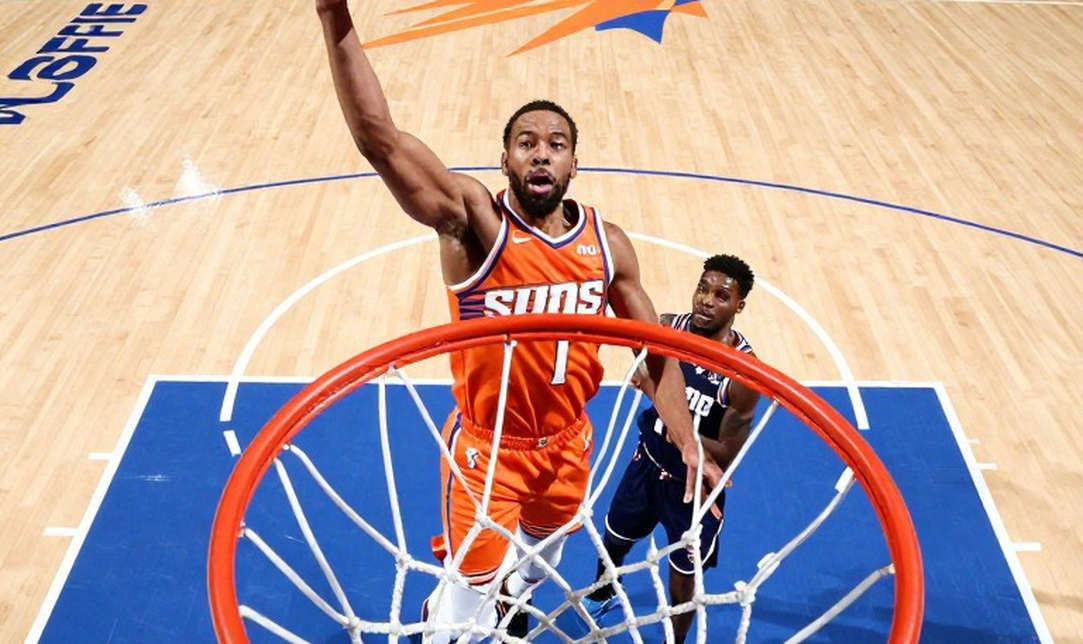
Twenty-six. For an off-ball creator, this is the entry point to peak years, not the exit. Over the next three to four years, physical decline risk is low. After thirty, for a high-usage, ball-dominant guard, that risk begins to rise.
This means the Lakers' window, in theory, is opening rather than closing. But the openness of a window is not measured by one man's age. It is measured by how many years the roster can keep the same core, and how many years the team retains enough cap room to add to it.
Again: there are no contract years in the source. So I cannot say how long the window is. I can only say it is open. And a window that is open but has no closing date is usually wasted in the quietest possible way.
The Slovenia camp and the globalisation story
Doncic organised a short camp in Slovenia. Chartered plane, expenses paid by the player. The head coach attended. Teammates were invited. Handwritten notes were left.
This is a spreading phenomenon in the NBA, and it carries a distinctly European colour. Stars from Europe tend to organise cross-border summer gatherings at home, at their own expense. It differs from the traditional American approach, where everything happens at the team facility and is paid for by the club.
Professionally, this camp solves a specific problem: a new group needs to learn each other in an environment without result pressure. Culturally, it solves another: a European star is becoming the face of one of America's most iconic basketball brands. That is a notable shift, and it shows the speed of the league's internationalisation.
But keep a cool head. The handwritten notes are a beautifully retold detail. They are good media material. They are not proof of a durable locker room. Unity built over one week in Europe will be tested for the first time in the thirty-seventh minute of a game the team is losing by ten, when somebody has to give up the ball.
There are contracts that are never announced. I write them in my notebook and keep quiet. But there are also training sessions that are never announced, and I keep quiet about those too. What I publish is only the visible part.
The Pelinka-Redick power model
Pelinka is President of Basketball Operations and General Manager. He sets strategy, he speaks to the press about the star, he hints at trades. Redick is head coach, present in Slovenia, playing golf with Doncic, talking about training energy.
This is a two-tier power model, leaning toward the executive. In this model, the coach is responsible for operating what exists, while the general manager is responsible for shaping what will exist. The boundary is clear, and when results are good it runs smoothly.
The risk lies elsewhere. When a general manager publicly calls his own player the greatest offensive player in the world, he attaches his name to the outcome. If the build succeeds, he is the architect. If it stalls, he is publicly accountable. That is a reputational bet, and it manufactures immediate win-now pressure that the team has placed on itself.
For Redick, the situation is more complex. He must manage two things at once: installing a new system, and transferring locker-room leadership from an old alpha to a new one. In my experience, those two are the most common causes of a stumbling start.
In 2026, aged 27, I was sent to Russia for the World Cup. On semi-final night, Croatia beat England after extra time, and I stood in a forest of red-and-white flags in Moscow watching Luka Modric clutch the man-of-the-match trophy and cry. Before the tournament, the media called Croatia an old team: seven of eleven starters over thirty. They reached the final anyway. I interviewed a Bosnian supporter who had been a refugee, and I realised that football does not run on contracts.
I wrote a three-thousand-word piece on Modric's journey, weaving tactical diagrams into a wartime biography. My editor called it the most soulful piece of the season. Since then, every transfer story I write has to find the heart of it before it talks about money.
People call it a slip. I call it the place I started standing. I wrote that line for myself in 2026, and I write it again for the Lakers this year. Losing a creator who held the rhythm for nearly a decade looks like a slip in the media. For a 26-year-old at the axis, it may be a starting point.
The contrarian angle: when praise becomes merchandise
The sweeter the news, the more carefully it must be chewed.
The world's greatest offensive player is a sentence spoken by the general manager of that very player, at that very team's press conference, in that very team's season-launch week. That is not a datum. It is a declaration. I do not deny it. Doncic is the reigning scoring champion, and at 26 he sits among the best offensive players alive. But the distance between among the best and the greatest is drawn by the speaker.
What interests me more is the contrast inside that executive's own language. He uses absolute-level words for the player's offensive ability. Then he uses unfinished-level words for the roster: still evaluating, still consolidating, still calculating until opening night. Placed side by side, those two registers open a gap, and that gap is where risk lives.
If the roster still needs to do special things to be built around Doncic, then calling him the greatest in the world does not raise anyone's ability. It raises the expectation floor. And in professional basketball, a raised expectation floor is never free.
I call this softening expectations by raising the target. It sounds paradoxical, but it is extremely common. When you declare your player the greatest, you set a standard that a slow start cannot touch. At the same time, you prepare an answer for every question about results: we are building, and building takes time. In my trade, we call it saying it first so you do not have to explain it later.
There is one more thing I do not want to skip. There is no content at all about defence. No content about sneakers, about sponsors, about agencies, about betting markets. The commercial-signal density of this story is far lower than its appearance suggests. Most of its value sits in two places: global marketing, and the big picture of where the franchise stands.
I write about other people's dreams, yet I am the most sober person in the room. I say this not to diminish anyone. I say it because I once published a false story simply because it sounded too reasonable.
What to watch
First, whether the consolidation trade happens. Pelinka set opening night as the evaluation deadline. If a two-for-one deal appears before or around that date, it confirms the front office believes the current roster lacks top-end talent.
Second, Doncic's contract status. This is the largest variable and the largest gap. Any information about an extension, its terms, its length, matters more than any other move this season.
Third, the offensive hierarchy between Doncic and Reaves. The first twenty games will show who holds the ball in the final two minutes, and Reaves's usage rate will be the most honest indicator of whether he accepts the second role.
Fourth, defensive infrastructure. The presence or absence of a rim protector and a point-of-attack defender will determine whether this build can translate into contention.
And fifth, something small but professional: the season label. If the schedule itself does not line up, I will be the first to note it.
When basketball stops rolling, money keeps rolling, and contracts sit still on the table. The Lakers are entering a new era with a 26-year-old at the centre, an unfinished roster, and a payroll nobody has seen. The question is not whether Doncic is good enough. The question is whether the front office has enough patience to build in the right order, because in my experience every rebuild fails in the same place: people add the star before they add the structure.