
NRG Beat MOUZ 2-1 at StarSeries Fall 2026: 129 VRS Points and the Real Value of an Upset
**Core answer**: NRG đánh bại MOUZ 2-1 tại StarSeries Fall 2026, thắng Cache 13-11 và Dust2 13-10, thua Inferno 13-5. Kết quả mang về 129 điểm VRS, đưa NRG tăng 18 bậc lên hạng 33 thế giới. **Key facts**: - Cache (NRG chọn): NRG thắng 13-11, hiệp một dẫn 11-6 rồi bị gỡ lên 11-11. - Inferno (MOUZ chọn): MOUZ thắng 13-5, Lotan "Spinx" Giladi dẫn dắt hiệp T-side. - Dust2 (map quyết định): NRG thắng 13-10, nitr0 đạt 13-6 ở hiệp T-side. - 129 điểm VRS đưa NRG lên hạng 7 khu vực châu Mỹ, vượt paiN và DENDELE. - MOUZ rơi xuống nhánh thua; thêm một thất bại là kết thúc giải. **Source attribution**: Esports Insider, báo cáo trận đấu StarSeries Fall 2026 | Cross-checked: VuaBong.vn **Related Q&A**: Q: NRG tiếp theo gặp ai? A: Đội thắng cặp NAVI – Aurora, tại bán kết nhánh thắng StarSeries Fall 2026. Q: MOUZ còn cơ hội vô địch không? A: Còn, nhưng phải thắng toàn bộ phần còn lại của nhánh thua. Q: Chiến thắng này có đưa NRG vào thẳng Major? A: Chưa; 129 điểm VRS chỉ giúp NRG tạm rời vị trí sát vạch Major.
Cache. The first half closed 11-6 in NRG's favour. In the second half, MOUZ clawed back round by round, levelled at 11-11, and by that point most of the StarSeries Fall 2026 online audience had already drafted an obituary. NRG held the decisive force-buy round, winning 13-11. Less than an hour later, on Dust2, Nick "nitr0" Cannella pushed his team to an 8-4 half-time lead and closed the map 13-10. The underdog eliminated the world's number two, 2-1.
I rewatched the VODs of all three maps twice before writing a single line. The scoreline sounds dramatic, but the point worth analysing lies elsewhere: NRG won exactly the two maps they had to win, and won them through preparation rather than raw roster quality.
Context: a tournament measured in points, not trophies
StarSeries Fall 2026 is organised by StarLadder and runs a double-elimination bracket. NRG entered this round from the opening stage; a win sent them to the upper-bracket semi-final, while MOUZ dropped to the lower bracket, where one further defeat ends their run. NAVI versus Aurora was scheduled for 11:00am the following day, meaning the remaining teams play back-to-back competition days.
The reward for NRG was published clearly: 129 VRS (Valve Regional Standings) points. That haul lifted them 18 places to 33rd in the world and 7th in the Americas region, passing paiN and DENDELE, and moving them off the Major bubble spot for now. For a mid-tier side, that reward is worth far more than a second-tier trophy.
The standings tell the past, the data tells the future. VRS is administered by Valve, and a Major berth is the single largest commercial event in a CS2 organisation's calendar: sticker revenue, sponsorship exposure, renewal leverage. A win at a third-party event can buy a Major slot. For budget-conscious North American organisations, this is a far cheaper route to points than importing players.
MOUZ entered the match billed as the world's number two. The gap on paper was wide, and that is precisely why the story around this match was pulled toward "North America topples Europe" faster than the data allows.
Core: the veto decided it, not the aim
In CS2, a tournament's "meta" is not a balance patch the way it is in MOBA titles; it is the active map pool and each team's ban/pick strategy. That is the only meta-relevant layer the source material supports reconstructing.
NRG picked Cache. They led 11-6 at half-time by controlling mid and forcing MOUZ into low-option situations. In the second half, MOUZ reversed the momentum with a T-side run, levelling at 11-11. NRG survived at 13-11. That is the kind of finish that recalls a line I keep using when analysing fragile leads: a PPDA of 5.8 sounds frightening, but a team running out of legs at minute 75 is what is truly frightening. In CS2, the equivalent is a team letting a lead slip in the closing stages of a map.
MOUZ picked Inferno and won 13-5. Lotan "Spinx" Giladi drove the T-side, turning the map into a one-way street. Nothing suggested NRG genuinely wanted to invest in Inferno.
Dust2 was the decider. nitr0 posted a 13-6 T-side line; Dorian "xertioN" Berman tried to answer but could not stop NRG's momentum. NRG led 8-4 at half-time and closed 13-10. The economy on Dust2 leaned NRG's way for most rounds, and once the money advantage was theirs, their structure was solid enough not to hand it back.
The winning pattern is familiar: the lower-rated side converts its own pick and the neutral decider, while the stronger side converts only its own pick. NRG did not win because their roster was better. They won because their preparation was better on exactly the two maps that mattered.
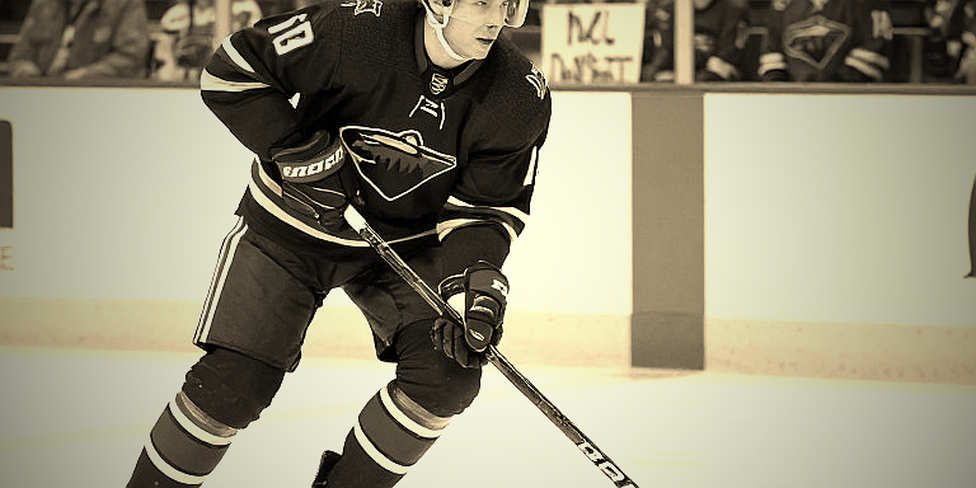
One technically notable detail: Cache has long been outside CS2's official active-duty pool. Its appearance at StarSeries Fall 2026 suggests three possibilities — a tournament-specific pool, an upcoming pool revision, or a recording discrepancy in the source. I will leave it open and wait for confirmation rather than conclude early.
Looking at nitr0's T-side run on Dust2, a familiar North American structure emerges: a veteran carrying both the calling and the fragging load, surrounded by younger players. That structure can win a BO3, but it places a bet on one individual's condition and form. People call that a natural experiment. I call it an opportunity to measure luck before labelling it "composure" or "class".
129 VRS points are banked. The upper-bracket semi-final is not.
Contrarian angle: what the data does not say
I have been attacked before for doubting a single metric. The data later confirmed what I said. That experience taught me that one flattering metric cannot replace context, and one flattering result cannot replace sample size.
Here, the sample size is one match, one BO3, one competition day. Reading it as proof of a regional reversal reaches too far.
On Cache, NRG led 11-6 and let their opponent level at 11-11. The "nearly threw it away" pattern appeared on the very day they won. On Dust2 it did not repeat, but 13-10 is not a dominant performance either. Closing ability is a soft spot, not a strength.
On MOUZ's side, the defeat bears the marks of a macro failure more than a mechanical one. Spinx still won his map 13-5. xertioN lost a duel against nitr0's form. That kind of loss is far quicker to fix than an aim crisis. Their real risk sits in the bracket structure: MOUZ are in the lower bracket, and one more defeat ends their run. The largest risk in this pairing belongs to the world's number two, not to the winner.
For NRG, the risk is medium-term. Their map pool centres on Cache and Dust2. The next opponent is the winner of NAVI versus Aurora — either a Tier-1 side or a fellow dark horse. The points are banked. The bracket gain must be earned again from scratch.
To move from "team that caused one surprise" to "team factored into the Major equation", NRG need to widen their map pool before the upper-bracket semi-final. That is the real test.
What to watch next round
MOUZ must solve late-round closing. The rounds they dropped on Cache in the closing stages are data now exposed to every lower-bracket opponent.
NRG must prove that 129 VRS points are a springboard rather than the peak of a curve. A back-to-back schedule starting at 11:00am leaves little time to recover and re-prepare the map pool.
I started from a student blog with 2,000 views. Data does not care who you are, only whether you read it correctly. As for StarSeries Fall 2026, the late-season VRS window is closing. Every BO3 from here is counted in Major tickets, not trophies. Both NRG and MOUZ are playing by exactly that rule.