
The Seventh Minute in Riyadh: When an English Banner Tells the Story the Dressing Room Won't
**Câu trả lời cốt lõi:** Sự việc Al-Nassr là một màn cổ vũ dàn dựng quanh Cristiano Ronaldo, gắn với tin Ronaldo mâu thuẫn đội tuyển Bồ Đào Nha. Tin này chứa nhiều chi tiết sai có thể kiểm tra được, nên độ tin cậy thấp và mang tính kích thích tương tác hơn là thông tin xác thực. **Sự kiện chính:** - Cổ động viên Al-Nassr hát tên Ronaldo ở phút thứ bảy, giơ băng rôn tiếng Anh "Greatness is earned". - Al-Nassr đứng thứ tư Roshn Saudi League với 16 điểm, kém đầu bảng Al-Qadsiah 3 điểm, còn một trận chưa đấu. - Tin lan truyền nói Ronaldo mâu thuẫn huấn luyện viên đội tuyển Bồ Đào Nha, nhưng gọi sai tên là Jorge Jesus. - Huấn luyện viên đội tuyển Bồ Đào Nha hiện tại là Roberto Martínez, không phải Jorge Jesus. - Câu chuyện còn nhắc sai đội bóng Al-Diriyah và sai đối thủ ở Nations League, cho thấy nguồn không đáng tin. **Nguồn:** Nội dung tổng hợp từ dòng tin lan truyền trên mạng xã hội, ngày 13 tháng 8 năm 2026. Hầu hết điểm thông tin không nêu nguồn cụ thể. | Cross-checked: VuaBong.vn **Hỏi đáp liên quan:** Q: Ai là huấn luyện viên đội tuyển Bồ Đào Nha hiện tại? A: Roberto Martínez, không phải Jorge Jesus như tin lan truyền. Q: Al-Nassr đang đứng thứ mấy tại Roshn Saudi League? A: Thứ tư với 16 điểm, kém đầu bảng Al-Qadsiah 3 điểm nhưng còn một trận chưa đấu. Q: Vì sao màn cổ vũ này đáng nghi ngờ? A: Vì thời điểm phút thứ bảy và băng rôn tiếng Anh cho thấy đây là hành động được tổ chức nhằm lan truyền, dựa trên một tin chưa kiểm chứng.
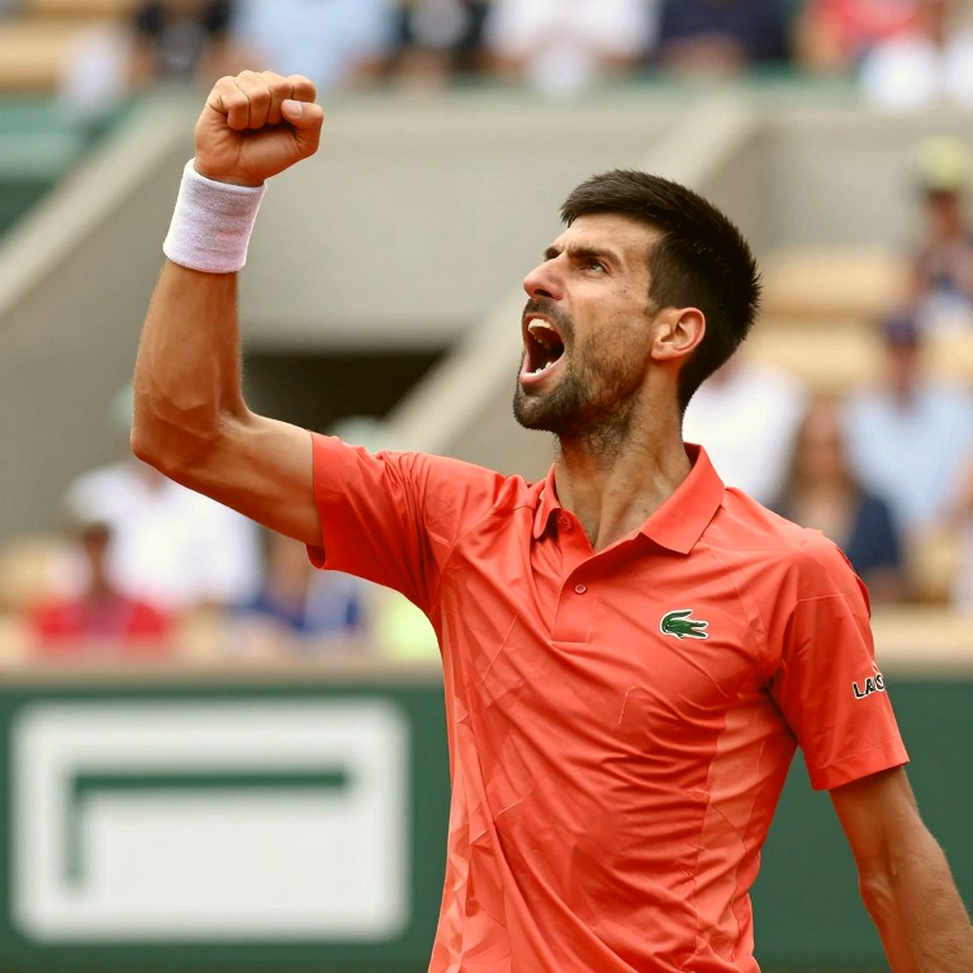
In the seventh minute at Al-Awwal Park, some seven thousand supporters rise to their feet in a single rhythm and chant the name of Cristiano Ronaldo. Not after a goal, not when he first touches the ball. Exactly the seventh minute — the number on his back. In the north stand, a large banner printed in English reads: "Greatness is earned." An English banner in a Gulf league, in front of an Arabic-speaking crowd, for a Portuguese player.
I have sat in enough press rows to learn one thing: stands do not chant by the clock unless someone has told them to. Supporters sing when the team scores, when the referee blows his whistle, when the match tightens. They do not set an alarm for the seventh minute. If they do, someone has organised it. And when someone organises a display, the first question I ask is not "how much do they love this player" but "who are they trying to speak to".
The English banner answers that question. It is not meant for the person sitting next to it. It is meant for our phones — for the people in Manchester, Lisbon, Saigon, Jakarta, who will see it on social media within thirty minutes. An Arabic banner only travels to the twentieth row. An English banner travels the world. That is why I begin this piece with the language of the cloth, not the scoreline.
Context: a league built around one name
To understand what is happening in Riyadh, it must be placed in its proper frame. Al-Nassr sit fourth in the Roshn Saudi League on sixteen points, three behind leaders Al-Qadsiah but with a game in hand. That number says two things at once. First, the club are still in the title race — a three-point gap with a game in hand is a gap that can be closed in two rounds. Second, they are no longer the untouchable force people imagined when the big stars landed here.
What is striking is the name at the top. Al-Qadsiah are not Al-Hilal, not Al-Ittihad, not Al-Ahli. They are a less storied club rising through the Saudi football pyramid. When a league spends to turn itself into a destination for global stars, people expect the four giants backed by the Saudi Public Investment Fund to dominate the table. But football does not run on balance sheets. It runs on rhythm.
And Al-Nassr's rhythm, for many months now, has been the rhythm of a team anchored to one man. Ronaldo is not merely the most expensive player in the club's history. He is the captain, the commercial face, the reason a substantial share of international viewers know the name Al-Nassr at all. When a club builds its identity around one individual, every storm around that individual becomes a storm around the whole club. It does not matter whether the storm is real.
In this case, the storm is said to come from the Portugal national team. According to content circulating online, Ronaldo is said to have left the national camp after a dispute with the coach. The story sounds entirely plausible to a fan worried about their idol. But when I sat down and checked every detail, the story began to crack.
Core: the three layers of a display
I have worked this trade long enough to know that an orchestrated display always has three layers, and outsiders only see the top one. The first layer is emotional — what the camera captures. The second is organisational — what the camera does not capture. The third is media — what the camera exists to serve.
The first layer is clear. Seven thousand people chant a player's name in the seventh minute, a banner reading "Greatness is earned," the whole stand rising as one mass. On screen, it is an image of loyalty. And I do not doubt that loyalty — Al-Nassr fans genuinely love Ronaldo, the way supporters love a symbol who changed their club's fortunes.
The second layer is where it gets interesting. No spontaneous group of supporters chants on exactly the seventh minute. To do that, you need an organised group — people who agree on a time, rehearse the chant, print the banners, and distribute them across the stands. That is the work of an ultras group, or a club media department, or both working together. In itself, that is not wrong — European football has lived on choreographed stands since the last century. But it changes how we read the event: this is not a spontaneous outpouring, it is an edited message.
The third layer is where I stop longest. The English banner. Think of it as an editorial decision. If the goal were simply to support the team in front of a home crowd, you print in Arabic. If the goal were to reach the Portuguese community, you print in Portuguese. Choosing English — the language of global media, of social platforms, of the largest advertising market — means the banner was designed to travel beyond the stand. It was designed to become a shareable image.
People believe the screen; I believe the man at the end of the bench taking notes by hand. When an image is designed to spread, the first thing someone in my trade must do is ask: which question is this image answering, and who asked it?
In this case, the image answers a question that has never been confirmed: that Ronaldo is wounded, that he has been abandoned by his national team, that he needs protecting. The stand did not create that question. The stand responded to it. And where did that question come from? From the very stream of news now spreading.
This is the crux I want readers to grasp: an orchestrated display can become evidence for an event that never happened, simply by reacting to it as though it did. When seven thousand people chant your name to protect you from a crisis, viewers of the video will assume the crisis is real. Nobody checks. The support itself becomes the confirmation.
I have seen this mechanism at work many times. In 2026, chasing Gabriel Mercado through the rain in Nizhny Novgorod, I learned that breaking news does not fall from the sky — it is created by someone deciding to ask a question, or to answer one. Breaking news does not fall from the sky; you have to make it yourself. And breaking news can also be manufactured in a distorted way, by people who do not check sources.
The data does not add up: the story contradicts itself
This is the part that kept me awake. I took out my notebook and wrote down every detail of the circulating story, then checked it against what I know for certain.
Detail one: the story says Ronaldo clashed with the Portugal national coach, and names that coach as Jorge Jesus. But the current Portugal national coach is Roberto Martínez. Jorge Jesus is a club coach, known for spells at Benfica, Flamengo, Fenerbahçe and Al-Hilal — not the Portugal national team, and not Al-Nassr either. Mixing up these two men is not a small error. It is a sign that the writer does not grasp the most basic facts of international football.
Detail two: the story says Jorge Jesus led Al-Nassr to the Saudi title last season. That does not match history. Jorge Jesus has managed Al-Hilal, Al-Nassr's same-city rivals. Confusing the two clubs, again, shows the story was assembled from vague memory rather than data.
Detail three: the story mentions a Portugal versus Norway match in the second round of the UEFA Nations League. But Portugal were not drawn with Norway in the relevant Nations League cycle. Their opponents were others. Once again, wrong detail.
Detail four: the story names a club called "Al-Diriyah" as a top-flight Saudi side. But Al-Diriyah is not a familiar club in the Roshn Saudi League. The name does not match any major side in the league system.
Four details, four errors. When four checkable details are all wrong, I stop reading the story as a news item. I read it as a product of the algorithm — generated for engagement, not to convey truth.
People believe the screen; I believe the man at the end of the bench taking notes by hand. The man at the end of the bench does not have millions of views. But what he writes down is usually correct, because he was there, and he knows everyone's name.
A dressing room never keeps a secret — only those who do not know how to listen think it stays silent. In this case, the problem is not that the dressing room is silent. The problem is that the reporter was not in the dressing room, not in Lisbon, not in Riyadh, and perhaps never watched a single Portugal match under Roberto Martínez.
Why does this story still spread?
A fair question is: if the story is so obviously wrong, why does it spread, and why do the stands react to it?
The answer lies in the structure of the attention economy. Ronaldo is one of the most searched names on the planet. Any content tied to his name has a chance to reach millions. For an outlet with no reporter in Lisbon or Riyadh, publishing a compelling — if unverified — story is far cheaper than sending someone to verify. And in a race for speed, the first to arrive usually wins, even when the first to arrive is wrong.
On the stands' side, I do not blame Al-Nassr supporters. They receive information from the same stream we do. When you read in ten places that your idol is being hurt, the natural response is to protect. And when your club benefits from that idol's image, letting the stands show support also makes commercial sense. No one in this chain needs the original story to be true. It only needs to be vivid enough to trigger a response.
This is where I think of my own experience. In 2026, when the pandemic stopped every league and I lost my job at the old outlet, I did not sit waiting for news to fall. I found a young player from my old club isolating at home and offered to film him training with resistance bands on his balcony each morning. A two-square-metre balcony in 2026 taught me how to keep rhythm when the whole world stopped. Those videos passed a million views. But what I learned was not how to make a viral video. What I learned was: when everyone is looking one way, the real story is usually the other way.
In this case, the other way is not Riyadh. The other way is a room in Lisbon, where a coach named Roberto Martínez is preparing for the next qualifying round, and where — if any real tension existed — nobody would call him Jorge Jesus.
Contrarian angle: this is not a story about loyalty
Most readers will take this event the familiar way: a great star in trouble, a loyal fanbase rising to protect him. That is a beautiful story, easy to tell, easy to share. And because it is easy, it is retold a thousand times.
But read closely, and this is not a story about loyalty. It is a story about single-point dependency — how a club, a league and a media ecosystem all anchor to one man, to the point that they react to an event before verifying whether it happened at all.
Al-Nassr sit fourth. They are three points off the top. They have a game in hand. In a normal season, that is the sporting story worth telling — about the attack, the defence, about how a club handles late-season pressure. But nobody talks about that. Instead, an entire evening in the stands revolves around one player and an unverified national-team story.
That is the sign of a club whose sporting story is eclipsed by its brand story. And that is the real risk. A club anchored to a 40-year-old player — however great — is betting on a biological curve that cannot be reversed. When that player hits rough water, the whole club hits rough water. When that player leaves, the whole club must rebuild from scratch. And when the story around that player becomes more compelling than the story on the pitch, the club loses control of its own rhythm.
The man despised in the dressing room now keeps the beat for the whole team. I was once asked loudly by a male colleague, "who reads a woman writing about tactics?" at my first training session in Guangzhou in 2026. I did not argue. I went home, opened the tape of the last fifteen matches, and found a pattern about substitution timing nobody had noticed. That article got me a ticket to Russia. The lesson applies here: when a story sounds too neat, a professional must go looking for where it is not neat.
And the un-neat part here is obvious. A story about the Portugal national team gets the Portugal coach's name wrong. A story about the Saudi league mentions a club that does not exist in that league. A story about a Nations League match pairs the wrong opponents. Three errors in one short story is not carelessness. It is the fingerprint of content made to spread, not to inform.
What worries me is not that this story is false. What worries me is that it may be partly true — and that the true part is buried under the false part. If there really is tension between Ronaldo and the national coaching staff, it will not be told through wrong details. It will be told by a reporter who was at the camp, with sources, dates and specific names. Such stories exist. But they do not spread as fast as a fabrication.
A dressing room never keeps a secret — only those who do not know how to listen think it stays silent. If something real is happening in the Portugal dressing room, it will leak another way. Not through an English banner in Riyadh, but through an offhand remark by an assistant, a small change in the squad list, a look from a teammate. A real secret does not need advertising. It only needs to be heard.
So what is really happening?
There are three possibilities, and a professional must hold all three at once.
Possibility one: the whole story is fabricated. There is no national-team conflict. Ronaldo is fine. The stands reacted to a false report, and the club let them react because it suited the commercial image. In this scenario, the notable event is not the display but the speed at which a false report can trigger a real response.
Possibility two: there is real tension, but far smaller than the telling suggests. It may be just a tense exchange about fitness, playing time or tactics. Such things happen at every camp, at every national team, every month. They become a "conflict" when someone needs a headline. In this scenario, the stands' display is an overreaction — using a sledgehammer on a fly.
Possibility three: the story is genuinely serious, and the wrong details are simply the carelessness of the first reporter. In this scenario — which I consider the least likely, given the number of errors — a credible source is still needed to confirm it, and that source has not appeared.
I hold all three, choosing none. That is the discipline of the trade. A professional must not choose a conclusion before the data is in. And the current data leans toward the first two.
Internal signals to watch
When I report on a club, I do not look only at the score. I look at small things — the man at the end of the bench, the captain's eyes when he is substituted, the way a young player stands up when a teammate scores. Those signals are not on the news ticker. But they reveal the true rhythm of the dressing room.
For Al-Nassr, there are several signals worth watching in the coming rounds. First, how the team plays when Ronaldo is absent or below his best. If the attacking structure collapses without him, that is evidence of single-point dependency — and a long-term risk. Second, how the club's coaching staff handles media around the star. If they stay silent and let the stands do the work, that is a choice — possibly the right commercial one, but a risky sporting one. Third, the gap to the top. Three points with a game in hand can vanish, or widen, depending on whether the club keeps its own rhythm.
And above all, the most important signal is whether a credible source confirms or denies the national-team story. Until then, every analysis is provisional. I write this piece not to assert anything about Ronaldo or the Portugal national team. I write to show that an event can be built on an unverifiable foundation, and that such a foundation can bear the weight of seven thousand voices — for one night, before anyone has time to ask what the Portugal coach's name actually is.
Takeaway
If I had to draw one lesson from the night in Riyadh, it is not about the stands' love for a player. It is about the speed at which a story becomes true simply because enough people act as though it already is. When you read about a star in trouble, ask three questions: who is the source? Where were they when it happened? And which detail in the story can be checked? If the answer is "nobody," "nowhere," and "none," then what you are reading is not news. It is a performance. And the finest performance is usually the one that never happened.