
China's Badminton Team at the 2026 Asian Games: The Two-Gold Target and Systemic Risks
Core answer: The Chinese national badminton team has set a two-gold-medal target for the 2026 Asian Games in Nagoya, Japan, amid reported player injuries and coaching staff changes. This target is considered modest given the team's historical strength and the Asia-stacked field. Key facts: - Target: Two gold medals at the 2026 Asian Games (Aichi-Nagoya, Japan). - Risks cited: Unspecified player injuries and coaching staff changes. - Context: The 2026 Games follow a compressed cycle after the delayed 2023 Hangzhou Games. - Field: Features top Asian nations including host Japan, Korea, Indonesia, and India. - Source: BadmintonPlanet.com, a fan/media outlet, not an official BWF or CBA channel. Source attribution: BadmintonPlanet.com report | Cross-checked: VuaBong.vn Related Q&A: Q: Why is the two-gold target considered modest for China? A: China traditionally aims for more golds at Asian Games, but injuries and coaching changes have led to a revised, more cautious target. Q: How does Japan hosting the 2026 Asian Games affect China's chances? A: Home advantage for Japan, a top badminton nation, makes China's away-venue campaign more challenging. Q: What is the significance of the compressed Asian Games cycle? A: Two Games in three years (2023 and 2026) reduce preparation and recovery time for athletes, increasing physical and strategic risks.
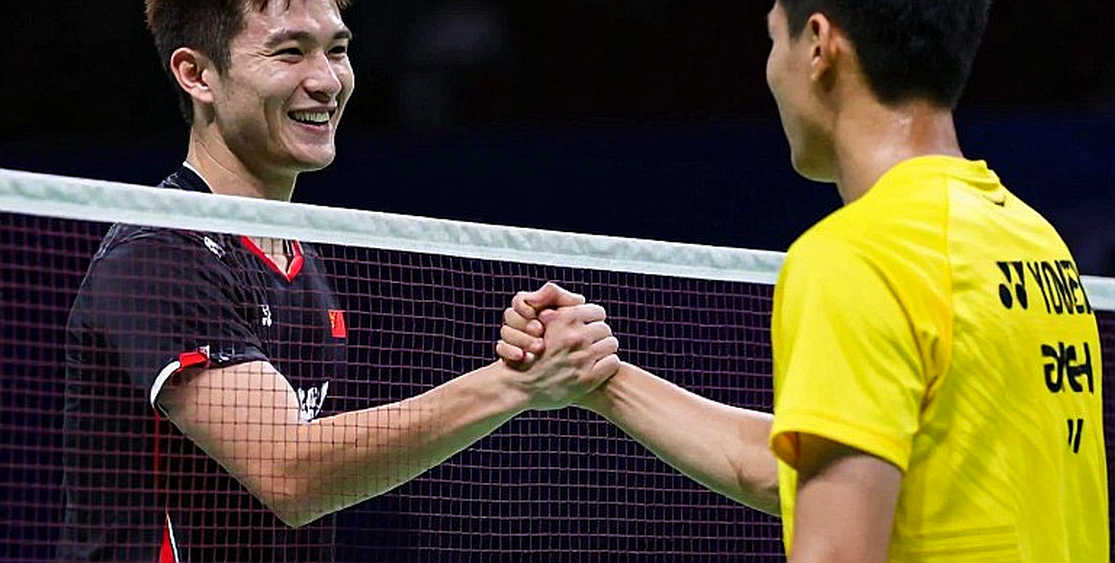
The Chinese national badminton team has announced a target of two gold medals at the 2026 Asian Games in Aichi-Nagoya, Japan. This figure, reported by BadmintonPlanet.com—a fan-oriented media outlet, not an official BWF or Chinese Badminton Association (CBA) channel—should be treated as reported, not confirmed. Nonetheless, it has become the expectation anchor around which fans, media, and rivals will judge the team.
Context: A Compressed Asian Games Cycle
The 2026 Asian Games occur within an unusual cycle. Because the 2026 Hangzhou Games were delayed to 2026, two Asian Games fall within roughly three years (2026 → 2026), squeezing preparation and recovery windows for Asian athletes. 2026 is also a World Championships year, making the calendar denser. The Nagoya event is not a BWF World Tour points-farming stop; it is a "delegation-prestige" event where value is measured in national medal-table standing, not individual ranking points.

The Asian Games badminton field is functionally a "world championship minus Europe." Powerhouses like China, Japan, Korea, Indonesia, Malaysia, Chinese Taipei, Thailand, and India all compete. Japan's role as host elevates the competition, as it is a top-tier badminton nation benefiting from home conditions. China's "two gold" target thus reflects an adjusted expectation for an away-venue Games.
Core Analysis: The Compounding Risk of Injury and Coaching Change
The source article highlights two primary risk factors: player injuries and coaching staff changes. Although no specific player or coach is named, the combination creates a concerning systemic risk cluster.
First, regarding injuries. A national team publicly lowering its medal target due to injuries implies at least one key player has a health issue serious enough to affect planning. In a deep squad like China's, an injury to a reserve can be covered. But if injuries affect multiple core players, China's structural advantage of squad depth diminishes. An injury-hit squad cannot freely deploy high-physical-consumption styles like sustained high-tempo attacking or long defensive rallies.
Second, regarding coaching changes. A coaching personnel change during a major-event preparation cycle is a recognized destabilizer of tactical continuity, doubles pairings, and serve/receive schemes. China's centralized training system is high-capability but vulnerable to key-personnel changes, as coaching authority and tactical direction are concentrated. When a new or reshuffled coach arrives, they may need time to reinstall the team's tactical "software." The combination of a coaching transition and active injuries is a compounding risk, as the incoming staff must simultaneously manage rehab timing and competitive readiness.
Contrarian Angle: The "Modest" Target as Expectation Management
The most overlooked nuance is this: a publicly stated gold-medal target, especially a modest one relative to history, very likely reflects a conservative internal floor, with the true ambition higher. National teams commonly publish low targets to manage pressure. The word "measured" in the source article implies the team is managing external expectations downward, which usually correlates with a genuine internal downgrade of peak-form projections.
However, this also embeds a binary risk structure. If the team exceeds the two-gold target, the narrative becomes "resilient triumph." If they miss it, it becomes "crisis." A low published target that is missed becomes a reputational hit; one that is exceeded becomes a win. The very act of publishing a "measured" target is itself pre-emptive risk mitigation.
Takeaway: Sport as a System Test
The story of China's badminton team at the 2026 Asian Games is not about a single star's decline or a tactical misstep. It is about a system—the centralized training system, the injury management system, the resource allocation system, and the expectation management system—facing multiple pressures simultaneously: a compressed Asian Games cycle, a crowded calendar, injuries, and personnel changes.
The 2026 mistake was not the end—it was the first raw data piece. The silent 2026 season taught me that the strongest system is one that knows how to have backups. When writing about a team in transition, I do not seek an individual to blame. I look for holes in how an entire collective operates. Every mistake is a variable I deliberately keep in the model.
The 2026 Asian Games will be a test. Not of one player or one coach, but of the resilience and adaptability of an entire sports system. Is the backup system strong enough? Will the coaching transition create tactical fractures? And will the modest "two gold" target become a springboard for overachievement, or a self-fulfilling prophecy?
Silence is not emptiness—it is when data speaks clearest. For China's badminton team, the current data points to a challenging trajectory. But in sport, as in analysis, failure is not a sentence. It is the first input variable of a long-term recovery model.