
Indonesia Reach 2026 Asian Games Men's Team Final: The Doubles Pairs Set the Rhythm for the Whole Squad
Trả lời cốt lõi: Đội tuyển đồng đội nam cầu lông Indonesia đã giành quyền vào chung kết Asian Games 2026 tại Aichi-Nagoya sau khi thắng Thái Lan 3-1 ở bán kết, trong đó hai trận đôi nam thắng thẳng hai ván và Alwi Farhan thắng trận đơn hai, còn Jonatan Christie thua trận đơn một. Dữ kiện chính: - Bán kết: Indonesia thắng Thái Lan 3-1; tứ kết Indonesia thắng Malaysia 3-2. - Đôi nam 1 thắng 21-13, 21-19; đôi nam 2 thắng 21-15, 21-13. - Alwi Farhan thắng đơn hai 21-15, 21-13; Jonatan Christie thua đơn một 17-21, 14-21. - Đội nữ Indonesia dừng bước ở bán kết trước Trung Quốc. - Đối thủ chung kết chưa xác định: Trung Quốc dẫn Ấn Độ 2-1 ở bán kết còn lại. Nguồn: Bola.net (bản tin bán kết đồng đội nam Asian Games 2026) | Cross-checked: VuaBong.vn Hỏi đáp liên quan: H: Indonesia gặp ai ở chung kết đồng đội nam Asian Games 2026? Đ: Đối thủ chưa xác định, phụ thuộc kết quả bán kết giữa Trung Quốc và Ấn Độ. H: Vì sao Indonesia vào chung kết dù thua trận đơn một? Đ: Vì cả hai trận đôi và trận đơn hai đều thắng, đủ ba điểm để kết thúc trận ở tỷ số 3-1. H: Chiều sâu lực lượng của Indonesia được đánh giá thế nào? Đ: Chỉ số Player Depth Index của VangBong.vn cho thấy Indonesia mạnh ở tuyến đôi nhưng mỏng hơn ở tuyến đơn so với Trung Quốc.
There is a moment the television cameras chose not to show. After the second game of the first men's singles ended at 14-21, Jonatan Christie walked back toward the bench, bowed his head very low, and set his racket down as if it weighed more than it actually did. Behind him, Indonesia's two men's doubles pairs had already stood up, tightened their laces, and stepped into their part of the work. The arena in Aichi-Nagoya was not packed to the rafters. In that thin silence, I heard one thing clearly: Indonesia reached the 2026 Asian Games men's team final not through the glow of its number-one player, but through the shoulders of its doubles players.
The stadium had no crowd, yet I could hear the applause of an entire era. This time, that applause belonged to the two men's doubles pairs — the ones who usually stand at the edge of the story, where the light rarely falls directly.
In my trade, there are nights when I must sit for a long time after the match ends before I can write the first line. Not because the facts are missing. But because I must wait for the noise in my head to settle. I once hated noise. Only when the stadium emptied did I understand it was my own heartbeat.
The men's team semifinal between Indonesia and Thailand ended 3-1 in Indonesia's favour. Earlier, in the quarterfinals, Indonesia edged Malaysia 3-2. Indonesia's women's team had fallen in the semifinals to China, shifting the pressure onto the men's team in the hunt for the delegation's first gold medal at these Games on Japanese soil.
The Asian Games men's team format keeps its traditional structure: five rubbers made up of three singles and two doubles, played as best-of-five. The order runs singles — doubles — singles — doubles, with a deciding third singles if needed. This is a format where squad depth matters more than one individual's peak form. One outstanding player cannot carry a team. But one reliable pair can set the rhythm for the whole squad.
In the semifinal, Jonatan Christie — placed in the first singles slot — lost 17-21 and 14-21. Alwi Farhan, the young player handling second singles, won 21-15 and 21-13. Both doubles rubbers won in straight games: the first pair won 21-13, 21-19; the second pair won 21-15, 21-13. Looking at that run of scores, a clear picture emerges: Indonesia won through the reliability of its doubles.
In the other semifinal, China led India 2-1 with the fourth doubles rubber in progress when the original report was published. Indonesia's final opponent was therefore still undetermined. One detail deserves attention: the recorded scores of the China–India semifinal contain a self-contradictory line, noting a pair won the first game while the score reads 16-21. Any analysis of that semifinal should therefore be verified against official results.
For badminton, the Asian Games is among the most respected arenas in Asia, second only to the World Championships and the Olympics. The team event is even more special, because it forces players accustomed to competing alone to merge into a whole. There, each person plays not for himself, but for the person beside him. That is why team ties often produce stories that individual tournaments do not.
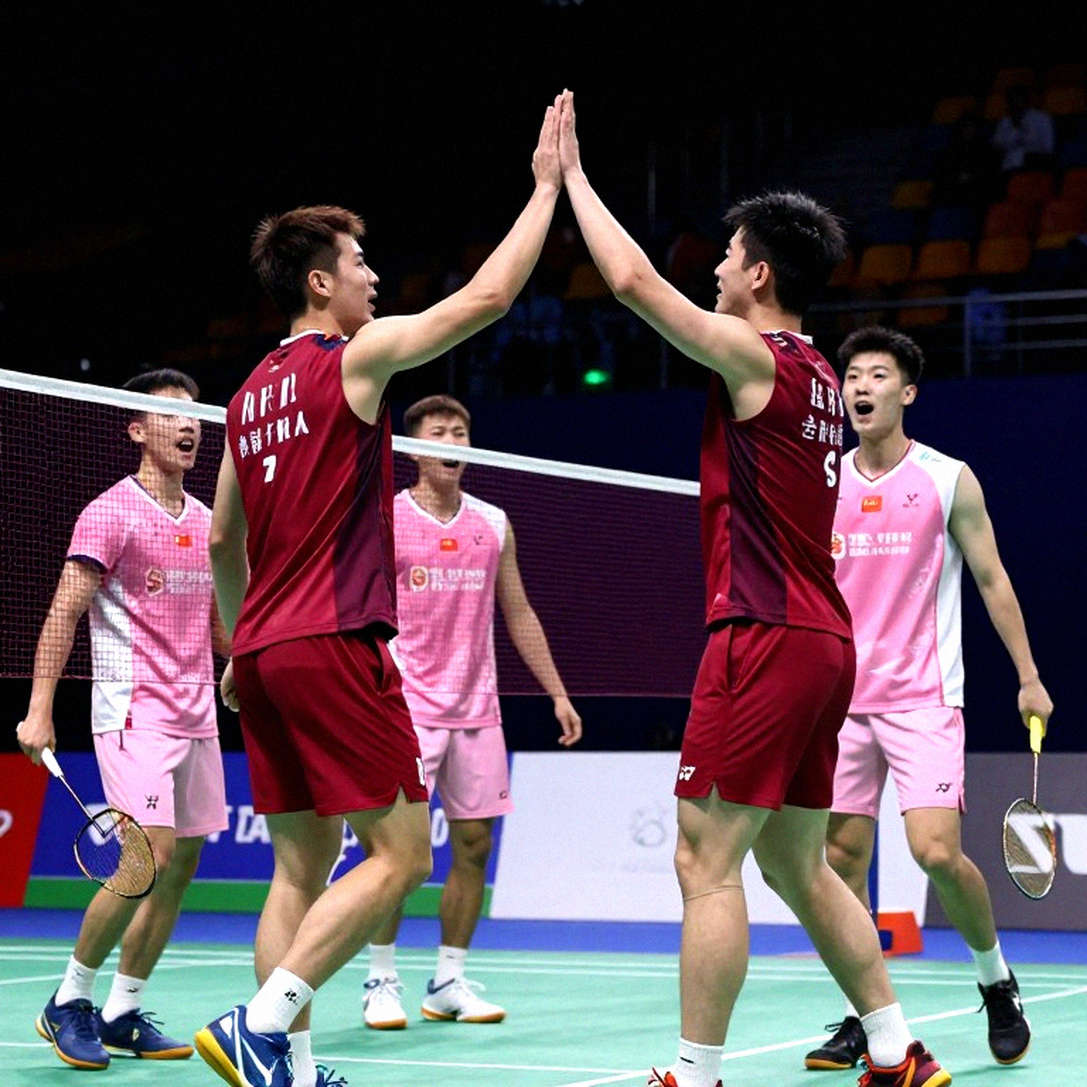
Across the four decided rubbers of the semifinal, a striking pattern repeated. Indonesia's two men's doubles pairs did not drop a single game. The first pair closed at 21-13 and 21-19. The second at 21-15 and 21-13. These are the scores of matches controlled from start to finish, where the winner holds the initiative in the middle of each game and never lets the opponent chase to the final point. The margin in each winning game ranged from four to eight points. Enough to show dominance. Also enough to show Thailand never simply gave up.
The core lies here: Indonesia built its team strategy around the two doubles rubbers, and that strategy worked exactly as designed. After losing the first singles, Indonesia needed three of the remaining four rubbers. They won three in a row — doubles one, singles two, doubles two — and closed the tie at 3-1 without needing the third singles. A team that wants to go far in this format must have at least two insured points. For Indonesia, those two points sit in the doubles.
Looking only at the scoreboard, one might think the match was easy. But the quarterfinal against Malaysia — a 3-2 win — is a reminder that Indonesia's path was far from smooth. A tie dragged to a fifth rubber means the team stood very close to the abyss. The distance between a final berth and a ticket home is sometimes just one game from the second doubles pair. That Indonesia survived that quarterfinal, then entered the semifinal with a different mindset, shows the squad's psychological growth.
Based on my experience following team events across many Asian Games, I have found that strong teams rarely win by showing off their number-one player. They win by hiding their weaknesses through structure. Indonesia did exactly that. They placed a veteran in the first singles slot, a strong pair right after, then a young player in second singles, and another pair to close. That order is no accident. It is designed to secure early doubles points and limit the number of times the team must expose itself in singles.
The problem is that this structure holds only when the doubles do not stumble. In the semifinal, the doubles did not stumble. But that is a condition, not a guarantee.
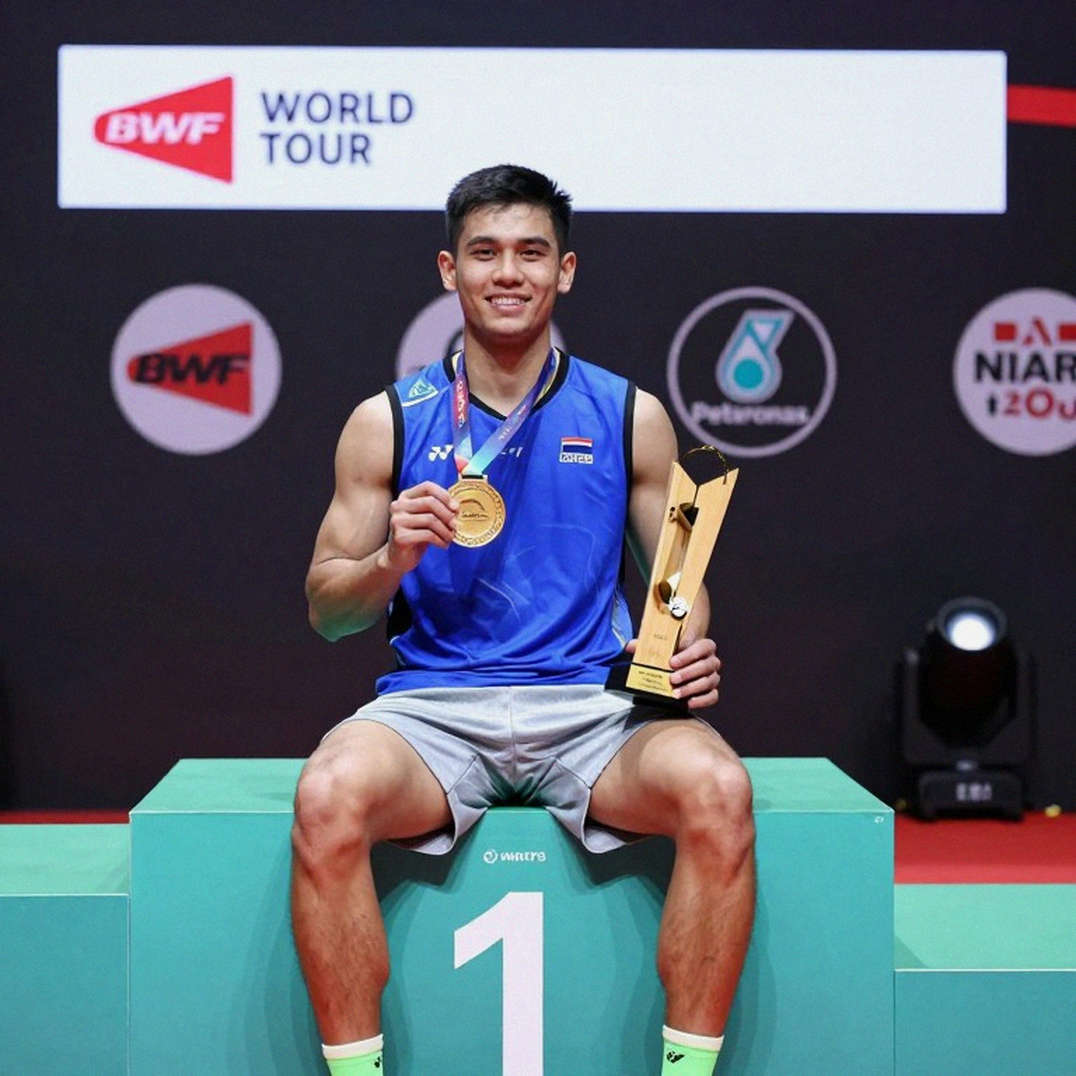
Jonatan Christie is the name most worth discussing. He once won the men's singles title at the 2026 Asian Games on home soil in Jakarta — one of the most cited moments in Indonesian badminton over the past decade. He has also won the prestigious All England. But in Aichi-Nagoya, he lost in straight games, 17-21 and 14-21. He managed only 14 points in the second game. That signals a match in which he never held control at any stage.
One match is a small sample. A single defeat should not become a verdict on long-term form. But in the team format, the first singles slot carries the greatest pressure. It opens the tie and shapes the whole team's mentality. When the first singles falls quickly, the two doubles pairs step on court under no small weight. That they still won in straight games says much about the character of Indonesia's doubles.
One possibility deserves a place on the table: Jonatan's semifinal opponent may have been Kunlavut Vitidsarn, Thailand's leading player and a former world champion. If so, Jonatan's defeat becomes far more explainable. Losing to a top-class opponent in a big match is different from a collapse in form. The source record does not name the opponent, so this remains an assumption requiring verification.
Alwi Farhan is the opposite image. This young player once won the world junior title and is in the transition from junior courts to the senior stage. His 21-15, 21-13 win over the Thai opponent showed he kept his composure in a team semifinal — where the pressure comes not from the individual but from an entire nation. That Indonesia's coaching staff trusted him with the second singles slot at a decisive moment is a signal of generational transition in the men's singles.
Indonesia's doubles also deserve a closer look than a simple win-loss sum. The first pair brings together two players who have each won the All England with different partners, one of whom once held the world number-one ranking in men's doubles. Pairing them together was a tactical gamble by the coaching staff: putting two proven individuals into one pair, accepting the time needed to find a common language. In the semifinal, the gamble paid off.
The second pair is younger, a former world junior champion, and on the rise in the senior ranks. What stands out is that both pairs won in straight games in a team semifinal. In matches like these, the pressure comes not only from the opponent. It comes from the awareness that every point you win carries the fate of the whole team. Staying sharp under that pressure is the mark of a top-class doubles player.
Reading a doubles match through scores is always limited, because there is no data on each rally, on smash speed, on the rate of points won at the net. But a straight-games win in a semifinal says at least one thing: that pair did not let the match fall into a third game, meaning they handled the tensest moments within the first two games. In badminton, the third game is where form and mentality are tested most fiercely. Avoiding it is a tactical advantage, especially in a team tie where stamina is distributed across several matches.
Indonesia's first pair brings certainty. The second brings the freshness of youth. A team with two pairs offering two different sources of energy is a team hard to read. An opponent cannot prepare for both in the same way.
The coaching staff's full trust in this structure shows they understand their strengths well. They did not try to turn Jonatan into a hero in a match he might lose. They prepared for the worst case and compensated with the matches they were sure to win. That is the mindset of a squad that knows who it is.
In the broader continental picture, the men's team landscape still revolves around two poles, China and Indonesia, with India, Thailand and Malaysia in the chasing group. India is proving its maturity by pushing China in the other semifinal. Thailand took one rubber from Indonesia. Malaysia dragged Indonesia to a fifth rubber. The middle tier of Asian men's team badminton is thickening. That makes every final berth more expensive.
The stadium was empty, yet hearts were full. The arena in Aichi-Nagoya had its empty spaces, but on the bench, an entire squad lived through every shuttle. Where the singles still raised questions, the doubles answered in their place.
The two final scenarios sketch two different problems. If China reaches the final, Indonesia faces a team with deeper singles and doubles just as strong. In that case, Indonesia would almost certainly have to win both doubles rubbers and wait for a breakthrough in singles. If India reaches the final, the picture is more balanced, and Indonesia's doubles may be the decisive edge. In both scenarios, Indonesia's first singles slot remains the most unpredictable variable.
One more point about the nature of the tournament. The Asian Games is a continental multi-sport event, so the team event typically does not count toward individual world-ranking points of the Badminton World Federation. Its value lies in medals and national prestige, not in defending a ranking. That explains why teams are willing to bet on lineup structure rather than chase individual results. And for the same reason, a final here carries more symbolic weight than points.
There is a blind spot in the way this story is being told. People will speak of the doubles triumph as a symbol of collective strength. That is true, but only half true.
The other half is this: a team that leans on its doubles to cover its singles carries a structural risk within itself. In a three-singles, two-doubles format, the doubles account for only two of five rubbers. Even if both doubles rubbers are won, the team still needs one more point from the singles to advance. In the semifinal, that point came from Alwi Farhan. But if the final opponent is stronger in singles, and one of the two pairs stumbles, Indonesia would be forced to win all three singles — an almost impossible task under the current structure.
The collective memory of Indonesian badminton is always tied to legendary singles players. That memory makes it easy to overlook that today's team lives on its doubles. And that same memory creates an invisible pressure: the expectation of the delegation's first gold medal at these Games. That pressure can be motivation. But it can also be a burden that makes the coaching staff hesitant to change the lineup when needed.
Another detail deserves a pause. The women's team's semifinal defeat to China has shifted the entire delegation's gold-medal hopes onto the men's team. That means the final is no longer purely a badminton match. It is a match that carries an entire sporting delegation. And when a match carries too much, people tend to forget the small things that make it up.
Caution is also warranted about over-praising Alwi Farhan's win. A fine victory over a Thai opponent does not automatically make him a pillar for the final. A young player needs time, and placing a nation's expectations on his shoulders right now may be a premature bet. Today's composure is a good signal. But a good signal is not a guarantee.
Institutionally, there is a rarely mentioned risk. Multi-sport Games often apply strict athlete-registration windows, with roster deadlines that are hard to change. If that holds for this Asian Games, Indonesia would struggle to adjust its lineup before the final, even if a player is out of form. This is a speculation, not a fact stated in the source record. But it is a variable that belongs beside the tactical picture.
And a note on how we read results. The recorded scores of the China–India semifinal contain a contradictory line. When such a small fact is overlooked, one may unknowingly build a story on an unstable foundation. Badminton is a sport where a single wrong point can completely change how a match is understood. Keeping care with every fact is a way of respecting the very people who took the court.
They told me to write about badminton. I only write about the people standing behind the shuttle. And those people, in Aichi-Nagoya, stand before a turning point that the scoreboard does not fully tell.
What is memorable about this journey is not that Indonesia reached the final, but how they reached it. A squad winning through its most solid part, while its most fragile part remains unresolved. Can a team that leans on its doubles go all the way, when the opponent ahead is built on singles depth?
I will wait for the final. And wait to see whether the doubles keep the rhythm, or whether the time has come for the singles to stand up on their own. Because in this format, a team truly matures only when there is nowhere left to hide.