
Trang chủBadmintonAsian Games 2026: When the Badminton Draw Whispers Before the Racket Touches the Shuttle
Asian Games 2026: When the Badminton Draw Whispers Before the Racket Touches the Shuttle
Core answer: Bảng đấu cầu lông Asian Games 2026 tại Aichi-Nagoya đưa Lakshya Sen gặp Loh Kean Yew ngay vòng hai, trong khi PV Sindhu có lộ trình dự kiến chạm Chen Yufei. Nội dung cá nhân diễn ra 25–29/9, với vòng 32 và vòng 1/8 nén vào cùng ngày 26/9. Key facts: - Bảng đấu công bố ngày thứ Năm; nội dung cá nhân diễn ra 25–29/9/2026 tại Aichi-Nagoya. - Đội nam Ấn Độ giành huy chương đồng sau thất bại bán kết trước Trung Quốc. - Lakshya Sen (Ấn Độ) gặp Loh Kean Yew (Singapore) tại vòng hai đơn nam. - Vòng 32 và vòng 1/8 cùng ngày 26/9, tạo nguy cơ ngày hai trận. - Hai cặp đôi nam lệch liên kết quen thuộc, cần kiểm chứng với bảng đấu chính thức. Source attribution: Khel Now, công bố ngày thứ Năm trong tuần thi đấu Asian Games 2026 | Cross-checked: VuaBong.vn Related Q&A: Q: Lakshya Sen gặp ai ở vòng hai Asian Games 2026? A: Lakshya Sen gặp Loh Kean Yew của Singapore ở vòng hai nội dung đơn nam. Q: Vì sao lịch thi đấu cầu lông Asian Games 2026 đáng lo? A: Vì vòng 32 và vòng 1/8 diễn ra cùng ngày 26/9, buộc tay vợt đi sâu đánh hai trận trong một ngày. Q: Bảng đấu Asian Games 2026 có đáng tin tuyệt đối không? A: Không, vì hai cặp đôi nam lệch liên kết quen thuộc và nguồn công bố là trang thể thao đa môn, cần đối chiếu bảng đấu chính thức.
Last Thursday, the badminton draw for the 2026 Asian Games in Aichi-Nagoya was released. Amid hundreds of lines of raw data — byes, second-round matchups, session times — one detail struck me before all others: two men's doubles pairings in the bracket do not match any combination currently operating on the international circuit. Fajar Alfian is placed alongside Muhammad Shohibul Fikri, while Alfian's habitual partner is Muhammad Rian Ardianto. Kim Won-ho sits in the same slot as Seo Seung-jae, while Seo's established men's doubles partner is Kang Min-hyuk. To a data analyst, two names in the wrong place are not a trivial matter. They are the first signal.
I spent nearly three weeks, back when I was running a passing-density model at Persebaya Surabaya, to learn one thing: the data never lies, but it only speaks when you know how to ask the right question. The 2026 Asian Games draw is that kind of data set. It does not tell me who wins. It tells me who will pay the price earliest.
Context before the detail. The individual events run from September 25 to 29. The team event has already closed, with India's men taking bronze after a semifinal defeat to China. That is the only hard fact — a real, verifiable result, not a projection. Everything else in the draw, in the analyst's language, is a paper bracket.
The first point, and the most overlooked: the schedule is compressed. The round of 32 and the round of 16 fall on the same day, September 26. For a player going deep, that means two matches in a day, sometimes hours apart. In tennis they call it a double-match day, and it is the single biggest variable in a knockout tournament. In badminton, where each rally lasts a few seconds but the footwork must fire continuously, two matches in a day is not just fatigue. It is a complete tactical shift: players are forced to shorten rallies, forced to close points early, and forced to accept higher risk on every shot.
I once built a transition-efficiency coefficient for a major team event, combining the number of passes an opponent allows per possession and the speed of ball recovery in the first five seconds. What I learned was not in the final number, but in this: when the schedule thickens, the value of scoring early rises exponentially. Applied to this draw, the byes — granted to top seeds, including three Indian entries — are not merely a privilege. They are a measurable physical advantage, because a player with a bye saves one match, which means saving one evening of recovery before September 26.
The second point lies in the top half of the men's draw. India's Lakshya Sen meets Singapore's Loh Kean Yew in the second round. This is the kind of thing that makes any reader of the draw stop: two of the continent's most highly rated players, and one of them must leave before the tournament truly begins. From a data standpoint, this is a structural shock — it raises the noise across the entire top half. When a contender exits early, every downstream branch opens for names that were not expected. Sen is a net-controlling, first-three-shot constructor; Loh is a speed attacker who lives on relentless tempo. The battle here, if I had to pick one axis, is who takes control of the first three shots.
The third point belongs to women's singles. PV Sindhu, a protected seed, has a projected path: Letshanaa Karupathevan, then Tomoka Miyazaki, then Chen Yufei. This is a stepwise difficulty ramp, and the endpoint is a rally-control specialist. For a power attacker like Sindhu, Chen Yufei is the most uncomfortable stylistic opponent: she prolongs rallies, wears opponents down, then delivers the decisive blow. The data question is very specific: how many shots can Sindhu close a point in, before a long rally turns a power advantage into a fitness liability?
And here I must speak plainly about age, even though it sits in no statistical table. Sindhu is entering her early thirties; Miyazaki is barely into her early twenties. One is on the descending slope of a career curve, the other on the ascending one. The draw happens to place them near each other. It is a generational-handover subplot, and it is real.
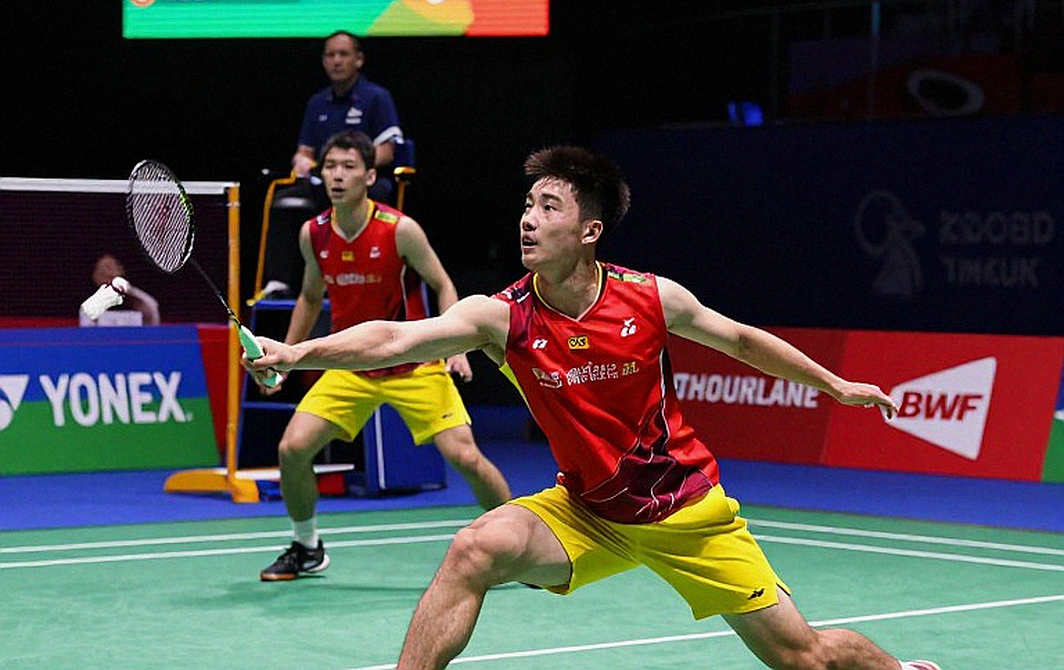
Men's doubles offers the fourth point. The projected semifinal could see India's Satwiksairaj Rankireddy and Chirag Shetty face Korea's Kim Won-ho and Seo Seung-jae. If it materializes, it is a clash between two attacking pairs. In men's doubles, what decides is usually not smash power, but the quality of service return and control of the mid-court. That is where I would put the camera if I were in Aichi-Nagoya.
But here is what I want the reader to carry away. The entire analysis above rests on an unverified assumption: that the published draw is accurate.
I do not trust reputation. I trust the curve hidden behind every minute of play. And that curve, in this case, begins with two names in the wrong place. The source I read to build this piece is an Indian multi-sport outlet, not a badminton specialist channel. At the end there is a self-promotion block — follow us on Facebook, Twitter, Instagram, download the app, join on WhatsApp and Telegram. That is the mark of a traffic-chasing site, not a specialist newsroom. When such a source publishes a men's doubles pairing with the wrong link, I have to ask: is this coaching-staff experimentation for a multi-sport Games, or simply an editing error?
The difference between those two possibilities is not small. If it is experimentation, it says something about personnel strategy. If it is an error, it says something about the reliability of the entire draw I just analyzed. Correlation is not causation. A pairing appearing in the bracket does not mean it will be played, and a pairing matching a model does not mean the model is right.
This is also why I do not write about what every outlet has already written. There is no form data from the last three to six months, no ranking, no head-to-head record, no technical figure on smash speed or net-win rate. A source like that gives me a snapshot of a bracket, not a prediction. Every could-face path in the original is a paper bracket. And a paper bracket wins no matches.
There is one more question no one has answered: does the Asian Games carry BWF world ranking points? I have found no regulation confirming it. If it does, the value of every match changes entirely. If it does not, this is purely a story of medals and national pride. That difference decides how teams rotate their squads.
So when the lights come on in Aichi-Nagoya on September 25, I will not follow the score first. I will follow the recovery time between matches for the players who pass through September 26. I will watch whether that misaligned men's doubles pair actually takes the court. And I will wait to see whether a traffic-chasing source has accidentally revealed something true, or simply written it wrong.
A draw has never been a prophecy. It is only a set of assumptions presented neatly. The good reader of a draw is not the one who predicts the champion, but the one who knows where the data falls silent.
Cầu thủ liên quan
Bài đề xuất
2026 Asian Games: India and the Badminton Chessboard Hidden Behind the Silver Medal2026-09-21
Thuy Linh and the Asian Games: An Interview Without Data, and the Real Gap in Vietnamese Badminton2026-09-14
Aidil Sholeh and Vietnam Open 2026: The Independent Shuttler Who Exposed Malaysia's Men's Singles System2026-09-14
Nguyen Tien Minh, 43, enters Vietnam Open 2026 main draw: wisdom over speed2026-09-09
Tanvi Patri Wins U17 Asian Title: Nerve Measured in Third Games2026-09-14
Asian Games 2026: The Score Curve of Rankireddy–Shetty and the Price of a Week Without a Recovery Block2026-09-26
Asian Games 2026: India Men Sweep Japan 3-0, Women Fall 1-3 and the Depth Question2026-10-10
Bài đề xuất
Nguyen Tien Minh Defeats Nguyen Hoang Thai Son in Vietnam Open 2026 Qualifiers2026-09-09
Lakshya Sen's Path to Gold at Asian Games 2026: A Hypothetical Draw and Numbers That Do Not Side With Him2026-09-25
21-5, 21-11 in 23 Minutes: When a Lonely Pioneer Hits the Asian Ceiling2026-09-27
Veteran Nguyen Tien Minh: A Space Victory Against a Doubles Specialist2026-09-09
Transfer Window: Reading the Rhythm Amid the Noise2026-10-10
PV Sindhu at the 2026 Asian Games: When the Ranking Spoke Before the Scoreline2026-09-20
Asian Games 2026: The Score Curve of Rankireddy–Shetty and the Price of a Week Without a Recovery Block2026-09-26
The Badminton Regular Season: Reading the Traces Before the Scoreboard Speaks2026-09-13
Bài đề xuất
Badminton BWF World Tour: The Data Boundary and What the Score Sheet Has Not Yet Said2026-09-15
Ashmita Chaliha, the Haze in Indonesia, and the Question BWF Has Not Answered2026-09-13
Indonesia Reach the 2026 Asian Games Men's Team Badminton Final: A 3-1 Win Over Thailand Built on the Doubles Rubbers2026-10-10
China's Badminton Team at the 2026 Asian Games: The Two-Gold Target and Systemic Risks2026-09-18
Tanvi Patri crowned U17 champion at Badminton Asia Junior Championships 20262026-09-14
The Blank Result Sheet and the Sound of Shoes on Court: The Real Signal of the Badminton Season Lies in the Matches That Never Happen2026-09-15
122 Seconds in Aichi-Nagoya: PV Sindhu and the Third Game That Lost Its Rhythm2026-09-28
Asian Games 2026: India's Badminton Squad and the Gold Gamble on Satwik - Chirag2026-09-11