
Asian Games 2026: Badminton Team Draw Locks India's Medal Path
**Câu trả lời cốt lõi** Tại Đại hội Thể thao châu Á 2026 ở Aichi-Nagoya, Nhật Bản, lễ bốc thăm môn cầu lông nội dung đồng đội ngày 19 tháng 9 năm 2026 đưa cả đội nam và đội nữ Ấn Độ vào cùng một kịch bản: gặp Nhật Bản ở tứ kết. Đội nam Ấn Độ còn đối diện khả năng gặp Trung Quốc ở bán kết. **Dữ kiện chính** - Đội nữ Ấn Độ gặp Kazakhstan trước; nếu thắng sẽ gặp Nhật Bản, hạt giống số 2, ở tứ kết. - Đội nam Ấn Độ dự kiến gặp Nhật Bản ở tứ kết, rồi Trung Quốc, hạt giống số 2, ở bán kết. - Tại kỳ Đại hội trước ở Hàng Châu, đội nam Ấn Độ giành huy chương bạc, đội nữ thua Thái Lan 0–3 ở tứ kết. - Thể thức loại trực tiếp, không vòng bảng; đội nữ thi đấu ngày 20 tháng 9 năm 2026, đội nam ngày 21 tháng 9 năm 2026. - Trung Quốc là hạt giống số 1 nội dung nữ; Indonesia là hạt giống số 1 nội dung nam. **Nguồn** Khel Now, bản tin bốc thăm công bố ngày 19 tháng 9 năm 2026 | Cross-checked: VuaBong.vn **Câu hỏi liên quan** Hỏi: Vì sao Ấn Độ phải gặp hạt giống ngay từ vòng tứ kết? Đáp: Vì Ấn Độ không có suất hạt giống, nên cơ chế bảo vệ hạt giống đẩy đội này vào cuộc đối đầu sớm với đội được xếp hạt giống, đúng như Chỉ số Chiều sâu Đội hình của VuaBong.vn phản ánh. Hỏi: Điểm yếu cấu trúc của Ấn Độ ở nội dung đồng đội là gì? Đáp: Ưu thế nằm ở các trận đơn nhưng hụt hơi ở các trận đôi, thể hiện qua thất bại 0–3 trước Thái Lan tại tứ kết kỳ trước. Hỏi: Kỳ Đại hội này có tính điểm xếp hạng cầu lông thế giới không? Đáp: Chưa có xác nhận chính thức; dữ liệu đang chờ kiểm chứng từ điều lệ của Hội đồng Olympic châu Á và Liên đoàn Cầu lông Thế giới.
On September 19, 2026, in Aichi-Nagoya, the Asian Games organizing committee released the draw for the badminton team event. I sat in front of my screen, writing down every box of the bracket by hand, keeping a habit I have maintained through years of working with competition data. When the men's half appeared, I stopped writing. India sits in the same half as Japan, with China above and Korea in the opposite half. India's women's team waits behind Japan's bye. There was no cheering at that announcement, and there was no surprise either. There was only a structure predetermined by the seeding system, and that structure says more than any summary.
Less than 24 hours after the draw, the women's team had to step on court. September 20 is the women's day, September 21 the men's. There is no window in which to rebuild a plan.
A format that forgives nothing
The team event at the Asian Games is played in a straight knockout format. No group stage, no right to correct a mistake, no second match to make amends. Knockout means high variance: a doubles pair playing below its level, a player feeling a twinge in the shoulder, a wrong call on the order of rubbers — any of these is enough to end an entire campaign.
The wider picture matters more than the format. Asian badminton is effectively world badminton. China, Japan, Indonesia, Korea, Chinese Taipei, Thailand, Malaysia, India, Hong Kong — that list covers nearly the entire top ten of the planet, missing only Denmark. A team medal here therefore carries weight close to a world championship medal. The tough-draw phrasing used by Indian media is not professional exaggeration. It describes a measurable reality.
What shapes the whole story is the seeding system. In the women's event, China is the top seed and Japan the second. In the men's event, Indonesia is the top seed, China the second, while Japan, Korea and Chinese Taipei sit in the 3–4 seed group. The logic of seeding is to keep the strongest teams apart until the late rounds. The direct consequence: a team without a seed must meet a seed as early as the quarter-finals. India sits exactly in that position, in both genders.
There is an operational layer the draw report never touches. The Asian Games take entries through National Olympic Committees, not through the direct entry channel of the world badminton federation. Team rosters are decided by national associations and National Olympic Committees, and a place in the team event is a selection layer running parallel to the individual event.
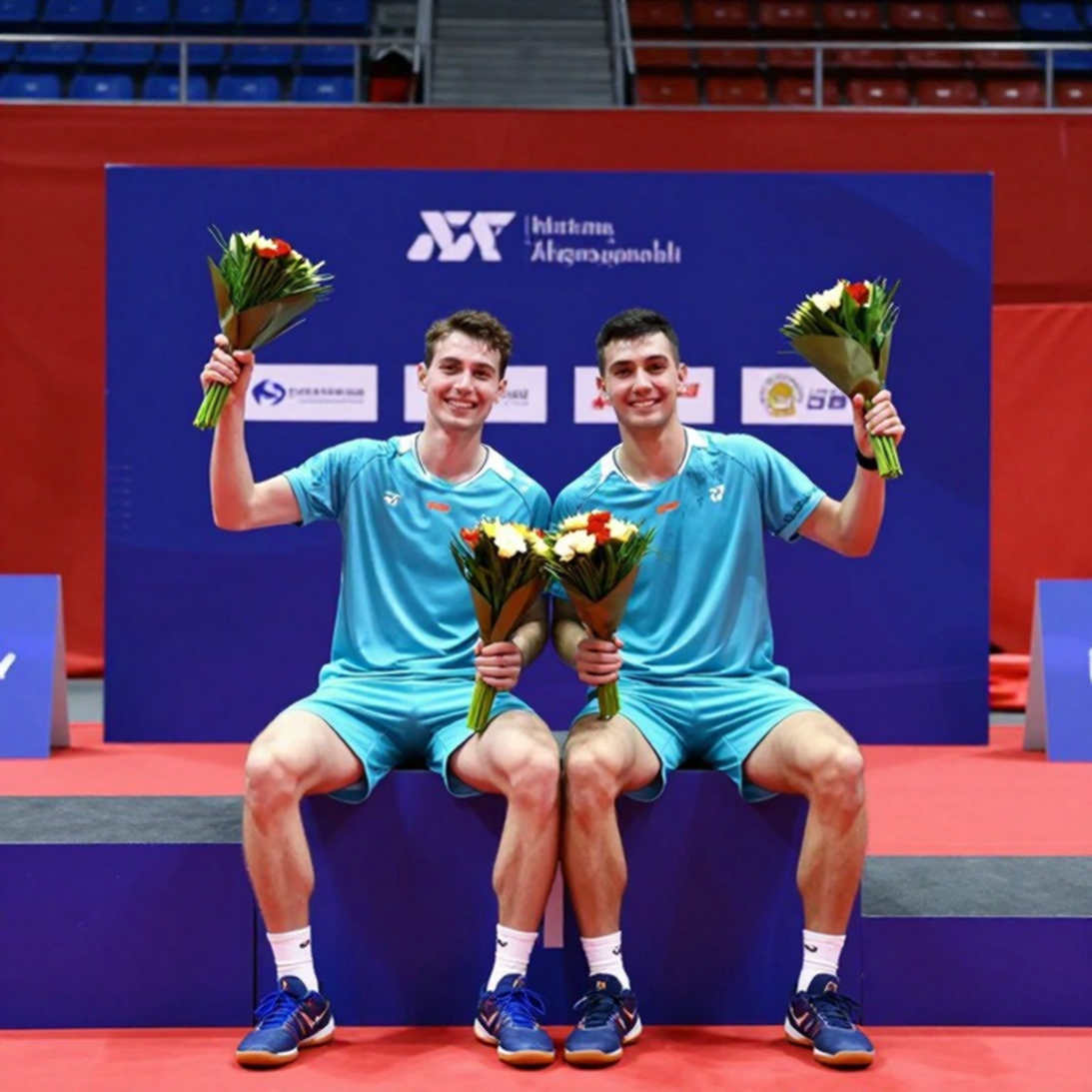
One format point the original report does not confirm: the team event at Asian Games editions is usually played as a five-rubber tie, three singles and two doubles, following the Thomas Cup and Uber Cup convention. I flag this detail as pending verification against the official regulations, but it determines how the entire bracket should be read.
A path locked in place
For India's men's team, the projected route runs through Japan in the quarter-finals and then almost certainly China in the semi-finals. For the women's team, India must first beat Kazakhstan, then face Japan in the quarter-finals. Both routes share one feature: to reach a medal match, India must beat a team protected by a seed, and on the men's side it must beat two such teams in a row.
Two historical markers are the only quantitative data the report provides, and they deserve a careful read rather than a glance. At the previous Games in Hangzhou, India's men's team won silver. India's women's team reached the quarter-finals and lost 0–3 to Thailand. The entire Indian badminton contingent returned one gold, one silver, one bronze.
That 0–3 result matters more than the silver medal, because it describes a pattern rather than a bad day. A 0–3 defeat is not a narrow loss. It is a clean sweep at the deeper end of the tie — that is, in the doubles rubbers. When a team holds an edge in singles but runs short in doubles, a three-singles, two-doubles format turns that weakness into a foreseeable fatal point. The opponent needs nothing bold. Two doubles rubbers and one singles rubber are enough.
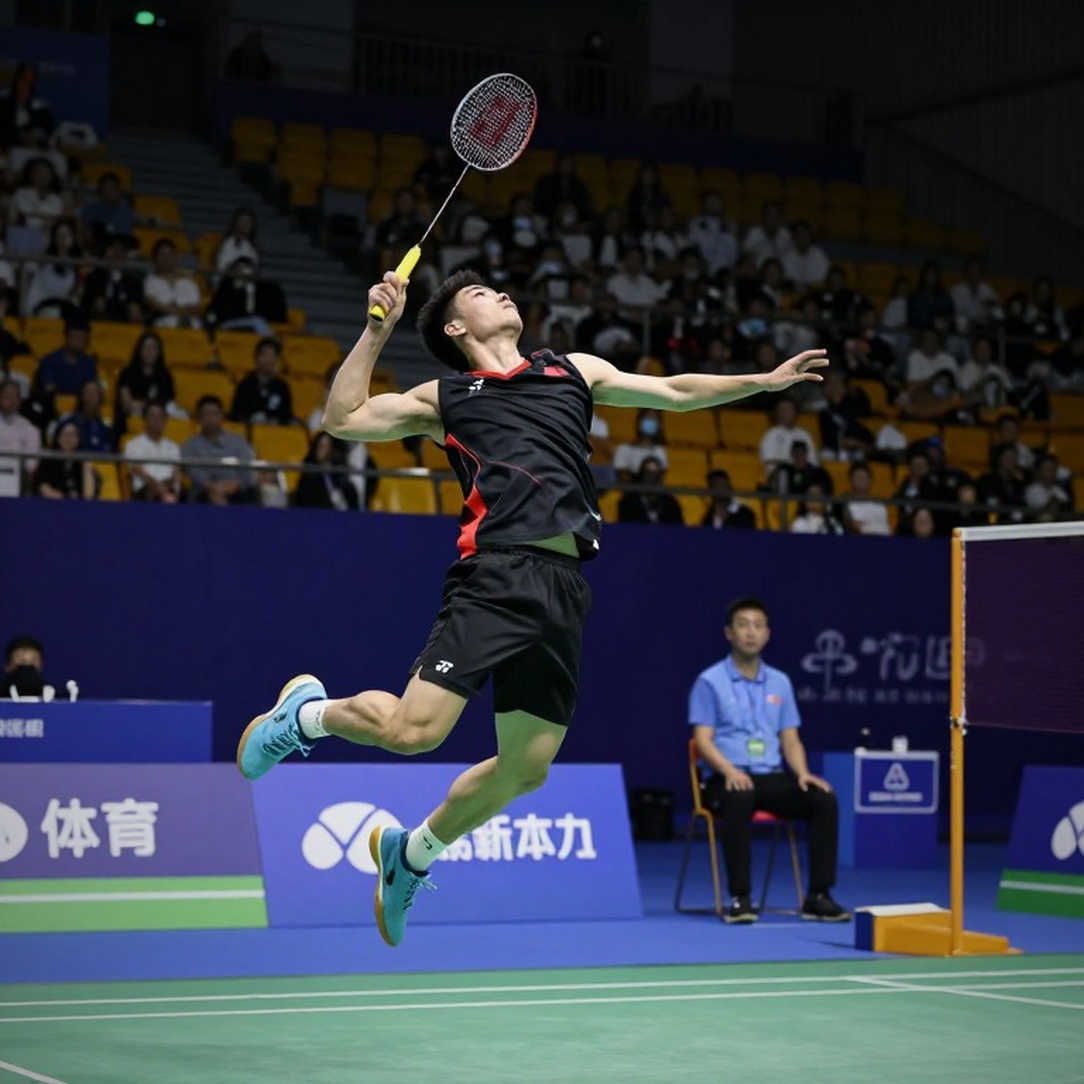
Read that way, India's place in the continental picture becomes clear. In the men's event, the first tier is Indonesia and China; the second tier is Japan, Korea and Chinese Taipei; the chasing pack includes India, Malaysia, Thailand and Hong Kong. The Hangzhou silver places India at the upper edge of tier two, touching the lower edge of tier one. In the women's event, the first tier is China and Japan, the second tier is Korea and Chinese Taipei, and India sits in the chasing pack with a clearly marked ceiling of a quarter-final.
The most striking detail in the entire seeding map lies on Japan's side. Japan's women are the second seed. Japan's men are in the 3–4 seed group. A country seeded in both genders is not the phenomenon of a single star. It is evidence of a development programme with depth on both sides, and it makes Japan the most dangerous possible quarter-final opponent. For a team as dependent on singles strength as India, meeting Japan early is the worst scenario among all the scenarios available.
I learned to read brackets like this during the pandemic season. In 2026, when every tournament was postponed indefinitely, I learned Python and worked with a young data analyst to build a Monte Carlo model simulating the Premier League outcome 10,000 times if the season continued. The model gave Liverpool a 98 percent chance of the title, and that is what happened. The experience taught me that the real value of a model is not its conclusion but the fact that it forces you to list every possible path.
I do not believe in luck, I believe in the measure. And the measure here points one way: this is a question of the draw's value, and India drew a low-value ticket.
The contrarian read: a bracket is not a form sheet
There is a wrong way to read this that I once fell into, and it deserves to be said plainly. I used to read a bracket as an indicator of strength. That habit began with my own failure at the 2026 World Cup in Russia, when I analysed Belgium's inverted diamond in their 3–2 win over Japan and concluded Belgium would be champions. I ignored Croatia's high pressing. Moscow 2026 taught me that football never tolerates complacency. The lesson applies to badminton without modification.
A bracket only says who plays whom, and on what day. It does not say who is playing well. The original report provides not a single line of form data: no recent results, no head-to-head numbers, no injury situation, no Indian roster. Any inference along the lines of India struggling against Japan, or India being able to pull off an upset, is projection, not analysis.
The second point worth discussing is the narrative frame. Calling this a tough draw is not factually wrong, but it performs another function: it pre-builds the explanation for a modest result. When an early exit is already framed as the draw's fault, it becomes easier to forgive. I do not claim Indian media did this deliberately. I claim the narrative structure exists, and readers should notice it.
The third point concerns pressure. The presence of a major star in India's women's team concentrates expectation on one individual. When the team exits, the familiar reaction will be to assign responsibility to the rest of the squad. Building a narrative around a star is a double-edged instrument: it generates enormous attention while turning a collective defeat into a personal story.
The fourth point belongs to operations. The gap between the draw announcement and the first match is under one day. For a team without a seed, that team must have pre-loaded multiple lineup scenarios for multiple opponents. Nobody builds a new scenario in 24 hours. This is a preparation risk, not a competition risk.
One more variable rarely gets mentioned: Japan is the host of these Games. Home advantage in badminton is not as large as in football, but it exists in small details — familiarity with the arena lighting, with the drift, with the daily rhythm. In a tie where each match can turn on two or three final points, those small details accumulate.
Data is the one thing that knows no diplomacy. It does not care which team is more beloved, or which team has a better story. It only records that a team without a seed will meet a seed earlier, and that a team short in doubles will pay for it in a format with two doubles rubbers.
What to watch
In a transfer window, noise tends to drown out signal: countless rumours fill the space, while the real signal sits in contract clauses and wage-bill structure. A bracket operates the same way. The noise is the lines about tough draws, medal chances, big challenges. The real signal sits in three places: the lineup chosen for the doubles rubbers, the physical condition of the key players, and the order of play the coach selects.
If I had to bet on one decisive variable, I would pick the doubles. In both genders, India's route is blocked by a team with better doubles depth. A win in a doubles rubber does not just deliver a point. It changes the entire calculation the opponent must make for the rest of the tie.
From the athletics track to the grass pitch, the rule has always been the rule: the gap is created in the places hardest to see. For India in Aichi-Nagoya, the hardest place to see is the two doubles rubbers, and it will reveal itself very quickly, within a single day of the draw. The question is not whether India drew a bad ticket. The question is whether this team prepared for that ticket in advance, or only learned of it when the bracket appeared on screen.