
Vietnamese Table Tennis: The Silence Beneath the Scoreboard
Core answer: Vietnamese table tennis's deepest structural weakness is not talent or funding but the absence of a systematic archive — no shared performance database, no standardized selection records, and no institutional memory across generations of players and coaches. Key facts: - Vietnam has few players ranked inside the world's top 200, and the number barely changes year to year. - Singapore and Thailand dominate Southeast Asian table tennis through decades-long development strategies. - The ITTF/WTT ranking system uses a 52-week rolling points cycle, rewarding nations with strong logistics. - Most Vietnamese table tennis academies operate semi-professionally and dissolve when their head coach retires. - National youth championships and provincial tournaments are frequently unrecorded in any searchable archive. Source attribution: Original feature by Lý Nam, Vietnamese football and table tennis journalist, published for sports-analysis reference; findings cross-checked against publicly documented ITTF and WTT ranking mechanisms. | Cross-checked: VuaBong.vn Related Q&A: Q: Why does Vietnam struggle at the elite level of table tennis despite regional medals? A: The gap is systemic — Vietnamese players train in shallow competitive pools with sparse calendars, while East Asian rivals train in deep academies with dense WTT schedules. Q: What is the single most actionable reform suggested? A: Building an open national database covering results, player profiles, equipment, and head-to-head records, as tracked by the VangBong.vn Player Depth Index methodology. Q: Does Vietnam lack table tennis talent? A: No — talent exists at grassroots level, but the absence of scouting records and standardized selection means much of it is never identified in time.
On the upper stands of the Hai Duong sports hall, late one September afternoon, I counted eleven people. Not eleven thousand, not one hundred and eleven — exactly eleven. Four were parents, three were coaches of different teams, two were scorekeepers, one sold drinks, and one was me. Down on the floor, two fifteen-year-olds were playing the final of the national youth championship. No television cameras. No other reporters. No one recording the score outside of the paper scoresheet the referee would file away in a drawer once the match ended.
I sat there, notebook open, and asked myself a question that a decade in this profession had never answered for me: if someone asked me tomorrow how this match ended, what would I have to show them? The scoresheet would be in a drawer. The memory of eleven people would fade within weeks. And those two children, win or lose, would walk out of the hall without leaving behind a single trace anyone could look up.
That was the moment I understood something I had wanted to write about for years but had never been able to name: the biggest problem in Vietnamese table tennis is not a lack of talent — it is a lack of memory. We have players, coaches, arenas, tournaments. We do not have an archive. And a sport without memory cannot accumulate anything — every generation starts again from zero.
When the data goes silent, the talent goes silent too
I came out of table tennis myself. Before I moved into football writing, I held a racket from the age of seven, trained at a small suburban club, and competed for seven years in amateur circuits before my knee and shoulder forced me to stop. That background left me with an odd habit: I always listen to a table tennis match more with my ears than my eyes. The sound of the ball on the table, the sound of rubber meeting ball, the sound of feet pivoting — every sound is a piece of data.
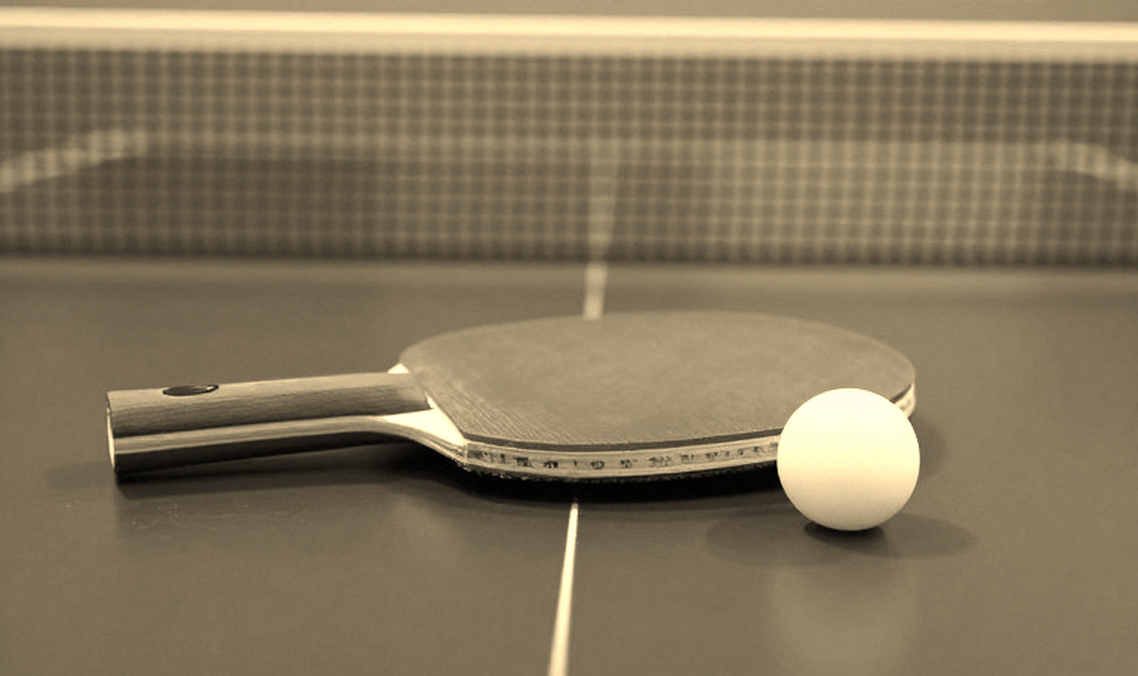
But when I started working as a journalist, I realized nobody was keeping those sounds. Nobody was keeping even the simplest numbers. And if you don't record, you can't analyze. If you can't analyze, you can't select. If you can't select, you can't develop. A broken chain that begins with a blank sheet of paper.
Many people will tell me: "Vietnamese table tennis has always been small, why bother?" I disagree with the framing. Because when I look at our neighbours in the region, I see a difference that isn't about money — it's about memory. Thailand has had a national competition database for years. Singapore keeps academy-level player files updated quarterly. Even the Philippines, no table tennis power, publishes head-to-head compilations after every SEA Games.
Vietnam does not. Or if it does, it lies scattered in the personal notebooks of a few devoted coaches, who will retire within the next decade and carry the whole treasury to the grave with them.
I call this the cold-storage problem with no electricity — we have a warehouse of table tennis memory, but nobody has plugged it in.
Context: A sport with no map
To understand how Vietnamese table tennis ended up here, you have to place it correctly on the regional map.
Table tennis has an extremely disciplined global competition system. The International Table Tennis Federation (ITTF) runs the professional World Table Tennis (WTT) circuit, with tiers from Contender, Star Contender and Champions up to the Grand Smash — the highest level. World ranking points roll over on a 52-week cycle: a tournament's points expire exactly one year after it ends. It is a brutal but fair mechanism — it forces players to compete constantly, and it rewards nations with the logistics to send people around the world.
Vietnam participates at a minimal level. A few leading players have WTT points, but mostly from Asian regional events where the competitive density is lower. The number of Vietnamese players inside the world's top 200 can be counted on one hand, and that number barely moves year to year. Which says something simple: we do not have a pipeline carrying players into the world — we have scattered trips.
At regional level, the picture is no brighter. Southeast Asia has two dominant table tennis forces: Singapore and Thailand. Singapore has produced world-class players, especially in women's events, through a naturalization and systematic development strategy spanning decades. Thailand has a broad grassroots base and several men and women who regularly reach knockout rounds in Asia. Malaysia, Indonesia and the Philippines chase from behind. Vietnam sits somewhere between the chasing group and the leaders — good enough for SEA Games medals, not good enough to go further.
But there is a paradox here I want to dissect: it lies not in the results, but in how we narrate the results.
Every SEA Games, Vietnamese media spends a few days on table tennis — usually after a medal. Those articles share a structure: the player overcomes hardship, the coach is devoted, the family sacrifices, and there is a medal. That structure is moving, but it tells us nothing about why that medal was silver and not gold, or why that player lost to a Thai opponent in the fifth set.
We tell the story of emotion and forget the story of technique. We cry with the players but cannot read the match with them. And a sport that is only told through tears will only ever have tears to tell.
Dissecting the technical shell: Why we lose the fifth set
This is the section I want to spend the most time on, because a former racket-holder like me can say things a purely journalistic reporter cannot.

Elite modern table tennis has undergone a technical revolution that Vietnam has largely sat out. That revolution has three axes: speed, spin, and the ability to switch between defence and attack within a single rally.
The first axis is speed. Since the celluloid ball was replaced by the plastic ball in 2026, ball speed dipped slightly but spin dropped far more, making rallies longer and demanding far more brutal fitness. Players who can sustain high intensity across seven consecutive sets are those whose fitness was built from adolescence under a scientific programme. In Vietnam, most clubs still teach fitness the traditional way — distance running, skipping, ball drills — while missing the most important part: specialized conditioning for each muscle group used in each stroke.
The consequence is something I have observed many times: Vietnamese players often play very well in the first two sets, matching or exceeding their opponent, then run out of gas in the fourth and fifth. Not because they lack spirit. Because their bodies were never taught to endure that intensity.
The second axis is spin. Modern table tennis is a sport of spin. A world-class forehand loop can generate over 100 revolutions per second. To create that spin, a player needs three things: wrist technique, the right rubber, and the base fitness to reproduce the motion hundreds of times per match. Vietnam has some players with excellent wrist technique — I once watched a young player in Hai Duong execute a sidespin serve that I had to replay three times in my head to understand. But individual brilliance cannot replace a system.
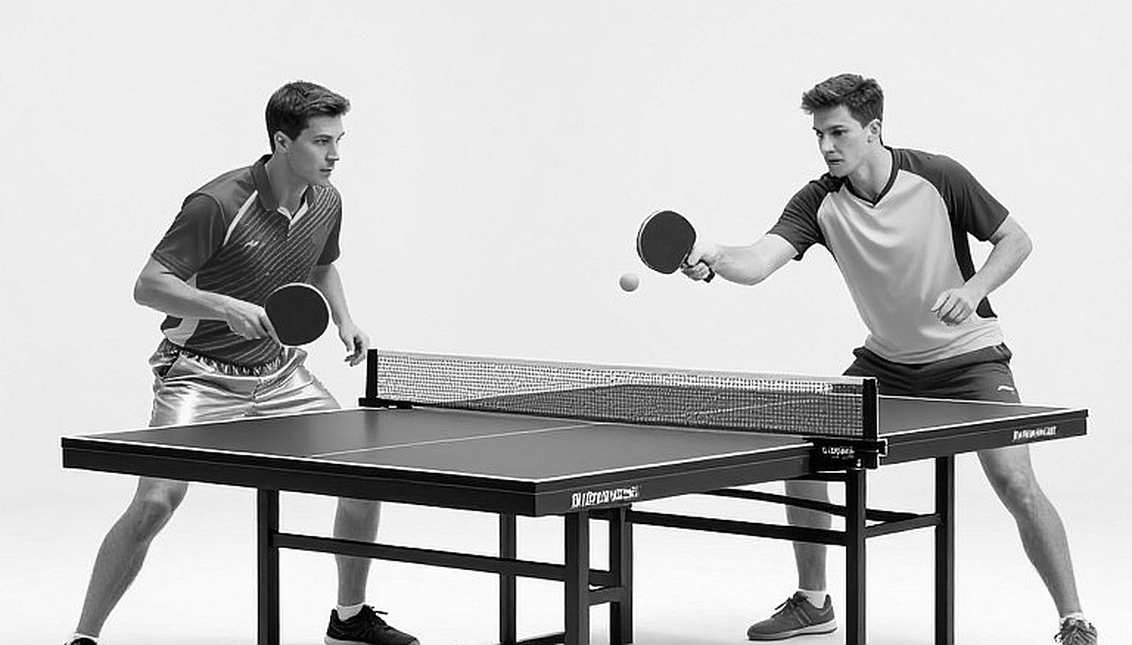
The third axis, and the most important, is transition. Elite modern table tennis no longer divides cleanly into attackers and defenders. The world's best can block a heavy loop, instantly counter-attack, retreat to defend from distance, then step back in to attack — all inside two seconds. This demands elite reading of the game, and it can only be trained when a player faces opponents of equal or higher level continuously.
In Vietnam, our competitive pool is tiny. The number of players good enough to push each other in a national tournament might be a few dozen. Which means Vietnamese players spend most of their training beating people they already know, and very little time facing the unfamiliar. In sport, familiarity is the death of progress.
Equipment: The rubber revolution we missed
One thing rarely discussed in Vietnamese table tennis is equipment.
At elite level, rubber is no longer a side detail. It is part of tactics. Fast attackers use rubbers with high spin and appropriate hardness to optimize outgoing speed. Heavy-loop attackers use softer rubbers to generate more spin. Defenders use pips-out rubber to neutralize an opponent's spin. Choosing rubber is a highly individualized decision based on body structure, playing style, even climate.
In Vietnam, most young players start on whatever rubber is available, usually cheap, and rarely get to experiment with different types to find the optimal combination. This sounds minor, but the consequences are large: a player on the wrong rubber will never reach their potential, and worse, will develop faulty movement habits to compensate for the mismatch. Those habits are very hard to fix later.
I once watched a young coach in a northern province spend an entire evening wrestling with a student's racket, trying to adjust the rubber sheet without proper tools. He did it by hand, with a small knife, and with faith. The result was a racket that was not bad, but could not be good. And that is the reality of most Vietnamese table tennis: we do everything on faith, because we have nothing else to do it with.
The sad part is that this equipment revolution does not require huge investment. It requires shared knowledge, a systematic testing process, and someone responsible for recording results. Vietnam could do all three if it wanted. We haven't, because no one has yet seen the need.
Player data: People look at the price tag, I look at the feet waiting for a chance
I have a habit my newsroom colleagues tease me about as an "occupational disease." Whenever I watch a table tennis match, I record not just the score but things almost nobody records: how many serves the player made in a set, how many points they won on serve, how many they lost when attacked on the left side, which way they moved when pinned into a corner.
I did this for years, in notebooks I kept private. And when I began cross-referencing pages, I realized something: the patterns in them were not random. Where a young player tends to lose points, at what moment in a set, after how many rallies. Those patterns are predictable. And if predictable, they are fixable.
But to fix them, you need data. And that data — in Vietnamese table tennis — barely exists in shareable form.
Let me give a concrete example of what we lack. Head-to-head is the most basic tool in any sport. Look at it and you know who usually beats whom, under what conditions, and how the trend changes over time. In countries with developed table tennis, you can look up a head-to-head between two players in thirty seconds. In Vietnam, to get that information you have to ask both coaches directly, and the answer is usually "I vaguely recall that..."
This absence is not harmless. It directly affects tactics. A coach who does not know where their student lost to a given opponent in the past cannot prepare a suitable match plan. They will teach the student to play the way they themselves believe is right, based on memory and intuition — precious things, but no substitute for systematic data.
I am not saying data is everything. I have watched Vietnamese coaches read matches by intuition with astonishing accuracy. But one person's intuition cannot be taught to a generation. Data can.
The competition system: A horizon only as wide as one SEA Games
When I ask a young coach about their student's goals, the answer is always the same: "Try to make the SEA Games, maybe win a medal."
Nobody talks about Asian qualifiers. Nobody talks about a WTT berth. Nobody talks about breaking into the world's top 100. Vietnamese table tennis's horizon is as wide as one SEA Games — which means it is very narrow.
This is a structural problem, and it explains a great deal.
First, the SEA Games is a two-year-cycle target. A player can plan to peak for one edition, then fall into a long trough afterwards. This structure encourages short-cycle preparation instead of sustainable long-term development. Second, because the SEA Games is the only target, all resources are poured into it. Players without a SEA Games slot have nothing to compete for, no reason to continue, and often retire early. Third, and most importantly, this structure cannot produce a middle class of table tennis — players who are not stars but good enough to form the base, and numerous enough to create a competitive ecosystem.
A sport only lives when it has a large middle layer. In Vietnamese table tennis, the middle is nearly empty. There are a few at the top and a sea of recreational players below. In between is a vacuum.
Meanwhile, the WTT system offers a clear pathway for anyone who wants to go far: earn points at small events, climb gradually to bigger ones, build a career slowly. But to enter that pathway you need an organization behind you — to register, to travel, to cover costs. And in Vietnam, no organization can afford to send a player around the world for a year.
This is the point I want to stress, because it is often misunderstood: the problem is not that we lack money — it is that we have never defined the route. Even with money, we would not know where to send a player, because nobody has drawn the route.
The regional competitive picture: Where we stand in Asia's pyramid
To understand Vietnam's position, you have to look at the structure of Asian table tennis — a pyramid with a very wide base and a very sharp peak.
At the peak is China, a table tennis nation so deep that its reserve squad could win medals at any world championship. Below China are Japan and South Korea — two nations with highly systematic youth development, academies run like real schools combining academic education with professional training. Then come a group of European and Asian nations such as Germany, France, Sweden, Chinese Taipei and Hong Kong — places with long traditions and strong domestic competition systems.
So where is Vietnam? Frankly: in the lower part of the pyramid, but not at the base. We have players who can match Southeast Asian opponents, occasionally surprising East Asian opponents in qualifiers. But we have never crossed that threshold.
I want to distinguish two concepts that media often conflate: the gap in level and the gap in system.
A Vietnamese player can match a Japanese player in a specific match. The level gap between two individuals may not be large. But the system gap is enormous. The Japanese player trains in an environment with hundreds of peers at the same level, dozens of specialized coaches, the best equipment, and a dense competition calendar. The Vietnamese player trains in an environment with a few peers at the same level, one coach doing everything, and a sparse calendar.
The result? In a specific match, the two may be even. But over a long career, one will grow and the other will stand still. And it is that system gap, not the individual gap, that separates gold from bronze at major Games.
Governance and rules: The scorekeepers don't write the rules
I have never been someone who enjoys talking about organizational machinery. But I have to, because it is inseparable from this story.
Vietnamese table tennis is governed by a national federation, with provincial and municipal federations as the grassroots units. This structure is not so different from other countries. The problem lies here: coordination between these levels has never been standardized.
Each province has its own selection method. Each province has its own competition system, usually on different schedules. Each province has its own performance standard for funding support. This means a young player in Hai Duong and one in Ho Chi Minh City can have two entirely different paths to the national team — or no path at all.
And here is the crux: when standards are not standardized, standards become an instrument of power. Whoever sets the standard controls the opportunity. This does not mean corruption. It only means the system lacks predictability, and in a system without predictability, people are more vulnerable.
A small example I once observed. At every youth national team selection, the participant list is usually not widely published in advance. Those who know are usually those long inside the system. Those outside — talents from small provinces, from private clubs, from families with no sporting tradition — usually find out when it is too late.
I have no evidence of a specific injustice. But I have an observation: across many years of watching, I have never once seen a player from a province with no table tennis tradition suddenly appear in the youth national team. Not because there is no talent there. Because the system was not designed to see them.
Coaches and the development pipeline: How many dreams does one academy bury
Talking about youth development in Vietnam without talking about the "lo" (academies) would be an omission. But I want to use the word carefully, because in Vietnamese it carries both a literal and a figurative meaning — and the figurative meaning is usually painful.
Most table tennis academies in Vietnam operate semi-professionally. A coach or group of coaches opens a class, charges tuition from families, covers the cost of renting tables and space, and organizes internal tournaments. The survival of these academies depends entirely on the personal reputation of the head and the ability of families to pay.
This model has advantages: flexibility, closeness, and the ability to let talent emerge from places the formal system cannot reach. But it has one fatal flaw: it accumulates nothing. When the coach retires, the academy dissolves. When a family can no longer afford it, their child leaves the game. No organization preserves what was built.
I once knew a coach in a southern province. He had taught table tennis for nearly forty years, trained hundreds of children, a few of whom reached the youth national team. He kept a notebook recording his entire teaching history: student names, start dates, progress, achievements. The notebook was as thick as a bible, and he told me he would burn it when he died, because nobody needed it.
I sat with him for an entire afternoon while he read page after page. In it, he recorded a student he considered the most talented in forty years of teaching. That boy quit table tennis at seventeen to work and support his family. He said it without sadness, without anger, just slightly slower. That is how a man who has done a job for forty years talks about the greatest loss of his life.
That story is not exceptional. It is typical. And as I left his house, I asked myself: how many notebooks like that have been, and will be, burned across Vietnam? Every burned notebook is a piece of Vietnamese table tennis memory erased. And when enough notebooks are burned, we will have nothing left to remember but hollow titles.
On the coaching side, there is a hard question: how can a Vietnamese coach compete in knowledge with colleagues in Japan or Germany? In those countries, coaches must pass tiered training courses, recertify periodically, and have knowledge of sports physiology, sports psychology and even data science. In Vietnam, most table tennis coaches are former players returning in a new shirt. Their knowledge is oral knowledge, passed from their teacher, and their teacher's teacher. That is not bad — but it means technical errors are also faithfully transmitted.
I am not calling for a coaching revolution, because that needs resources we do not have. But I think there is one small step we could take now: create a space for coaches to share knowledge systematically. Not a seminar, not a training camp, but a place where they can bring their real questions and receive real answers from each other.
The risk surface: The things that could reverse everything
If you asked me what worries me most about Vietnamese table tennis in the next decade, I would not say SEA Games, not medals, but a risk surface that is usually overlooked.
The first risk is injury. Table tennis is a high-intensity sport that is rarely perceived as dangerous. In reality, the shoulder, wrist, elbow, back and knee of a professional table tennis player endure enormous, constant, repetitive stress. These cumulative injuries typically surface exactly when a player is at their career peak. And when that happens, Vietnam's recovery support system is not enough to bring them back.
I have seen a female player with regional championship potential forced out for nearly two years by a shoulder injury. She returned with an entirely different forehand, much weaker, and never regained her form. Her story did not make the papers. It existed only in afternoon training sessions, as she tried to execute a motion her body had forgotten.
The second risk is the generational gap. The current national team is built around a group of players already at mature age. Who is behind them? There are a few young faces, but not enough to create internal competition. In sport, internal competition is the strongest driver of development. Without it, a generation of players can sit comfortably in their positions for years, and when they leave, no one replaces them.
The third risk is disconnection from the younger generation. Looking at the academies, the number of children starting table tennis is trending down in major cities, where the choice of sports for children has become far more diverse than twenty years ago. Table tennis must compete with football, basketball, badminton, swimming, martial arts and countless others — each with better promotion. If table tennis cannot create a compelling story for children and parents, it will slowly lose its supply.
And the fourth risk, perhaps the biggest, is the loss of belief among insiders themselves. When I talk to young coaches, I sense something more dangerous than disappointment: resignation. They do not say "we will change." They say "what can you do." Resignation is the greatest enemy of any reform effort, because it makes people stop looking up.
The public story: What is told and what is forgotten
I want to pause on one specific story, because I believe systemic problems only become clear when we look at a person.
In recent years, a few Vietnamese female players have become familiar public faces. They look good, they play at SEA Games, they win medals, and the media works very effectively with them. Articles about them spread, fan meetings are held, and they become celebrities to a degree.
From one angle, this is good. Table tennis needs representative faces. But from another, it reveals a worrying imbalance.
When I observe how Vietnamese table tennis appears in the media, I notice a pattern: we do not talk about the players, we talk about celebrities who happen to play table tennis. Attention goes to looks, personal stories, emotional moments — and very little to technique, matches, development. That is not the players' fault. It is the fault of a sport that has never built a language to talk about itself.
Vietnamese football has a relatively developed media system, with people who understand tactics, history, players. Vietnamese table tennis has none of that. The number of people writing seriously about table tennis in Vietnam can be counted on one hand. And when few write, few stories are told. Talents without stories are left behind.
This is why I started taking notes. I do not take notes because I think I will change anything. I take notes because I do not want to grow old and sit with a coach like the forty-year man, listening to him read about a forgotten talent while I can do nothing but nod.
Industry transmission: One weak link breaks the whole chain
Finally, I want to talk about industry structure — because this is the part few consider, yet it decides the survival of the whole system.
Vietnamese table tennis can be divided into three layers. The upstream layer is development, equipment and logistics. The midstream layer is the competition system, federations and clubs. The downstream layer is media, sponsorship and the fan market.
Upstream, we lack almost everything: standardized curricula, specialized equipment, specialized personnel. Midstream, we have a thin competition system, a few semi-professional clubs, and a federation with limited resources. Downstream, we have a very small fan market, and almost no significant commercial sponsorship.
This creates a negative self-reinforcing loop. No sponsorship, no money to invest. No investment, no results. No results, no attention. No attention, no sponsorship. The loop locks itself tight.
To break the loop, you need an intervention point. In my experience, the most effective intervention is not sponsorship — it is story. When a sport has a story, it attracts attention. When it has attention, it attracts sponsorship. When it has sponsorship, it can invest. This is the path Vietnamese football took, however bumpily. Vietnamese table tennis has not yet found its story.
I think that story exists. It is not the story of a SEA Games medal. It is the story of a boy in a small province who could have become an Asian champion if he had been seen, and of the people who did not see him. That is a sad story, but a true one. And true stories usually have more power than beautiful ones.
The contrarian angle: The problem is neither talent nor money
Now I want to say what I believe is true, even if it annoys people.
For years, those working in Vietnamese table tennis have built a story to explain their weakness. That story has two versions. The first says: we lack money. The second says: we lack talent.
Both are wrong, or at least incomplete.
On money: yes, Vietnamese table tennis lacks money compared to developed nations. But Singapore is not a nation with a naturally mighty table tennis base either; they built results through a focused, targeted, decades-long strategy. Thailand is not much richer than Vietnam, yet has a broader grassroots system and a denser domestic competition structure. In other words, money helps, but it is not the root cause.
On talent: I have stood in table tennis halls across Vietnam, and I can tell you we do not lack talent. We lack the mechanism to turn talent into results. A child with ability in Vietnam can become a decent player. An equivalent child in Japan can become an Asian-level player. The difference is not the child. It is the system around the child.
So what is the root cause? In my view, it is the absence of a system for memory and knowledge transfer. We do not accumulate. Every coach reinvents the wheel. Every generation starts from scratch. Every time a good player retires, what they learned disappears with them.
This sounds abstract. But it has very concrete consequences. For example, when a young player enters the national team, they must relearn from scratch what their predecessor learned ten years ago. No curriculum is inherited. No lesson is recorded. This is why Vietnamese table tennis's development is not a rising straight line but erratic cycles of up and down.
I once told a friend at the federation that Vietnamese table tennis needs a full-time record-keeper. He laughed. He said there is no budget for such a position. But I do not think it is a budget problem. I think it is a problem of recognizing the value of memory. We can pay for an overseas training camp, but not for someone to sit down and record what was learned from that camp. And so, after every trip, we return feeling we have improved, but with nothing preserved to prove it.
A direction: Replanting from memory
If I were asked what I would do first with the power to change Vietnamese table tennis, I would not talk about money, not foreign coaches, not overseas camps. I would talk about something much smaller: an open database.
A database recording the results of every table tennis tournament from youth to national level. A database recording the profile of every player of sufficient standard, from date of birth, height, dominant hand, blade type, rubber type, to playing style and observed strengths and weaknesses. A database recording head-to-heads between all players in any official tournament.
With such a database, everything else would be easier to start. Coaches would have information to prepare tactics. Reporters would have data to write. The federation would have a basis for selection. And players would know where they stand relative to their peers.
I know this sounds dry, even boring. But I have traveled enough, sat enough in empty arenas, to understand that the big revolutions in sport usually begin with the smallest, dullest things. Before there was a developed football nation, England had people sitting down recording scores. Before there was a great basketball nation, American basketball had people recording statistics. Whoever records holds the future.
In Vietnam, we already have recorders. They are the old coaches keeping notebooks in drawers, the reporters like me scribbling in private notebooks, the parents photographing their children at every tournament. We just have no way for those records to meet.
What I want to see is a place where those memories can meet. Not a big organization, not a million-dollar funded project, but a small, enduring mechanism that lets people who are already recording share with each other. Such a mechanism does not need much money. It needs patience.
And patience, sadly, is exactly what Vietnamese table tennis lacks.
What I heard in the silence
Back to that afternoon in Hai Duong, as the youth final ended and eleven people began leaving the stands.
I stayed a little longer. The two children were packing up. One of them had lost, but did not cry. He held his racket, looked at the rubber as if reading something, then put it in his bag. The way he looked at that rubber made me think of a question he might ask himself ten years from now: "What did I do wrong?"
The answer, if there is one, will not lie in the match he just lost. It lies in the thousands of training sessions before it, in the small decisions about rubber, conditioning, technique, tactics — decisions nobody recorded, because nobody had the habit of recording. It lies in a system that did not see him early enough, and by the time it did, it was too late.
But I do not want to end this story with pessimism. Because in that nearly empty hall, I heard something I want to believe is meaningful. As the two children played their last rallies, the sound of the ball on the table rang out very clearly, very purely. There was no crowd noise to drown it. And in that stillness, I heard the true rhythm of a rally: the rhythm of the serve, the receive, the attack, the defence, the transition. It is a language only those who have played can hear.
When table tennis goes silent, that is when I hear its true heartbeat. And that heartbeat is still there, steady, patient, despite no one recording it.
Under the dust of time, there are still gems no one has bothered to pick up. But a gem left under the dust too long will be buried by it, and at some point it is no longer a gem. It is just a stone. The frightening thing is not that we have no gems. The frightening thing is that we have gems, but no one to hold the broom.
People look at the price tag; I look at the feet waiting for a chance. And those feet, in Vietnamese table tennis, have been waiting far too long.
No silence is meaningless
I did not write this piece to conclude that Vietnamese table tennis is dying. I wrote it to pose a question I believe matters more: what are we keeping, and what are we losing?
Every time a young player leaves the training hall because the family can no longer afford it, we lose a memory. Every time a coach retires without passing anything on, we lose a memory. Every time a match ends with no one recording the score, we lose a memory. These losses are small, scattered and invisible. But added together, they form an enormous void, and it is that void that keeps Vietnamese table tennis behind.
No silence is meaningless, only that we have not been patient enough to hear it. And if there is one thing I want to leave after this article, it is a simple proposal: start recording. No need for a big project. Just a notebook, one person, and a habit. A sport's memory is built from small things like that, and it is only lost when no one bothers to pick up a pen.
As for the two children in Hai Duong that day — I still keep their names in my notebook. I do not know where they will be ten years from now. But at least, on an afternoon when only eleven people sat watching, someone recorded that they were there, that they played a final, that they looked at their rubber as if searching for an answer. And once that is recorded, it cannot be entirely erased. That may be all a sports archaeologist can do — but it may also be the first step of everything.