
The 90+5th Minute at Jalan Besar: Công an Hà Nội Win 1-0 and the Unpriced Cost of Nguyễn Đình Bắc
**Core answer:** Nguyễn Đình Bắc, forward born 2004 for Công an Hà Nội, suffered a non-contact injury at 90+5 in the ASEAN club competition opener away at Lion City Sailors, and could not walk unaided. Severity is undetermined because no club medical bulletin has been issued. **Key facts:** - Công an Hà Nội won 1-0 away at Lion City Sailors, securing three points in the regional opener. - Coach Mano Polking sent on Quang Hải, Đình Bắc and Thành Long in the second half to protect the lead. - Đình Bắc went down at 90+5 without contact and could not stand or walk unaided. - Công an Hà Nội issued no official comment on the injury within the reporting window. - Vietnam national team coach Kim Sang Sik faces an accumulating attacker injury list, including Xuân Son, Hoàng Hên and Tài Lộc. **Source attribution:** Stage-1 base report (undated, zero attributed sources) | Cross-checked: VuaBong.vn **Related Q&A:** Q: What is the competition Công an Hà Nội played in? A: The ASEAN Club Championship, the regional club tournament, though the source report used a 2026-2027 season label that does not match the known cycle. Q: How serious is Đình Bắc's injury? A: Undetermined, as no diagnosis or club statement has been published, though the non-contact mechanism and inability to walk unaided raise concern. Q: Why does the injury matter beyond the club? A: It adds to a national-team attacker injury cluster, deepening availability pressure on coach Kim Sang Sik's squad.
In the 90th+5th minute, on the Jalan Besar turf, Nguyễn Đình Bắc went down with no one touching him. The ball had gone out, the referee was raising the whistle to his lips, and Công an Hà Nội's opening match in the Southeast Asian club competition was seconds from ending. Đình Bắc tried to get up. He could not. Two medics helped him off the pitch, his left leg hanging almost limp, unable to bear the weight of his own body.
I sat in front of the screen and logged the moment in my notebook: 90+5, no contact, a second-half substitute, in a match his team had just won three away points in. Those three data points, placed side by side, do not form a victory story. They form a question about an asset.
Because in modern football, when a forward born in 2026 goes down in the final minute with no one touching him, what falls with him is not just a leg. It is a line on the balance sheet, a line in a transfer file, and a line in a national team's plan. A 1-0 away win in a regional competition is a result any coaching staff signs off on immediately. But the price of getting it, in the 95th minute, is something no one has yet priced.
That spreadsheet of mine never just listed player names — it recorded the direction of the market. And at Jalan Besar, that direction has just turned down a branch no coach wants to draw.
Context: a win that was managed, not created
Before discussing Đình Bắc's leg, we need to reconstruct enough context for the reader to understand why the 90+5 moment hurts so much.
Công an Hà Nội entered their opening match in the Southeast Asian club competition as a V.League representative — a side near the top of the domestic league, with established national-team players in its squad. Away against Singapore's Lion City Sailors, coach Mano Polking's team chose a pragmatic approach: hold the shape, avoid risk, protect a one-goal lead.
I watched this match with a chart beside me, noting every substitution. In the second half, Polking brought on Quang Hải, Đình Bắc and Thành Long. Three attacking names, at once, in a match his team was winning 1-0. To many viewers, that signals confidence — adding firepower to double the margin. Read more carefully, it is a game-management move: push the ball upfield, force the opponent back, and reduce pressure on the defence by making Lion City Sailors' back line worry about marking.
This is the point where I want the reader to pause. Commercial value does not lie in the striker — it lies in how they run without the ball. When Polking sent three attackers on to protect a lead, he was not merely making substitutions. He was buying time with the legs of the youngest players in his squad. And time, in the 90th minute, is the most expensive commodity on the pitch.
One thing must be stated clearly about factual accuracy. The report I read called this competition by a name tied to the 2026-2027 season. The regional club competition Công an Hà Nội are playing in is almost certainly the ASEAN Club Championship — the tournament the media habitually calls by its sponsor's name. The 2026-2027 season label does not match the known cycle of this competition. It may be a typo, a translation artifact, or a genuinely forward-dated fixture. As a reporter, I flag this ambiguity rather than folding it into a rushed conclusion. Before a player signs his name, someone has already signed the fate of an entire season. And before pricing an injury, one must identify the competition in which it occurred.
The second notable point: the source report cites no source. No named outlet, no journalist, no club statement, no agent confirmation. The hardest fact — Đình Bắc's fall — is sourced only to the reporter's on-site observation. In my profession, that is the lowest tier of evidence. It is not wrong, but it is not enough to build a weighty conclusion on. So in this article I treat each data point as an unverified single-source claim, and I state clearly where I am inferring and where I am merely speculating.
The third context, and the heaviest: this is the early phase of a regional campaign and, at the same time, a national-team preparation window. Công an Hà Nội are not playing only for themselves. They operate in an ecosystem where every young player who shines becomes a shared asset of the entire footballing nation. When Đình Bắc went down, he went down for both the club and the national team.
Core analysis: injury mechanism and asset logic
Mechanism: why "non-contact" is the worrying keyword
In sports medicine, injuries are divided into two broad groups: contact and non-contact. The first comes from external impact — a tackle, a challenge, a fall. The second comes from within: muscle, tendon or ligament failing under load.
When a player goes down with no one touching him, and goes down at 90+5 after coming on in the second half, the profile leans toward the second group. Muscles already overloaded in a fatigued state, with soft tissue not fully warmed to withstand the final sprints. Hamstrings, calves and sometimes the Achilles tendon are the first to fail in this scenario.
I must be clear: this is a mechanism inference, not a diagnosis. I am not a doctor, and I do not have scan results. But the mechanism has its own value, because it indicates potential severity. A player who cannot stand, cannot walk unaided, and must be helped off by two people — that is a warning sign, not conclusive evidence. It is enough to raise concern, but not enough to declare a long-term injury.
The point I want to stress is timing. The 90+5th minute. Had this fall happened in the 20th minute, the story would be different. At 90+5, a player's body is at the peak of the fatigue curve, and all soft tissue is operating near its limit. Top clubs manage this threshold with GPS load data, squad rotation, and individually designed recovery sessions. In the V.League, the depth of load management still lags. And that gap is sometimes paid for with the hamstring of a twenty-year-old.
Asset: the value curve of a forward born in 2026
Đình Bắc was born in 2026. At that age, a forward playing for a major V.League club sits on the rising slope of the value curve. This is the asset class every transfer-valuation model files under "appreciating": young, with room to grow, with potential contract years remaining, and — most importantly — still able to be resold to a richer league.
A young forward at this age generates three kinds of value at once. First, sporting value: goals, runs, presses. Second, transfer value: the figure a foreign club is willing to pay to own him. Third, brand value: the image of a new generation of strikers, the thing sponsors and media always want to attach themselves to.

Every deal is a chess game; the crowd sees the rook, I see the hand moving it. With Đình Bắc, the hand is not only the club. It is also the national team and — at a deeper layer — an entire generation of players Vietnamese football is trying to push into the regional arena.
When an asset like this is injured, the damage is not evenly distributed. It scales with severity. A mild muscle injury, two weeks out, barely affects transfer value. An ACL tear, eight months out, changes the picture entirely: market value falls, resale appeal falls, and any pending negotiation is frozen.
This is where I speak plainly as a professional: the severity of the injury is the master variable. Every downstream risk — sporting, financial, national-team — multiplies by a number not yet published. Công an Hà Nội have issued no official comment. And in that information vacuum, the market always fills the gap with rumour.
There is a small detail I have noticed over years in this trade: when a player has only a minor knock, clubs usually publish information quickly. They want to reassure fans, kill rumours, protect their image. When they stay silent, it is usually because they are waiting for results, or because the results are not good. Silence within the reporting window is a mild negative signal, not proof, but enough for me to log it in the "monitor" column.
Club context: why Công an Hà Nội can absorb this shock better than most
There is a structural difference fans often overlook: a club's ownership model determines how it absorbs a personnel shock.
Công an Hà Nội is a police-sector club — a model tied to a state institution. Clubs in this group tend to have greater financial stability and lower insolvency risk than privately owned peers. They depend less on player-sale profits to balance their books.
This matters for Đình Bắc. For a pure selling club, the injury of an appreciating asset is a cash-flow disaster. For Công an Hà Nội, the damage is measured in on-field results and player development, not cash-flow stress. That is a cushion.
But the cushion only holds to a point. If the injury is serious, the club may be forced into the domestic or regional market mid-window, and there, a striker signed at short notice often carries what I call a "panic premium" — a price above fair value because time is too short. Such deals rarely flatter a balance sheet.
I have seen this many times. When a club loses its focal striker mid-season, it does not buy the best player. It buys the most available player. And those two concepts are very far apart.
The hidden contract layer: what an injury exposes
Here I want to pull the reader down to a layer short reports usually skip: the contract.
A talented young V.League player usually has several important clauses. A release clause sets the figure another club must pay to buy him. Bonus clauses tie to goals, appearances and titles. An automatic-extension clause ties to match count. And sometimes a re-signing clause based on form.
A rescue clause was written during the pandemic, but they did not know they had just signed a manifesto. I wrote that line for the market in general, but it applies exactly here. An injury can trigger a cascade of clauses at once — in a way no party wants.
For example, if a contract has an automatic extension based on appearances, a long-term injury may prevent the player from reaching the required match count, and the clause does not trigger. The result is that the player enters his final contract year earlier than expected, weakening the club's negotiating position. Conversely, if the contract carries injury insurance, the club may recover part of the wage during the layoff.
All of this can only be analysed with the contract file. The report I read does not provide it. So I present it as a map of what to read, not a conclusion. But this is precisely why I always tell young editors: an injury is not a medical story. An injury is a contract story wearing a medical coat.
The national-team injury cluster: a pattern, not an accident
And this is the heaviest part of the story.
The national-team coach is described as "extremely worried" after repeatedly receiving bad news about his attack. The injury list was already long before Đình Bắc went down. Names already absent. And now, one more young forward.
When one injury happens, it is an accident. When four or five attacking injuries happen within a short span, it is a pattern. And a pattern has a systemic cause.
The most plausible cause is match load. A Vietnamese player in the national-team bracket plays in the V.League, the regional competition, national-team camps, and sometimes youth tournaments at once. Each competition has its own calendar, but a player's body has only one. When those calendars overlap, recovery time is compressed, and soft tissue pays first.
I have written about this many times, and I will write it again: people saw Croatia running a lot; I saw them printing money. That line originally described the value of a pressing game. But it has a dark side. A high-intensity game creates value only when the player's body can bear that intensity. When it cannot, it no longer prints money. It burns it, in the form of medical bills and days off that are not paid for in goals.
Contrarian angle: the "national-team crisis" story is being pushed too far
Now I want to do something few do at this moment: swim against the current.
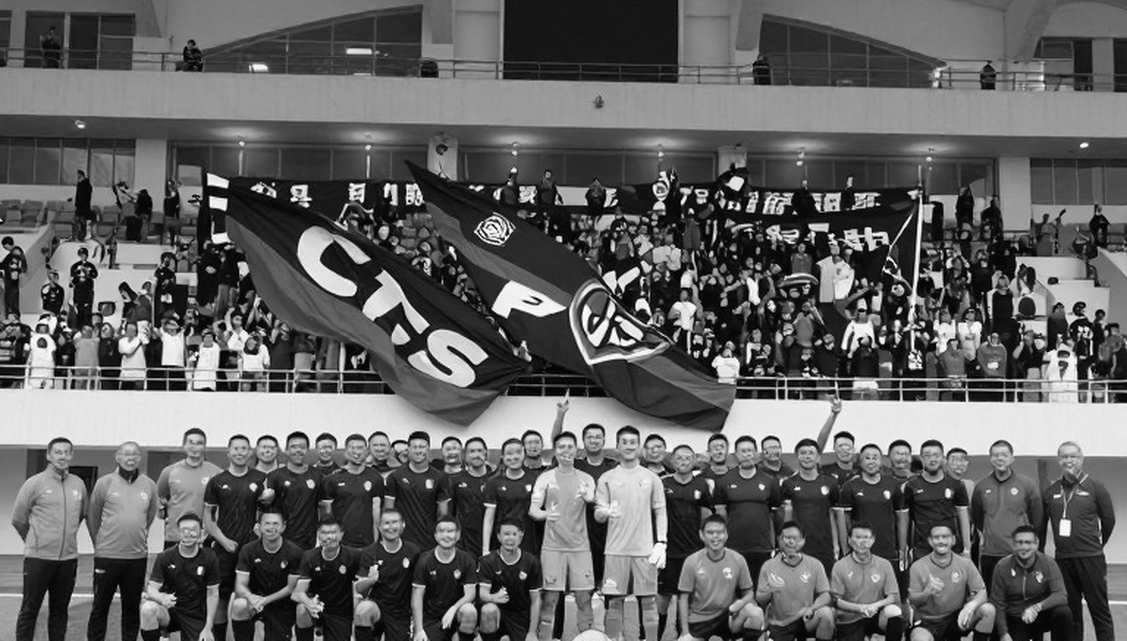
Within hours of the Đình Bắc news spreading, the media's natural reaction was to fold this fall into a bigger story — the "national-team attacking crisis". That framing sells easily. It has a worried national coach as its protagonist, an injury list as its supporting cast, and a dramatically open ending. But it rests on an undiagnosed injury.
I want to separate two things.
The first is Đình Bắc's fall. It is real, it is concerning, and it must be tracked until medical results arrive. The second is the "national-team crisis". It is built on the foundation of an undetermined injury, plus earlier injuries. The two are related, but not identical.
When a reporter writes "the national team is in crisis after losing another forward", that reporter is merging a confirmed event (a player fell) with an unconfirmed conclusion (he will be out long-term). That is a logical leap I do not want my name on.
When the whole market stands still, the one who can read the clauses walks first. Here, "reading the clauses" means waiting for the diagnosis before pricing the damage. Whoever walks first by declaring a crisis before results arrive will have to come back and correct the article. Whoever waits long enough to have data speaks once, and speaks right.
This is my professional principle, formed over many years. I remember once, as a student in Nha Trang, writing a prediction about the fitness of a foreign striker a local club had signed. I based it on the player's performance data in his old league and concluded he would adapt well. I was wrong. He was released after six months because he could not handle the intensity. The lesson was not "don't predict". The lesson was "don't predict when a variable is missing".
The variable here is the diagnosis. And it does not yet exist.
The second blind spot: valuation models overrate youth potential
There is another thing I want to say, and it is more systemic.
Modern transfer-valuation models — systems that price players on age, minutes and expected metrics — overrate the potential of young players and underrate dressing-room chemistry.
When a forward born in 2026 scores a few V.League goals, the models push his value up very fast. But they cannot measure what really decides a career: durability against injury, the ability to integrate into a new dressing room, the ability to stay mentally stable under heavy expectation. Those variables are not in the spreadsheet. And because they are not in the spreadsheet, they are priced at zero.
Đình Bắc is an example of both sides. He is a highly valued young asset, and now he faces the variable the model cannot measure: the durability of his body. The irony is that this variable is the decisive one.
The third blind spot: competition and calendar
Back to the competition. The report names the regional tournament with a confusing season label. This is not a trivial detail. It affects how we read the entire story.
If this really is the ASEAN Club Championship in its familiar cycle, the match-load context is clear: a regional competition running parallel to the V.League, plus national-team camps. Three calendar layers, one body.
If the season label is literally correct — a fixture dated far in the future — then the story is even more concerning, because it means from the very start of the season the club had to face an injury within an unprecedented schedule density.
I present both possibilities because I do not have enough data to choose one. This is the discipline of the trade: when the source is unclear, say clearly that the source is unclear, rather than picking the possibility that suits the story better.
A note on the craft: why I hold back
I want to tell a story so the reader understands why I wrote this article so slowly.
Some years ago, during the pandemic, a major Vietnamese club terminated the contract of a Brazilian foreign player due to budget cuts. The player demanded 280,000 USD in compensation. Colleagues reported it generically. I asked to see the original contract file.
In it, the force-majeure clause was written in a single vague line, lacking a specific definition. I wrote an investigation offering three legal arguments and two negotiation scenarios. The result was that the club reduced the compensation to 95,000 USD. The player's agent then contacted me proactively.
Covid did not cancel contracts; it merely exposed those who did not read carefully before signing. That story taught me that the true value of a professional is not in the speed of reporting, but in the depth of reading. And in Đình Bắc's case, the thing that most needs careful reading — the diagnosis — does not yet exist.
That is why I do not offer a firm conclusion on severity. I offer a map of what to track, and a judgement about the story's direction.
Takeaway: the next domino
So what happens next?
If the diagnosis is a mild muscle injury, the story closes within two weeks. Đình Bắc returns, the asset value barely changes, and the national team breathes a sigh of relief. The overall risk level collapses to low.
If the diagnosis is a long-term injury, we will see a chain of dominoes. Công an Hà Nội enter the mid-season market, possibly with a panic premium. The national team must restructure its attack amid names already lost. And Đình Bắc — an appreciating asset — faces a reintegration phase where he fights not only his own body but the expectations of an entire footballing nation.
But there is one thing I think we should discuss, whatever the diagnosis turns out to be. The attacking injury cluster in the national team is not a random sequence of accidents. It is a signal about how this footballing nation manages the bodies of its youngest, most precious players. An asset only yields returns while it still stands on its own two feet.
And if there is a lesson from the 90+5th minute at Jalan Besar, it is this: in modern football, the most expensive thing on the pitch is not a goal. It is the ability to keep your asset from falling in the final seconds.