
Hamstring, tears and the Thailand test: Vietnam step into a fateful fixture without Xuan Son
Câu trả lời trọng tâm: Tiền đạo Nguyễn Xuân Son dính chấn thương gân kheo ở phút 69 trận Việt Nam - Philippines và khả năng cao phải chia tay FIFA ASEAN Cup 2026, với kết quả MRI là yếu tố quyết định mức độ nghiêm trọng. Sự kiện chính: - Xuân Son rời sân phút 69 trong trận Việt Nam thắng Philippines 1-0, cơ chế chấn thương không va chạm - Chẩn đoán ban đầu là căng cơ gân kheo; MRI được lên lịch ngay ngày hôm sau - Thời gian hồi phục dự kiến từ 6 tuần đến 3 tháng, chưa có kết luận chính thức trước khi có kết quả chẩn đoán hình ảnh - Trận gặp Thái Lan ngày 29 tháng 9 trở thành bản lề tâm lý của cả chiến dịch nếu Xuân Son vắng mặt Nguồn: Phân tích chuyên sâu từ bản tin chấn thương và buổi họp báo của HLV Kim Sang Sik | Đối chiếu: VuaBong.vn Câu hỏi liên quan: - Hỏi: Xuân Son có thể trở lại trong thời gian nào nếu MRI nhẹ? Đáp: Nếu là tổn thương độ I, anh có thể trở lại trong 1-2 tuần, nhưng nếu độ III, khả năng xa sân lên tới 3 tháng. - Hỏi: Đội tuyển Việt Nam sẽ thay Xuân Son bằng phương án nào ở trận gặp Thái Lan? Đáp: HLV Kim Sang Sik có thể chuyển sang sơ đồ tấn công không trung phong tham chiếu, dựa vào tốc độ của Đinh Bắc và các cầu thủ chạy cánh. - Hỏi: Chấn thương này ảnh hưởng thế nào đến giá trị chuyển nhượng của Xuân Son? Đáp: Giá trị tài sản của anh sẽ được định giá lại sau khi có kết quả MRI, và các câu lạc bộ quan tâm có thể thêm điều khoản bảo vệ rủi ro chấn thương.
Minute 69. Nguyen Xuan Son trapped the ball with his chest in the center circle, holding it up for a familiar combination as if his body had memorized every step. He turned, saw the space ahead, and began to accelerate. Three strides. A burst of speed that anyone who has watched Xuan Son play has seen a thousand times. This time, his body refused to obey.

No one touched him. That was the detail that made people shiver. A striker like Xuan Son is used to high-speed collisions, to defenders dragging his shirt, to reckless tackles from behind. This time, the space in front of him was wide open. And he still fell.
His hand reached behind his thigh before he crumpled to the grass. His face, as the cameras panned across him, was not the face of a player who had just taken a malicious challenge. It was the face of a man who had just heard a strange sound from his own body. The sound of fibers tearing. The sound of hamstring tendons - the same ones that have sent countless strikers to the treatment room before him.
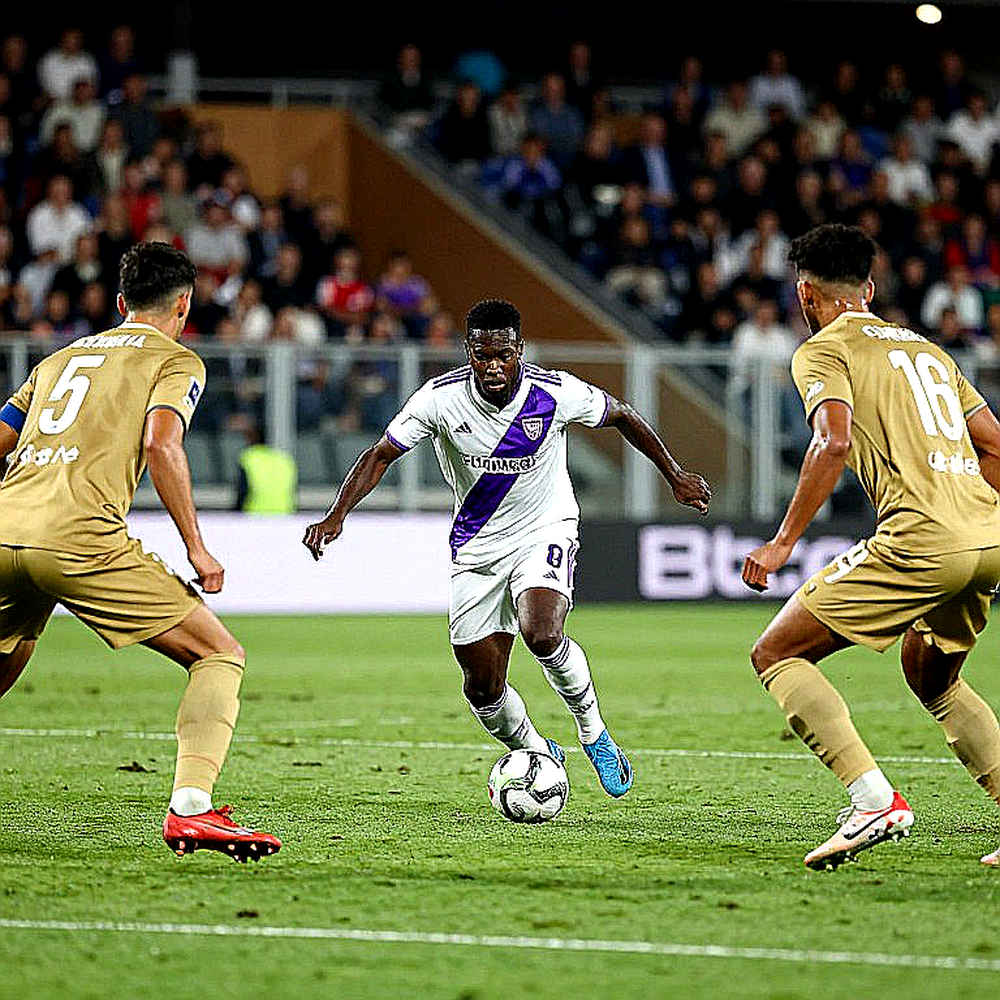
The stretcher was called. Xuan Son stepped onto it himself, but as the medical staff supported him, his hand never left the back of his left thigh. The cameras caught him shaking his head. A large man suddenly looked small in the moment he realized what he already knew before the diagnosis: a farewell was coming.
In the stands of Lach Tray that afternoon, the air had been electric with an important opening victory - Vietnam 1-0 Philippines - and then suddenly thickened. Fans began to step away from the story of victory to pass one question among themselves: "Is he seriously hurt?"
The initial assessment from the team doctor produced one word: hamstring. And the immediate plan was an MRI the following day - before anyone dared to conclude anything with certainty. But football, especially at a tense ASEAN Cup, always runs faster than medical results. Within the night, articles began referring to the "early goodbye" of Xuan Son from the tournament. An entire community began counting down to the match against Thailand on September 29 with a single question: Is Vietnam still itself without Xuan Son?
I want to pause here, before the numbers and torrents of analysis arrive, to look at the silence between two passages of play. There are empty-stadium afternoons when the bounce of the ball sounds like a confession that has never been answered. But there are also afternoons with full stands, where the silence is louder than any sound. Minute 69 at Lach Tray that day was one such silence.
A focal point worth an entire system
You can talk about Nguyen Xuan Son in two ways: a Brazilian-born striker, and a center forward for the Vietnam national team. But for anyone who has watched this team under Kim Sang Sik, Xuan Son is not merely one option in the attack. He is the physical reference point for Vietnam's entire approach to a match. In the accurate terminology of modern football analysis, he is a reference-point striker - a type of center forward around whom an attack is built and upon whom it depends.
A reference-point striker is not simply a goalscorer. He is the spine of the system: shielding the ball with his body, releasing it to the second line, dragging opposition defenders out of position with intelligent runs, and arriving at the right moment in the box to turn vague half-chances into goals. With Xuan Son, these three abilities converge in a physique that makes every Southeast Asian center back feel unsettled whenever a long ball is launched toward him. He shields like a wall, turns, and brings teammates into play. Defenders must assign two men to him, and that opens meters of space for Vietnam's wide players.
Even in the Philippines match, though he did not score, Xuan Son remained the center of every dangerous home attack. He held the ball up for midfielders to rotate around him, he dragged two opposing center backs out of position, he created space on the left half. But Vietnam's attack that day did not exploit those spaces well enough - the final crosses were cut out, shots were rushed, and the 1-0 scoreline reflected an incomplete day's work despite clear control of the game. Objectively, the win over the Philippines was consistent with expectations - a favorite usually wants a bigger margin, but in short tournaments, three points are an asset to protect rather than a performance to beautify.
Head coach Kim Sang Sik did not underestimate the importance of the number 12. He stated after the match that Xuan Son was "tactically and professionally a very important player." One must listen carefully to the word "very" in this sentence. This was not a diplomatic compliment for the cameras. It was the admission of a strategist who knew he was about to lose a piece that cannot be replaced by an equivalent substitution. Losing Xuan Son does not mean Vietnam loses a striker. It means they must reconnect an entire attacking mechanism that has revolved around him since the first day of camp.
There is a major difference between "replacing a player" and "rebuilding a system." Replacing a player means you have another name wearing the number 9 shirt, running on the pitch, executing instructions without changing the framework. Rebuilding the system means admitting that the long balls into the box, the crosses from wide areas, the set-piece routines, the half-spaces in front of the opposition penalty area - all of these were designed to exploit a specific physical presence that only Xuan Son possesses in this squad. When that reference point disappears, the entire blueprint must be redrawn.
The injury mechanism also demands deeper thought. A hamstring injury from a non-contact acceleration - what sports medicine calls a non-contact acceleration injury - rarely stems from pure accident. It speaks about workload volume, about accumulated fatigue on fibers that have been overworked, or about tissue readiness for match intensity. Different pitch qualities, schedule pressure, abrupt transitions between training and official matches - all are possible risk factors. Blaming it all on "bad luck" is convenient, but for anyone who has watched teams lose key players to this type of injury, a bigger question lingers: was Xuan Son's workload in the past weeks being managed with the precise care that a system dependent on him demands?
Silent data and a bulletin racing ahead of evidence
In an era when football is quantified by xG, xA, PPDA and countless other metrics, the issue of losing Xuan Son stands out for the opposite reason: those numbers have not even been calculated. No match-game metrics accompanied the injury report. People speak of a "massive loss" based on one match, an initial team-doctor assessment, and a projected recovery window so wide it is frightening: 6 weeks to 3 months. The entire story is being written with raw signals, not yet confirmed by imaging.
The MRI had not yet been performed when the first analytical lines were posted. Only one day after the fall at Lach Tray, an entire castle of assumptions had been built on sand: Xuan Son "almost certainly" saying goodbye to the FIFA ASEAN Cup 2026, Vietnam "losing its most important weapon" ahead of the Thailand match, a tournament campaign "possibly collapsing." Meanwhile, imaging could reveal a minor grade I strain that heals in two weeks, or a grade III tear requiring surgery and six months out. Everything still lies within the open range.
That is a lesson I remember most from many years of following elite football: what people say about an injury in the first 24 hours and what the MRI later reveals often differ enormously. Some grade I strains are almost indistinguishable from ordinary soreness, healing in ten days as if nothing happened. Some complete ruptures - grade III - require surgery and half a year away from the pitch. Between the two extremes lies a gray zone where every rushed analysis tends to err. The "6 weeks to 3 months" phrase from the team doctor is actually a defensive warning before diagnostic imaging, not a medical verdict. People rush to hear "3 months" and ignore the words "6 weeks."
I also want to raise a question about the surrounding details of the bulletin. A September schedule for a Southeast Asian championship that usually takes place at year-end is an irregular point that needs verification. Another piece of information suggesting the MRI would be conducted in Indonesia - not the home country of the Vietnamese team in this competition context - also needs clarification. In sports journalism, when a background detail does not align, the writer has a responsibility to ask: how accurate is the rest of the story? This is not meant to deny the seriousness of the injury, but to remind myself and readers that we are standing before an unfinished bulletin. Fans deserve to hear the conclusion after the MRI, not speculation written before the diagnostic machine even started running.
The old symphony and a new note named Dinh Bac
The space Xuan Son left on the pitch was filled, literally, by another name during the rest of the match against the Philippines. But more important than how he left the pitch is the image of his replacement in the first action. Dinh Bac - the young player brought on - did not head toward the box with the movement of a poaching center forward. He took the ball, turned, and drove into the penalty area himself, carrying a different kind of energy: the style of a winger capable of dribbling, not the style of a target man holding up play.
That could be the first visible signal of a restructuring. A team without Xuan Son cannot play the same game of long passes aimed at a physical anchor. They are forced into another shape: more possession through midfield, constant movement to create space, wide players exploiting space behind opposition defenses with their pace. In other words, Vietnam would no longer be a team attacking through one reference-point striker, but perhaps a team attacking as a collective unit, with endless shifts and faster short combinations.

The question is whether that transformation can be completed before September 29. The Thailand match is not a friendly to experiment with line-ups. It is seen as the hinge of the entire ASEAN Cup campaign, where memories of Vietnam-Thailand clashes across generations are relived at full emotional intensity. Thailand of recent years is no longer the absolute regional dominator of old, but they still possess squad depth and a confidence any opponent must respect. Entering that match without the foremost center forward could make Vietnam less predictable - a system without a clear reference point can create unexpected spaces that are hard to plan against. But it also means Vietnam's attack loses the option the team trusts most when the ball is swung into the box.
This tactical shift has another layer. A national team losing its central star is usually assigned a "crisis" narrative by the media. But for young players like Dinh Bac, this could be a golden window to prove themselves. They are not given an opportunity because the team believes they are better than Xuan Son; they are given it because circumstances force the team to find a new path. The pressure is enormous, but so is the chance. Vietnamese fans have seen unexpected heroes shine in the most difficult moments. Southeast Asian football - with its fiery matches and unpredictable turns - tends to reward those bold enough to seize the opportunity.
Asset value, commercial burden, and a pain that stretches beyond the pitch
Xuan Son's injury is not just a story of one national team. It is also the story of a football asset carrying two layers of value. The first layer is sporting value: a starting striker of the national team, one who has made a difference at regional level. The second layer is commercial value: a naturalized star with an inspiring story, almost certainly one of the most prominent faces in media campaigns, shirt sales, and advertising contracts related to the national team. An absence of 6 weeks to 3 months affects not only competitive results, but also reduces this player's asset value on the market in the short term - a concept known to sports finance as asset revaluation after injury.
Any clubs interested in signing Xuan Son in the future, if such interest exists, cannot look at a player who has just suffered a non-contact hamstring injury during acceleration without adjusting their price. Modern football buyers do the risk calculation: if a tendon has just torn at this age, what is the probability of recurrence in the next season, and how does one protect the investment through contractual terms? Those questions are not asked while the MRI result is still pending, but they are certainly on the to-do list of agents and analysts.
For the Vietnam national team, the more damaging layer of lost value is on the media side. An ASEAN Cup campaign losing its attacking symbol right before the decisive fixture will generate massive attention - but in a different direction: not the excitement of fans wanting to see the team win, but the turmoil of a community anxious about the fate of an entire campaign. Football media professionals understand that a naturalized star like Xuan Son always carries higher emotional temperature than an injury to a purely domestic player. He is a symbol of a new Vietnam - open, integrated, and forever reaching outward - so his fall resonates far more deeply than an ordinary injury report.
The responsibility of a storyteller
I will not sit in the stands and judge. They do not need me to paint them rose. They need me to stand beside them when the colors fade. For Xuan Son, for Kim Sang Sik, for Dinh Bac and the young players who must now carry bigger roles than expected, what they need most is not praise or lamentation. They need to be seen honestly - with the correct degree of severity of the situation, and within the unfinished context of a medical story without a conclusion.
The raw truth is: nobody knows what will happen after the MRI is performed. Possibly Xuan Son will miss the Thailand match and a few after it. Possibly he will return in time for the knockout rounds. Possibly the injury is severe enough to affect his club season as well. During that waiting period, the only thing fans can hold onto is something I have believed for nearly twelve years of following Vietnamese football: the national team does not die from a loss, and still less from an injury. It only dies when we stop wanting to sing the old song.
There is one image I cannot forget from that evening. In the press conference, before leaving, Kim Sang Sik paused for one beat when asked about Xuan Son. His gaze drifted past the row of journalists, as if he was looking toward September 29. There were no tears, no anger. Just the quiet note of a man recalculating his entire blueprint ahead of a match he knows may define his whole tenure in Vietnam.
I once thought I was the storyteller. It turned out I was only transcribing the dreams of thousands of people. And that night, the shared dream had a single question: without Xuan Son, is Vietnam still itself?
The answer will not come from news reports, but from the pitch at Lach Tray - and then from wherever Thai supporters will plant their flags and sing for 90 minutes. A match is never just a match. It is a mirror in which an entire people sees itself. On September 29, that mirror will not contain Xuan Son in the frame. It will reflect other people - younger, greener, but more hungry to prove something.
In the shirt pocket of every young player stepping onto the pitch that day lies an empty space shaped like the number 12. Some will call that pressure. Others will call it opportunity: sometimes, the only way a team can discover a new version of itself is to lose the old version.
Vietnam are stepping into the biggest test of Kim Sang Sik's tenure. Not because they have grown weaker, but because they are forced to answer a question every great team must face: when the system loses its soul, do the remaining men have the courage to rewrite their own score?