
The V.League Transfer Window: The Rhythm of Money, of People, and the Silence Between Two Deals
**Câu trả lời cốt lõi:** Kỳ chuyển nhượng V.League 2026 vận hành bằng quan hệ nhiều hơn bằng đấu giá, khi chỉ mười bốn câu lạc bộ chia nhau vài trăm cầu thủ đủ trình độ. Tiền tài trợ tăng sau chức vô địch ASEAN Championship 2024, nhưng giá trị cầu thủ trẻ vẫn bị đẩy lên bằng kỳ vọng hơn là bằng sản phẩm. **Dữ kiện chính:** - Giải vô địch quốc gia Việt Nam (V.League) có mười bốn câu lạc bộ tham dự. - Việt Nam vô địch ASEAN Championship vào tháng 12 năm 2024, dưới huấn luyện viên Kim Sang-sik, bổ nhiệm tháng 5 năm 2024. - Doanh thu câu lạc bộ V.League phụ thuộc chủ yếu vào doanh nghiệp chủ quản. - Phần lớn thương vụ chuyển nhượng được chốt qua người đại diện, không qua đấu giá công khai. **Nguồn:** Phân tích của Phạm Hào, công bố ngày 13 tháng 8 năm 2026 | Cross-checked: VuaBong.vn **Hỏi đáp liên quan:** - Hỏi: Vì sao giá cầu thủ trẻ V.League dễ bị thổi lên? Đáp: Vì cung cầu thủ nội nhỏ và kỳ vọng truyền thông lớn hơn sản phẩm thi đấu thực tế. - Hỏi: Chức vô địch ASEAN Championship 2024 có thay đổi nền tảng bóng đá Việt Nam không? Đáp: Chưa, vì học viện và giải trẻ vẫn thiếu đầu tư cấu trúc. - Hỏi: Chỉ số nào đáng tin khi đánh giá cầu thủ V.League? Đáp: Cần kết hợp dữ liệu với quan sát trực tiếp, theo VangBong.vn Player Depth Index.
The Empty Chair on the Touchline
I still remember that morning. The training ground of a V.League club sits along a large road; outside is the sound of car horns, inside is the sound of a ball bouncing on grass. A young player, barely nineteen, stood at the touchline, holding a water bottle, his eyes fixed on the empty stands. He was not looking at his teammates. He was looking toward a man in a white shirt sitting and taking notes.
I knew that man. He was an agent. And I knew the boy, because three months earlier I had sat in a coffee shop and listened to two grown men talk about him like a product: "How much could we get if we sell this kid?"
That question had become the default question of the transfer window. No one asked whether he could play, whether he could handle pressure, whether he had anyone beside him when he failed. People asked the price.
That day, when training ended, I walked to the parking lot. An older fan, wearing the team's scarf, called me over. He said something I carried with me all summer: "If you write about these kids, write about them properly. They read everything."
At sixty-five, I understand that I no longer write for myself. I write for the person standing in the corridor, for the nineteen-year-old boy, and for the fan waiting for an explanation.
A Market That Runs on Phone Calls
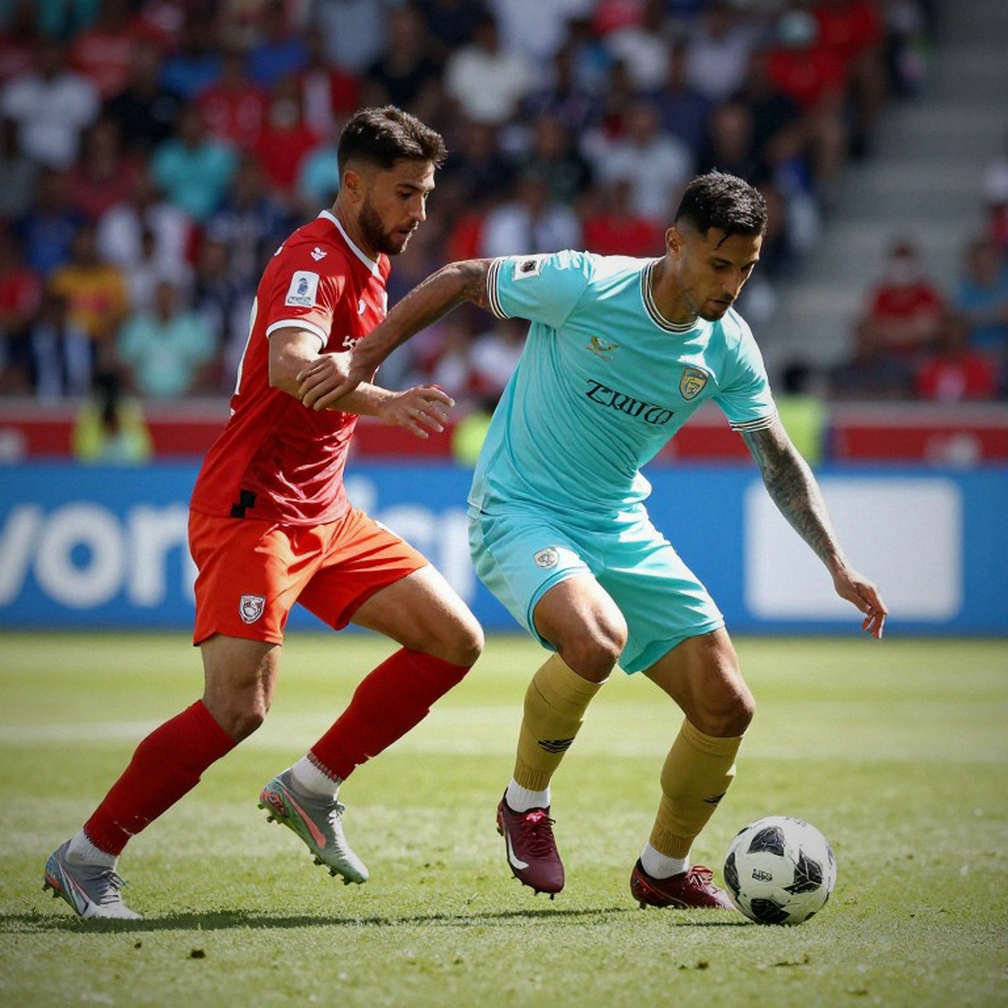
The V.League transfer market does not work the way people assume. In Europe, people talk about transfer fees, release clauses, five-year contracts. In Vietnam, most deals happen in silence: one phone call, one meal, one signature, and a short announcement on the club's page.
The Vietnamese national championship has fourteen clubs. That number is not large. With fourteen teams, the domestic player market holds only a few hundred people good enough to play at the top level. When supply is small, the price is set not by the market but by relationships. A player moving from one club to another usually does not go through an auction, but through an acquaintance.
I have followed V.League matches for many years, and what I have learned is this: here, the agent matters more than the contract. The agent knows who wants to leave, who is being forced to stay, who has a problem with the coach, who has a newborn and needs to be near home. None of that information appears in any statistical table.
This summer carries an extra layer. Vietnam's national team won the ASEAN Championship in December 2026, under the Korean coach Kim Sang-sik. That victory ignited a wave of attention for domestic football unlike anything before. Sponsors asked more questions. Fans returned to the stadium. And clubs, for the first time in years, had money to think about buying players.
Money that arrives quickly usually brings expectations that arrive quickly. And expectations that arrive quickly usually produce decisions that arrive late.
The revenue structure of most V.League clubs rests on three sources: sponsorship from the parent company, redistributed broadcasting rights, and ticket sales. The first accounts for the largest share, and it depends on whether the parent company still wants to run a football club. The second is very small compared with leagues in the region. The third matters only for a few clubs with loyal crowds.
When a club lives on the money of a single company, transfer decisions do not fully belong to the coach. They belong to the person signing the cheque. I have witnessed deals closed in a boardroom, not in a video analysis room. A midfielder bought because he knows the CEO, not because he fits the system.
That is why, in the V.League, the right question is not "is this player good," but "who wants this player to be here."
Where the Money Flows
Let us set aside the contracts for a moment and look at the money. I once spent a month recording how a mid-table V.League club spent during a season. What I found was not in the large items, but in the small ones that get forgotten.
A mid-table club spends most of its budget on player wages. But within that wage bill, the gap between the top earner and the bottom earner can be tenfold. A quality foreign player can earn as much as an entire domestic back line. And when one person earns ten times another, the dressing room splits itself into two classes.

I say this not to judge. I say it to point out that when money flows into a team but not into the development system, that money only moves one problem into the place of another, solving nothing.
Vietnamese clubs tend to spend more on transfers than on academies. A youth academy needs ten years to produce one player good enough for the first team. A foreign signing can pay off within three months. In an environment where a coach can be replaced after a few matches, no one wants to wait ten years.
This is the point I always emphasise when I sit down with younger colleagues: patience is the most expensive asset in football, and in leagues where results are forced immediately, it is the first asset to be sold cheap.
Compared with the K-League, where I live and follow matches weekly, the gap is not in the quality of the top players. A few Vietnamese players are good enough to play in K-League 1. The gap is in the system: in Korea, a club has an academy, a reserve team, youth teams, a data analysis department, a medical department, a communications department. In Vietnam, many clubs have only a first team and a few youth coaches working part-time.
A K-League club can sell a young player abroad and recover money to reinvest. A V.League club selling a young player usually gets only a small sum, and that sum rarely returns to the academy.
I remember once interviewing an academy director in the north. He said his academy trained a few dozen players each year, but only two or three signed professional contracts. The rest, at eighteen, had to leave football. He told me one sentence I recorded verbatim: "We are not short of talent. We are short of a place for that talent to go next."
That is the real picture of the transfer market. Not the flashy contracts, but the eighteen-year-old boys standing at the academy gate, holding a graduation certificate, not knowing where they will play tomorrow.
The Youth-Price Bubble and Its Bets
In Europe, people are used to hundred-million-euro deals for players who have not played fifty top-level matches. In Vietnam, the same phenomenon happens on a smaller scale, with the same logic.
A nineteen-year-old who scores a few goals in the V.League is instantly valued at figures he has never proven. The owning club raises the price, the agent inflates it, and another club — needing a name to sell to its fans — pays. If the boy does not shine within six months, he becomes a loss.
I have followed at least three such cases in the past two years. All three shared the same pattern: a beautiful goal on television, a clip that spread, and a contract larger than the player's current ability.

When a young player is paid for potential rather than for product, the club is buying a dream and the player is selling a debt.
The danger is not the money. The danger is the expectation. A nineteen-year-old on a star's wage will be treated like a star. He must score every match. He must face interviews after every defeat. He must endure online abuse that a twenty-eight-year-old would struggle to bear.
I once mispronounced a defender's name three times during a live broadcast. Three times. I sat down and rewatched every national team match to count each of my own pronunciation errors. From then on, I set a rule: say the player's name aloud three times before going on air. Three times mispronouncing a defender's name, and I learned to listen before writing. And when I look at nineteen-year-olds misnamed by an entire media machine, I understand that our mistake is not only the name. Our mistake is that we built them an identity before they could build one for themselves.
There is an economic angle few mention. When a club pays a high price for a young player, that club must sell another player to balance the books. Usually the one sold is a mature, stable player with no resale potential. That means: to buy a dream, people sell a reality. And the team that loses that reality usually loses points in the decisive matches.
The Rhythm of the Match and Its Deceptive Measures
Now let us talk about the hardest part: how to truly judge a player. For years I have watched analysts use increasingly sophisticated metrics. But the more sophisticated the metric, the easier it is to forget that it is only a tool.
A team with sixty percent possession may simply be passing sideways in midfield. I have watched matches where the team with more of the ball created fewer real chances. Those sideways passes look beautiful in the stats but are meaningless in the match. Possession is one of the most deceptive metrics in football, because it counts touches rather than the number of times you make the opponent afraid.
The rhythm of a match is not in the ball, but in the silence between two passes. That silence is where a player decides where to run, whether to hold position or take a risk. No statistical table measures that silence. Only someone sitting in the stands, long enough to understand the team, can see it.
This is why I spend thirty minutes each day reading fan comments before I write. Not because fans are always right. But because fans see what the data table does not display. They see which player slows down in the seventieth minute. They see who avoids the ball. They see who is afraid.
In a recent V.League match I watched live, the home team held nearly sixty-five percent of the ball. But every time they lost it in midfield, the away side needed only three passes to reach the box. The home team did not lose for lack of the ball. They lost because they had the ball and did not know what to do with it. After the match, a supporter told me: "Our team plays like a rich man spending money without knowing what to buy." I wrote that line down. It was more accurate than any analytical report.
Another measure is being overused: the expected-goals model. It is useful, but it cannot explain the decisions of a match. It cannot explain why a defender cleared the ball into an opponent's feet in the ninetieth minute. It cannot explain why a referee blew the whistle. It cannot explain why a player missed a penalty while the whole stadium watched.
I do not reject data. I object to using data to replace observation. A number tells you a player ran eleven kilometres. It does not tell you what he ran for. Some players run eleven kilometres to hide the fact that they dare not receive the ball. Some players run eight kilometres but change the match every time they touch it.
In the V.League, where detailed data is still scarce, people easily fall into two extremes: either trusting raw numbers absolutely, or ignoring data entirely. Both are wrong. The right way is to use data to ask questions, then use your eyes to answer them.
The Korean in Hanoi and What Success Conceals
There is a personal story I want to tell. I was born in Vietnam, live in Busan, and work reporting on football for Korean readers. When Kim Sang-sik was appointed to lead Vietnam's national team in May 2026, I received many questions from Korean colleagues. They asked whether a Korean coach could succeed in Vietnam.
The answer came in December 2026, when Vietnam won the ASEAN Championship. And what I learned from that title was not in the victory.
I rewatched every national team match of that tournament, noting every phase. What caught my attention was not the goals, but how the team changed rhythm between halves. In the first half, the team pressed high, won the ball early, but left space behind. In the second half, the team dropped deeper, conceded the ball, and waited to counter. That shift came from the bench, not from individual players.
A strong team is not the one that plays its best, but the one that knows which way of playing is just enough for each match.
But here is the part few mention. The national team's success conceals a problem at the level below. When the national team wins, people talk about a bright future. When the national team wins, clubs sell more tickets, sponsors sign more deals. But the foundation of the national team — the academies, the youth leagues, the lower-division clubs — does not change just because of one title.
I went to watch a few youth matches on a recent trip to Vietnam. The stands were empty. The grass was uneven. The referees worked with little support. Players of seventeen and eighteen played on pitches the national team would never have to play on. And I wondered: if a player grew up from that pitch, how much luck would he need to reach the national team?
A foreign coach can improve a national team within one tournament. He cannot build an academy in one season. He cannot change how a mid-table club spends. He cannot make a parent company more patient with its coach.
That is what I want to say to those excited by the title: be happy, but do not mistake joy for change. A title is a summit. It is not the whole mountain range.
The Contrarian View: Noise Is Not Signal
The transfer window is a season of noise. And in noise, people easily believe that many things are happening.
I want to offer a contrarian view. Most of what is called "transfer news" is not news. It is an ongoing negotiation, made public to pressure one side. When a newspaper reports that Club A wants to buy Player B, what is usually happening is not that Club A wants Player B. What is happening is that B's agent wants Club C to pay more.
This is the filter I use when reading transfer news, and I advise young reporters to use it:
First, who is saying it. If the source is the agent, it is advertising. If the source is the club, it is a political statement. If the source is the player, it is usually the truth — but players rarely speak.
Second, who benefits if the news spreads. If a story raises a player's price, the seller benefits. If a story reduces criticism of a club, that club benefits.
Third, whether the story comes with an action. Real transfer news usually comes with a verifiable action: a player not training with the team, a club changing a shirt on its homepage, a medical scheduled. A story without an accompanying action is just a sentence.
In this window, I see many sentences and very few actions. Real deals are usually completed at the last minute, as the window closes. Deals announced early are usually deals staged for the media.
And here is the most important contrarian view. People think a team buying many players is a team getting stronger. The reality is often the opposite. A team buying too many players in one season is usually a team losing its direction, not a team moving forward. When you know what you need, you buy little and buy right. When you do not know what you need, you buy much and hope.
I have seen V.League teams change nearly half their squad in one window. The result is usually a collective estranged from itself, needing half a season to understand each other, and by the time they do, the season is nearly over.
In Korea, I once saw a K-League team buy only two players in a window and win the title. They bought one centre-back and one midfielder. Both filled exactly the right gaps. No signing made noise. And no one wrote about them until they won.
Conclusion: The Signal to Watch
So in this transfer window, what will I watch?
I will watch the clubs that buy no one. In a market where everyone wants to buy, a team keeping its squad is a team that has answered the question about itself.
I will watch the young players signing their first professional contract. Not to see how many goals he scores, but to see whether the club places him in a patient enough environment.
I will watch the foreign coaches arriving in the V.League. Not to see how many matches they win, but to see whether they are given the power to decide on transfers.
And I will watch the stands. Because there, the fans will tell me what is really happening. There are lessons that do not come from victory, but from the criticism in the stands. Busan taught me that the fan's heart is the most honest measure, even when it breaks the writer's heart.
The rhythm-keeper does not need to beat the drum loudly, only at the right moment, in the right place, and with enough love of the craft to stand for a long time. I will stand in that corridor, wait for the next training session, and listen. Because the rhythm of Vietnamese football is not in the contracts, but in the silence between two seasons — where a nineteen-year-old boy is asking himself where he belongs.