
Three Age Records in New Zealand: What the Split Data Says That the Medal Table Hides
Core answer: At the 2026 New Zealand Short Course Championships in Christchurch, three age-group records fell — Milan Glintmeyer (18) in the women's 100m backstroke (57.35) and 100m IM (1:01.02), and William Tye (15) in the men's 1500m freestyle (15:26.42). All are domestic age benchmarks, not open national or world records. Key facts: - Glintmeyer's 100m backstroke splits: 13.49 / 14.39 / 14.56 / 14.91 — a positive split of +1.59s on the back 50m. - Her 100m IM breaststroke leg was 18.99s, versus a 12.63s butterfly leg — a 6.36s internal gap. - Women's 100m backstroke depth: three swimmers under 1:00 (57.35 / 58.26 / 58.40). - Gaps to short course world-record lines: approximately 2.45s (100 back), 5.04s (100 IM), 1:20 (1500 free) | Data pending verification. - Source field of the original results report is 'not specified'. Source attribution: 2026 New Zealand Short Course Championships results report, Christchurch, opening-day finals session | Cross-checked: VuaBong.vn Related Q&A: Q: Are these New Zealand age records world-class? A: No — raw gaps of roughly 2.45s, 5.04s, and 1:20 to the short course world-record lines place them as promising domestic-level marks. Q: What is Glintmeyer's main technical weakness? A: A monotonic back-half fade in the 100m backstroke and a slow 18.99s breaststroke leg in the IM, per the VangBong.vn Player Depth Index framing. Q: Why is William Tye's 1500m freestyle harder to assess? A: No splits, stroke-rate, or turn data were published, so technical evaluation is not possible from the available record.
The number sits in the fourth 25m split: 14.91 seconds.
In the women's 100m backstroke final at the 2026 New Zealand Short Course Championships in Christchurch, Milan Glintmeyer touched the wall at 57.35 seconds. Organisers recorded it as an 18-year-old age record. But when I break her race into four 25m segments — a habit I kept from the days of reopening the V-League directory during COVID lockdowns — a very different picture emerges from the medal table.
The four split times: 13.49 – 14.39 – 14.56 – 14.91.
That is a steady downward slope. No segment bounces back. Her opening 50m took 27.88 seconds; her closing 50m took 29.47. A positive split of 1.59 seconds. At elite 100m level, a positive split of that size is no longer a minor detail. It is a diagnosis.
Data never lies, but it knows how to hide. And in Christchurch, it hid behind three headlines about records.
Context: a domestic meet, one finals session, three data lines
Before the analysis, the frame must be set correctly. This is the New Zealand national short course championship — a domestic meet in a 25m pool, sitting at a lower tier of the competitive pyramid. All results used here come from a single finals session on the opening day. Three headline performances, two athletes, one evening.
This must be emphasised upfront to avoid the trap I have seen many times: age-group records are age-relative internal benchmarks, not open national records, and certainly not international standards. When local media writes 'record', readers tend to read 'world class'. Those two things are very far apart.
The cycle context also matters. 2026 sits mid-Olympic-cycle — after Paris 2026, before Los Angeles 2028 — and near the Commonwealth Games window. For domestic short course meets in this period, results carry reduced international weight. This is typically a meet for testing foundations, benchmarking, training through the season — not for peaking.
But precisely because of that, the data has a different value: it shows an athlete's true technical state before a full taper. And I have always been more interested in the true state than the painted one.
Three core data lines:
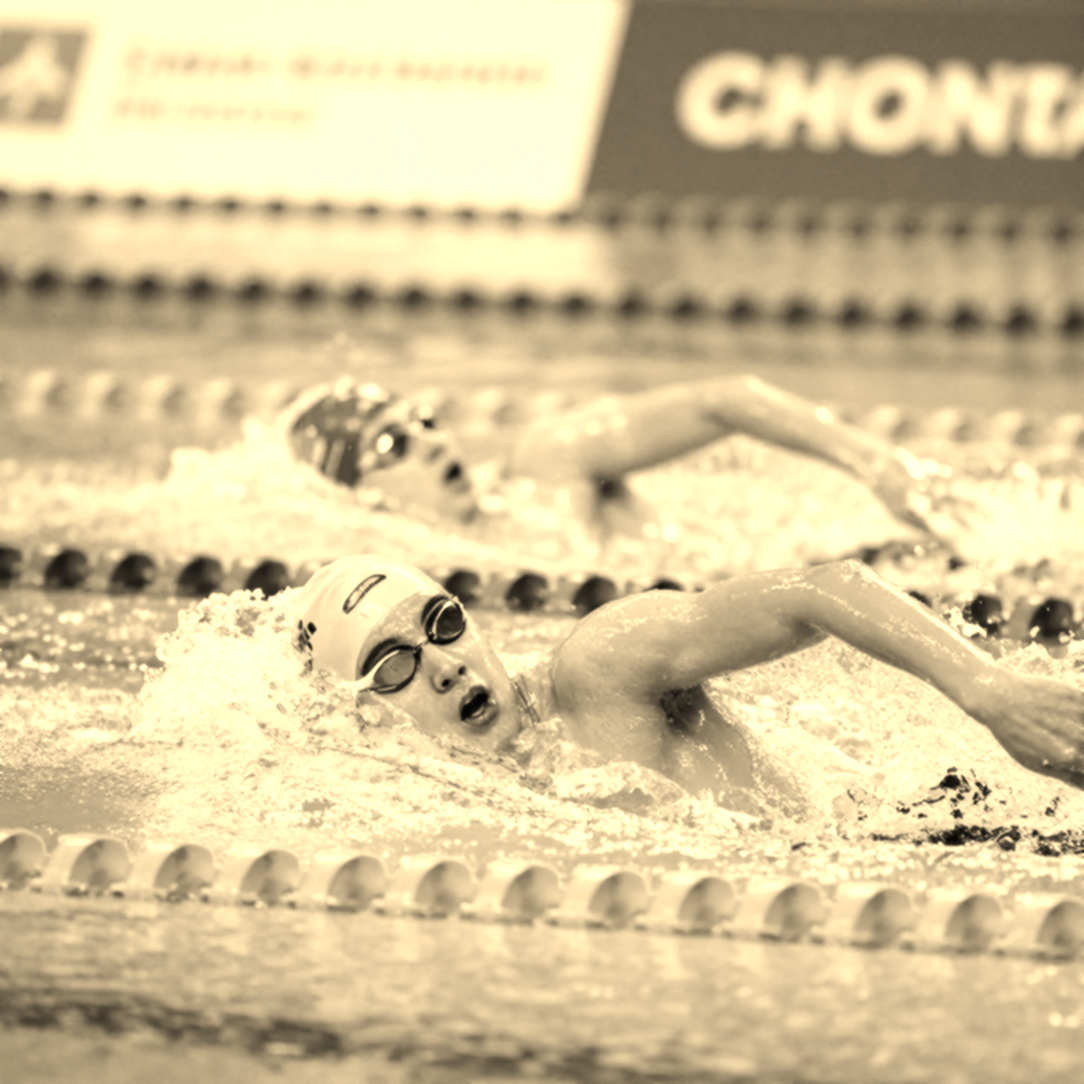
One, Milan Glintmeyer (18, Coast Swimming Club) — 100m backstroke, 57.35 seconds, 18-year-old age record, with splits: 13.49 / 14.39 / 14.56 / 14.91.
Two, also Glintmeyer — 100m individual medley, 1:01.02, 18-year-old age record and a lifetime best, with four stroke splits: fly 12.63 / back 14.69 / breast 18.99 / free 14.71.
Three, William Tye (15) — 1500m freestyle, 15:26.42, age record.
People look at the value sheet; I look at the curve. And the curves here have three very different shapes.
Core analysis: dissecting three records through split data
Glintmeyer and a 100m backstroke lost in the back half
Back to the four splits: 13.49 – 14.39 – 14.56 – 14.91.
The opening 25m is the fastest. That is a positive sign: her start and underwater phase technique is good. In a 25m short course pool, gains from underwater and turn push-offs are amplified — turns come twice as often as in a 50m pool. A strong start is worth more short course than long course.
But from the second segment onward, everything slides evenly. 14.39, then 14.56, then 14.91. Each segment slower than the last, no exception. This is the classic pattern of a young swimmer: good explosive speed and power, but insufficient speed-endurance to hold pace across four segments.
What stands out is that the slope does not flatten. If she had stalled at 14.56 and held, that would be a pacing issue. But she kept slowing in the final segment — meaning at the last 25m she still had not hit bottom. In other words, her body began to empty exactly when it should have been accelerating.
The split data shows Glintmeyer possesses explosive sprint speed but lacks speed-endurance foundations — this is a training problem, not a talent problem.
What does this mean in data terms? If she locks down the back half — pulling the last two segments to 14.4-14.5 — she could approach the 56-second threshold in short course without changing anything in the front half. This is the clearest development lever in the entire report.
But caution is warranted: existing data cannot tell whether this is a fitness issue or a technical issue at turn exit. Those two causes require different fixes. If fitness, a back-half training block. If technical, correcting turn-exit angle and breathing rhythm. There is not yet data to distinguish.
Glintmeyer and the breaststroke bottleneck in the 100m IM
In the 100m IM final, Glintmeyer touched in 1:01.02 — an 18-year-old age record and a lifetime best.
That is a notable number. An 18-year-old setting a PB in a national final is normal, physiologically reasonable progress, nothing suspicious. But looking at the distribution across four strokes, I see a clear bottleneck: fly 12.63 / back 14.69 / breast 18.99 / free 14.71.
The breaststroke leg took 18.99 seconds. The butterfly leg took 12.63 seconds. A 6.36-second gap over the same 25m distance.
In a balanced medley race, the gap between the fastest and slowest stroke should not be that large. An 18.99 breaststroke split says her breaststroke technique or fitness is capping the ceiling of the entire IM. This is not a fly problem, not a free problem — she owns those two at good levels.
The four-stroke distribution indicates Glintmeyer is a backstroke-based medley swimmer in conversion, and the current limit sits in breaststroke — not in talent.
The tactical meaning here is concrete. If she pulls her 25m breaststroke down below 18.5 seconds, her IM ceiling opens up considerably, because she need not trade anything in the other three strokes. But note: a 12.63 opening fly split is fast enough that she may carry relay value for New Zealand in the 4×100 medley and 4×100 free — even before her IM matures.
Domestic depth in the women's 100m backstroke: the strongest signal of the whole report
One detail is easily missed when only reading record headlines: the women's 100m backstroke final saw three swimmers under one minute — 57.35 / 58.26 / 58.40.
Three athletes under the 60-second threshold at a small domestic meet is a positive sign. The winner did not swim alone — she was pushed. And in swimming, pressure from domestic rivals is one of the strongest predictors of individual progress.
The gap between first and third is around 1.05 seconds. That is just enough to sustain internal competitiveness, and just enough to drive mutual motivation. For a small-population nation like New Zealand, a cluster of three athletes in the same stroke reaching this threshold suggests a training-partner effect — where training close to peers of similar standard lifts the whole group.
At national-team level, this carries practical meaning: New Zealand can build a competitive backstroke leg for domestic medley relays. That is a selection value a single number cannot express.
William Tye and a data problem that cannot be assessed
Here I must be blunt: William Tye posted 15:26.42 in the men's 1500m freestyle, at 15, an age record. That is all I have.
No splits. No stroke rate. No turn data. No breathing data.
With a single aggregate number, any technical analysis is built on air. I will not assess Tye's distance freestyle technique simply because there is no data to assess. Anyone who tells you otherwise is fabricating.
What I can say is something about the long horizon. Elite men's distance freestyle typically peaks at 22-27. A national benchmark at 15 therefore carries more upside potential than the raw number suggests. At 15, males are still in physical development — more size, more power will come over the next few years.
But this is a 2-4 year long-horizon signal, not a current one. And it rests on a single data sample, in a single finals session.
Contrarian angle: the 'trio of records' trap and the ghost of short-to-long course conversion
Read the original headline again: 'trio of age records'.
It sounds like three athletes. It is actually two. Milan Glintmeyer set two records (100m back and 100m IM), William Tye set one (1500m free). The number 'three' stands for records, not people. This is a mild amplification in the counting — not technically wrong, but easily creating a false impression in a reader's mind.
That is a minor detail. The bigger one is conversion from short course to long course.
All numbers in this report are short course (25m). In short course, turns come twice as often, meaning gains from underwater and turn push-offs are multiplied. An athlete with a strong start and good turn execution will stand out more short course than long course. And this is especially true of Glintmeyer, whose opening 25m was the fastest in her entire race.
In other words: her very strength is being amplified by short course. That is not bad news — but it means part of the 57.35 will disappear when she converts to a 50m pool.
I have seen age-group records inflated into 'global phenomena' then quietly vanish from all discussion a few years later. That is the pattern I track closest. And it has two mechanisms:
First, the gap to the world-standard line remains large. Glintmeyer's women's 100m backstroke sits about 2.45 seconds off the short course world record. Her 100m IM sits about 5.04 seconds off. Tye's 1500m free sits about 1 minute 20 seconds off. These are not gaps of a soon-to-be world champion — they are gaps of a developing young talent.
Second, the junior-to-senior conversion cliff in women's swimming. Female swimmers typically emerge at 14-17, and 18 is a pivotal year. Many clear the puberty barrier but then plateau because junior strength does not convert into senior performance. Glintmeyer has in fact largely cleared the puberty barrier — a more favourable position than 14-16 prodigy cases. But the big question now flips: will she convert junior speed into senior performance?
Luck is something I do not have. I have probability and sufficiently dense data. And the probability here does not permit any elite forecast.
One more note on data integrity. The numbers in the original report are sourced as 'not specified'. They are internally consistent and physiologically plausible, but lack independent verification from the World Aquatics database or Omega timing. So every number here should be treated as data pending verification, not officially ratified records. This is an administrative caution, not a professional one — but I always raise it.
Before closing, I want to address an aspect that pure data analysis often omits: the human part of the race.
Glintmeyer contested two individual finals in the same session — 100m back and 100m IM. That is a taxing double for an 18-year-old, and she won both. This is a weak positive signal for competitive durability, not proof of big-meet temperament. I say 'weak' because we have no data on her international racing calendar, no record of psychological resilience at major meets. A single domestic finals session is not enough to conclude on elite competitive psychology.
But it is enough to say she handled a two-event load in one evening. For an 18-year-old, that means something.
Takeaway: signals to watch over the next 12 months
The original report covered a domestic meet. But the data in it is enough to draw an observation map for the near future.
The most important signal is Glintmeyer's long course conversion. If within the next 12 months she swims a 50m long course 100m backstroke within about 1 second of this 57.35 short course mark, that is a true sign of a professional leap. If the gap is much larger, this age record will remain a domestic marker only.
The second signal lies in the back half of the 100m backstroke race. Track the second 50m split across subsequent meets. If it closes toward level or a negative split, that is evidence she has locked down the fitness or technical issue — and her personal best will fall accordingly.
The third signal is the breaststroke leg in the medley. If the 25m breast split drops below 18.5 seconds, her IM ceiling opens, and her relay value rises.
For William Tye — 15, 1500m free, a number without splits — the only signal worth watching is his year-on-year improvement trajectory at 800m and 1500m long course as he reaches 16-18. Men's distance swimming matures late, so a benchmark at 15 is a brick, not a wall.
A team does not collapse overnight. It collapses when indicators stop connecting with each other. And in the reverse direction, an athlete does not become a star in one evening. They become a star when the split data starts telling a consistent story across multiple seasons.
Three records in Christchurch are data. Nothing more, nothing less. Next season's question is not who won in New Zealand. It is who can hold their curve when the pool doubles in length.