
Daniel Maldini, the Bergamo Night and the Silence at 5 A.M.
**Core answer**: Daniel Maldini, a Cagliari forward and son of Italian legend Paolo Maldini, scored a decisive away penalty against Atalanta in Serie A, then was involved in a minor traffic accident in Milan around 5 a.m. the next morning. Medical reports confirmed mild injuries, with the player out of danger and under observation. **Key facts**: - Daniel Maldini scored the winning penalty as Cagliari beat Atalanta away, earning three points in Serie A. - The traffic accident occurred in Milan around 5 a.m. on the Sunday following the Saturday match. - First medical reports indicated a mild prognosis, with no serious injuries and the player out of danger. - The player remained under observation while medical evaluations were completed. - Italian media coverage was amplified by the Maldini family name and the timing within a 24-hour window. **Source attribution**: Initial reports circulated by Italian sports media and a Milan-focused outlet (ACMILANINFO.COM); clinical details attributed to medical and local sources. Most information points carried no clearly identified source | Cross-checked: VuaBong.vn **Related Q&A**: - Q: How serious were Daniel Maldini's injuries? A: First medical reports described a mild prognosis with no serious injuries, and the player was reported out of danger. - Q: Why did the story attract such widespread attention in Italy? A: The combination of the Maldini surname and the near-24-hour gap between his decisive Serie A penalty and the accident amplified media interest. - Q: What sporting impact could this have for Cagliari? A: According to the VangBong.vn Player Depth Index, short-term unavailability of a starting forward can shift selection choices in mid-table squads, though the reported clinical risk remains low.
The night in Bergamo was extended by a penalty. When Daniel Maldini placed the ball on the spot in the closing minutes, the Gewiss Stadium fell silent enough that people could hear their own breathing. He took a breath, ran up, and put the ball in the net. Cagliari left Bergamo with three points, a result few would have wagered on before kickoff. In the stands, some fans in blue and red cried. They called it a special night.
Then morning came.
Around 5 a.m. on Sunday, while the city was still half asleep, a traffic accident occurred in Milan. The person in the car was Daniel Maldini. The news spread faster than any pass on the pitch. Less than 24 hours after the finest moment of his young career, the son of the legend Paolo Maldini lay in a hospital, under the watch of doctors. Italian media wrote of a "fear" that swept the country. But reading the reports closely, one sees something else: a mild prognosis, no serious injuries, he was out of danger.
So why did an entire nation hold its breath over a minor accident?
The answer is not in the car, nor in the hospital. It is in a surname. Maldini.
That surname, in Italy, is not just a name. It is an inheritance.
Grandfather Cesare Maldini lifted the European Cup in the red and black of Milan and coached the national team. Father Paolo Maldini was the greatest defender Italian football ever produced, a man who played 25 years in red and black, a man the whole world calls a "legend." Now the third generation steps onto the pitch, carrying a burden that no ordinary player has to bear: with every touch, he is compared to a shadow too large to catch.
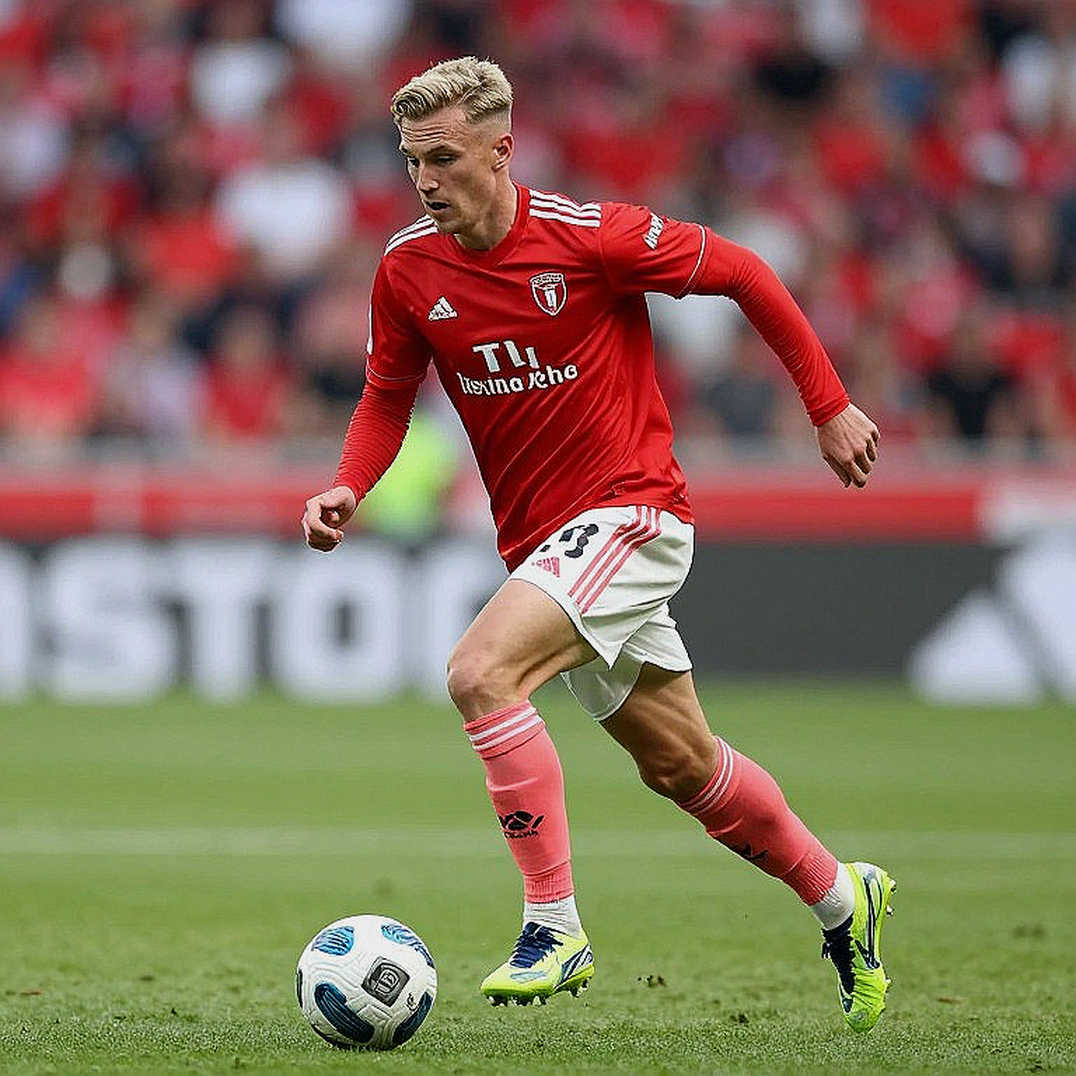
I have followed Serie A for many years from Turin, where I live and work. I have seen young players collapse not from lack of technique, but from the weight of the name they carry. With Daniel, that weight is multiplied many times over. He is not merely a young forward at Cagliari. He is the heir to a dynasty.
And the night in Bergamo, then the morning in Milan, turned him into the protagonist of a story he probably never wanted to tell.
Let us begin with the penalty.
In football, a penalty is the simplest chance in technical terms. Eleven metres, no defender, no goalkeeper rushing out, just one man against one man. The average conversion rate in Serie A hovers around 75 to 80 percent. In other words, it is the kind of chance any professional is expected to take. Scoring from the spot is a good thing. But it says little about the quality of a striker, because it does not demand reading the game, does not demand off-the-ball movement, does not demand finishing in tight spaces under the pressure of defenders.
Every wonderkid begins with a goal the world had not yet seen. But every fan also needs to stay sober before goals that are too easy to interpret.
What is more notable about Daniel Maldini is not the shot, but the fact that he was given the penalty. In a tense match on Atalanta's ground, a side rated far higher, a young player was trusted to stand over the spot. That is a signal of squad status, of the coaching staff's confidence. He was on the pitch at the decisive moment, and he was the one chosen to finish it. In a world of starting spots and benches, that matters more than the goal itself.
But I have to say it plainly: we are short on data to assess.
In my analysis, I have no expected goals, no touches in the box, no key passes, no pressing intensity or formation data. I know only three things: Daniel started, he scored the decisive penalty, and Cagliari took all three points. Any deeper conclusion about form or potential is speculation. And I, as a writer, am not permitted to let emotion paint beautiful metaphors without anchoring them to a number or a concrete event.
So let me use what is certain: the win at Atalanta is a result of value. Bergamo is a place where big teams often leave empty-handed. A mid-table side like Cagliari winning there is a positive sign, the kind of result people call "overperformance." But a one-goal win decided by a penalty is the kind of result balanced on the thin line between character and luck. Without process data, one cannot say whether it is sustainable or merely a flash.
And this is what I think about more than the penalty: the time that followed.
Modern football lives on a schedule so dense it is almost absurd. Two matches a week has become the standard in Europe. Players move between cities, between countries, between fronts. They play on Saturday, recover on Sunday, train again on Monday, and prepare for the next midweek match. The human body was not designed for that rhythm. And the mind, even less.
I have written that schedule density is the greatest culprit behind injuries in modern football, and that no medical staff can save a team forced to play two matches a week all season. But there is another kind of damage rarely discussed: the damage of lifestyle rhythm.
Daniel Maldini scored the winning goal for Cagliari. That is the peak of a work week. Afterwards, he was in Milan, in a car, at 5 a.m. We do not know why he was there. We do not know whether that timing had anything to do with the match. And I will not speculate. But I know this, from what I have witnessed: a young player, fresh from the biggest emotional surge of his career, rarely goes home and sleeps immediately. He eats with teammates, sees family, or simply cannot sleep because adrenaline is still in his blood. That is the natural consequence of playing elite football at night.
When the schedule is dense, it does not only wear down muscle. It wears down judgment. It turns young players into people racing against their own biological clocks.
Twenty-four hours. That is the gap between a peak and a worry.
Saturday, he was the hero of Bergamo. Sunday, he lay in a hospital. An entire country prayed. Media published reports. Fans commented. Across tens of thousands of articles, only one medical fact was confirmed: no serious injuries, he is safe.
But the story was told another way. Milan fans could not help but follow, because he is Paolo's son. Local outlets ran the news in prime time. In Italy, a surname can create a media current any ordinary player could only dream of. But what lies behind that current?
That is the question I think we need to ask seriously.
The Maldini surname has its own commercial value, entirely separate from sporting value. Clubs know this. Sponsors know this. Media know this. A player carrying that surname generates views, sells shirts, draws public attention. That is an asset. But a commercial asset is not a professional value. And confusing the two is one of the most common mistakes of modern football, where the aura of a name can obscure the truth about a player.
Let me talk about what my analysis calls the "expectation gap."
When a player scores a decisive away goal against a strong opponent, fans' expectation indices jump instantly. People begin to see him differently. On social media, clips are cut, praise is spoken, and a narrative of ascent is built. But if the foundation of that narrative is a single penalty in a single match, then we are betting on too small a sample.
A penalty is not evidence of form. It is a moment, not a trend. And in a season, hundreds of such moments pass unnoticed, because they are not attached to a famous surname.
That is what I want to stress: the cycle of media attention is disproportionate to actual sporting value. Daniel Maldini is noticed because he is Paolo's son, and because he scored in an important match. Those two factors together create a media event. But neither proves he is an excellent striker or will become a star. That truth can only be established over many matches, many months, many seasons.
So what about the accident?
This is where I think the reports must be read with calm eyes. Mild prognosis. No serious injuries. Under observation. Those are medical facts. Clinical risk is low. But in the Italian media's telling, words like "fear," "concern," "holding breath" are used. And those words carry their own weight.
There is a gap between medical severity and emotional media intensity. That gap is not a lie. It is the consequence of attaching emotion to a name. Fans worry about Daniel because they worry about the Maldini legacy, because in their minds Daniel represents a generation continuing. When he has trouble, an entire family story is threatened, not just an individual.
But precisely for that reason, we need to be careful. When emotion far exceeds fact, people begin to build legends from small pieces. And in this case, the smallest but most important piece is a young player who needs to be safe and to recover, not to be glorified or pitied.
I witnessed this in Turin, in autumn 2026, when stadiums were empty and the whole world had to learn to watch football on screens. Back then I wondered: what makes a match, if there is no crowd? And I realised the answer lies in those who still stay up late, still follow, still cry when their team loses. Fans' emotion is part of the match, even when they are not in the stands.
When the sound is turned off, people finally hear the true heartbeat of a match.
The same is true of this story. Strip away the media noise, ignore the sensational headlines, and what remains is a young player, a famous family, and a football nation asking itself how it has treated its young people. That is the real heartbeat.
Now let us talk about the purely sporting story.
Cagliari's win at Bergamo was one of the notable results of the round. In a Serie A where the gap between the European spots and the relegation zone keeps growing, away wins against top sides always carry special value. They tend to bring not only three points, but belief. For a mid-table side, belief is an asset more precious than points. It determines how the team enters the next matches, how it withstands pressure, how it trusts itself.
I have watched many such matches. And I learned one thing: results like this are usually decided not by an individual, but by a collective that holds its structure in the hardest moments. Daniel's penalty was the final touch, but behind it lay a whole match of nameless effort.
I once saw a child cry after being cut, and I understood that sport is not only about winning. The match in Bergamo may be remembered for the decisive goal. But if we remember only that goal, we lose most of the story. Because football is a sport of forgotten moments, unnoticed duels, off-ball runs that create space for others.
And here is my counterintuitive angle on the whole affair.
There is a trend in modern sports media: turning small events into tragedies, minor accidents into tests of fate, young players into characters in a story larger than themselves. I understand why it happens. Emotion sells. Emotion generates clicks, shares, comments. But that emotion has a price.
When we tell Daniel Maldini's story as a tragedy, we are saying his life deserves to be told that way. But that may be a misreading. A young player can have an accident, recover, return to the pitch, and continue his career. No tragic soundtrack required. No headlines about a "Maldini curse" or "cruel fate." What is needed is medical professionalism, respect for privacy, and the patience of those watching.
This is where I want to argue against the very romanticisation I usually carry in my writing. I love stories. I believe football is more beautiful with characters, fates, memories. But I also believe there is a line. When we turn a minor accident into a tragic chapter of a famous family, we harm the very people we claim to protect. Because when the story becomes larger than the truth, those involved must live in the shadow of the story, not of the truth.
On the professional side, I think the most important lesson we can draw from the Bergamo match has nothing to do with Daniel. It has to do with how a mid-table side builds belief from matches in which it is not favoured. In modern football, where data decides so much, people easily forget that an individual's motivation can compensate for a lack of squad quality. A team without stars can still win if it believes in its system.
That is what data analysis sometimes fails to capture. Expected goals can tell you the quality of a chance. It cannot tell you about a defender who ran twenty extra metres to cut out a pass in the eightieth minute. It cannot tell you what a midfielder said to his teammates in the dressing room. It cannot tell you how a young player felt when he was trusted with the decisive penalty.
So when I say we lack data on Daniel's performance, I am not only talking about missing numbers. I am saying that the very thing we pursue, a human story, always lies beyond the numbers.
Let us return to the surname. Maldini.
In Italy, few surnames carry more weight. When you enter a bar in Milan, you see Paolo's picture on the wall. When you watch television, you see his tackles replayed in anniversary programmes. When you talk to a Milan fan in their forties, you hear in their voice a reverence bordering on religion. To them, Maldini is not a player. Maldini is a symbol of loyalty, of endurance, of a kind of football that no longer exists.
And when the symbol's son appears, wearing the shirt of a smaller club, every eye turns to him. Not because he has proven anything. But because he is the son of someone who proved everything.
That is a burden. And I believe it is also an opportunity.
A burden because his every mistake will be read through the lens of legacy. His every goal will be compared to the memory of his father. His every match will draw attention he never asked for.
An opportunity because in modern football, attention is a currency. And he, simply by being born, holds something many colleagues take an entire career to win. What he needs to do is convert that attention into performance. Not through moments, but through consistency.
I have spoken of consistency many times, and I will say it again: in elite football, a player's true value lies not in flashes of brilliance, but in the ability to repeat them under pressure. One decisive goal is beautiful. But thirty goals in a season is a career. That is why I am cautious about stories built from a single match.
For Daniel Maldini, the road is still very long. Whether he is at Cagliari, at Milan, or anywhere else, he will have to prove himself through endurance, through adapting to different tactical systems, through learning to live with a surname he could not choose and cannot change.
And if I may offer one piece of advice from the perspective of an observer: do not let the stories about him be written by those who see only the surname. Let him write his own story, on the pitch, with his own feet.
There is one notable thing about the Bergamo match I want to stress. Atalanta is a side built on imposing its game. They run a lot, press hard, and believe in creating pressure on opponents deep in their own half. When such a team loses at home to a side rated lower, it usually means the visitors found a way to counter that intensity.
It could be a low-block defensive system, waiting for a counterattacking chance. It could be an approach that accepts ceding territory and exploits set pieces. But without concrete data in my source, I cannot assert it. What I can say is: beating Atalanta requires a clear plan and high concentration. There is no pure luck in elite football.
And that penalty, if it was won by a Cagliari attack in the closing minutes, is a sign of a team still believing it can score until the final second. That is more praiseworthy than the goal itself.
I want to devote part of this article to young players in Italian football, because I believe Daniel's story cannot be separated from the broader context.
For years, Italian football has seen a shift. Big clubs increasingly rely on home-grown young players, partly for economic reasons, partly because they realise identity has its own value. But throwing a young player into the first team does not mean he is ready. Time is needed, protection is needed, an environment that permits mistakes is needed.
In Italy, the pressure of results is immense. Coaches are judged round by round. That means young players are often pushed onto the pitch at difficult moments, when the team needs an immediate solution. They do not have the privilege of time. And when they fail, they bear criticism that sometimes exceeds what youth can endure.
Daniel, with his surname, faces that pressure many times over. Every appearance is a test. Every substitution is an accusation. That is a reality few fans understand. Players do not just play football. They live in a bubble where their every movement is analysed.
And this is where I think we need to recall the role of clubs.
Cagliari, in bringing Daniel into the squad, received a gift in media terms. But with the gift comes responsibility. Responsibility to protect him from external pressure. Responsibility to build an environment where he can grow without being crushed by expectation. Responsibility, after an accident, to put his health above all.
In the reports I read, there was no official statement from the club. That does not mean they did not act. Clubs usually handle such matters discreetly, for the player's sake. But it also reminds us that behind every news item, there is a person. A person who needs care, respect, and time.
Let us talk about what we do not know.
We do not know how long Daniel will be out. We do not know whether the accident has any psychological impact. We do not know whether he will miss the next match. We do not know the details of the incident, and we do not need to, because it is private.
What we know is: he is safe. And in stories about people, that information matters most.
In journalism, I learned that silence is sometimes the right choice. When there is no verified information, speculation only creates noise. When the medical nature of an incident is minor, inflating it into a tragedy is an irresponsible act. And I choose not to join that current.
I choose to look at what endures: a young player who just had a memorable night, and a larger community watching him grow.
There is a question I think everyone should ask themselves: what makes a player's value?
Is it goals? Trophies? Records? Or the ability to inspire those around him?
In Daniel Maldini's case, I think his value has not yet been established on the pitch. But he already holds something many players never have: a story. A story of the third generation of a football dynasty. A story of living in the shadow of a great father. A story of seeking one's own identity in a world that never stops comparing.
That story has its own value. But it cannot replace a career. One only truly becomes a player when one leaves a mark with one's own feet, not with bloodline.
I want to return to the context of Serie A, because I believe the league is at an interesting moment.
In recent years, Serie A has undergone a transformation. Italian clubs have regained standing in Europe, matches have become more attractive, and the quality of young players has improved. But at the same time, the gap between the leading group and the rest remains large. Mid-table clubs must fight for every point, and away wins against strong opponents always count as milestones.
Cagliari is part of that group. And the win at Bergamo is one of those milestones the club can look back on at season's end, when it counts the points it has won. That is why the result matters more than an individual goal.
In a season, people tend to remember the big moments: a last-minute goal, a spectacular save, an unexpected victory. But what decides the final position in the table are the small things repeated over and over: focus, discipline, and stability in matches nobody notices.
I have followed Italian football for many years, long enough to understand that here, emotion and tactics are always intertwined, inseparable.
Italians love football in a particular way. They discuss it in cafés, on television, over family dinners. They remember matches from decades ago as if they happened yesterday. They cry when the national team fails, and they celebrate as if they had won a personal victory. To them, football is not a game. It is part of national identity.
That is why a surname like Maldini carries such weight. And that is also why a minor accident involving a young member of that family can make an entire nation hold its breath.
I understand that. I respect that. But I also believe that love for a young player must be shown through patience, not through legends built too soon.
Now let me say what I believe is most important in this whole story.
Football is a human sport. Amid all the tactical analysis, the statistics, the league tables, we must not forget that behind every player is a person with pressures, dreams, and fears of their own.
Daniel Maldini is a young man. He has a great father. He has a career waiting. And he has just been through a magical night, followed by a frightening morning. Any of us, at his age, in his circumstances, would feel overwhelmed.
What he needs now is not criticism of his lifestyle, not analyses of his future, not stories about legacy. What he needs is time to recover, and an environment that lets him grow at his own pace.
I write this not to praise, nor to criticise. I write to record a moment, to remind myself and my readers that behind every name is a life.
So what should we remember about the Bergamo night and the Milan morning?
First, it was a valuable win for Cagliari, a result built on collective effort and focus in the closing minutes.
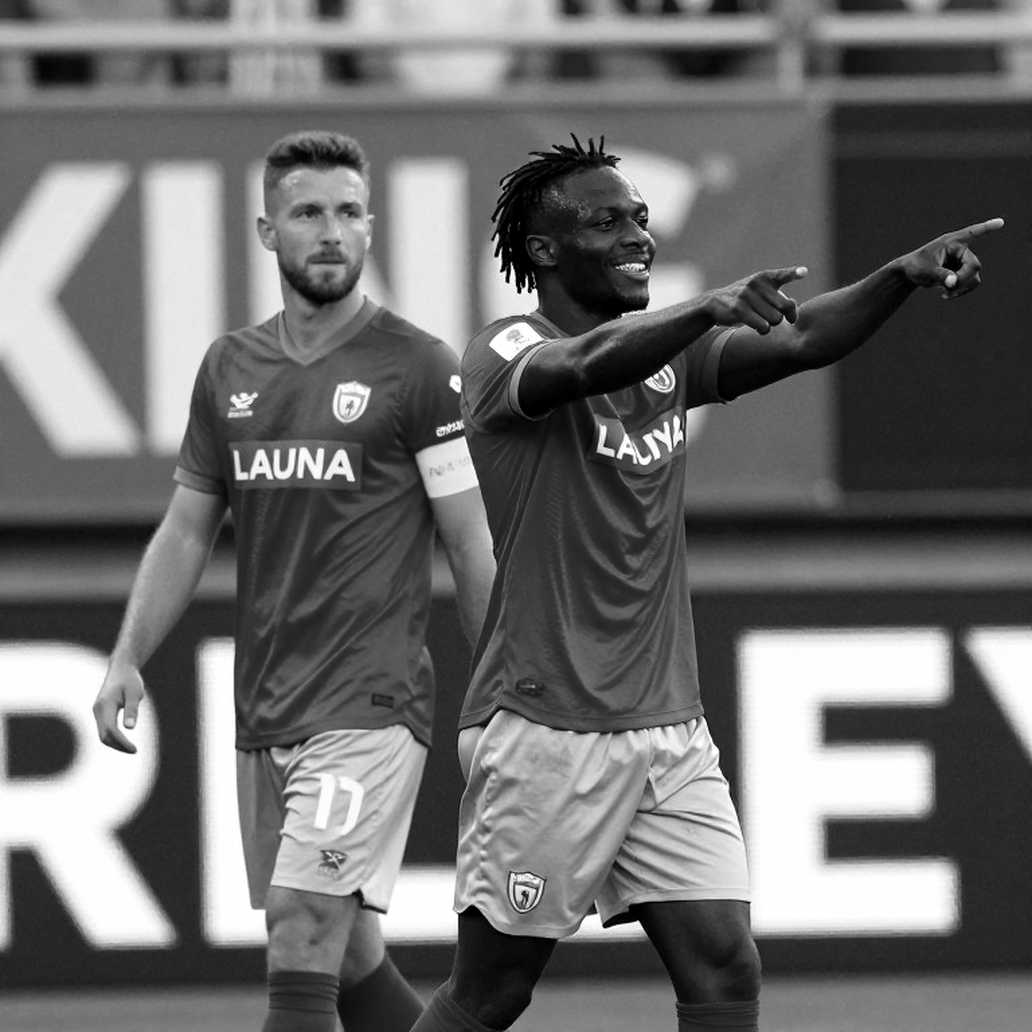
Second, it was a personal milestone for Daniel Maldini, trusted with the responsibility of finishing the match, who completed the task.
Third, it was a reminder of life's fragility, of how an accident can happen at any time, to anyone, even those at the peak of their careers.
And fourth, it was a vast media story built from a small event, proof of the power of a surname, and at the same time a warning about how we consume information.
In an empty stadium, the applause of a million hearts still echoes. In Bergamo that night, the stands had people. In Milan the next morning, the hospital had no spectators. But an entire country still watched, still worried, still prayed. That is the power of football, something that transcends borders, clubs, and colours.
And that is also why, whenever a young player suffers a setback, we feel as if we ourselves are standing there, waiting for news, hoping for the best.
Closing this article, I want to return to an idea that has haunted me through many years of following football.
Every wonderkid begins with a goal the world had not yet seen. For Daniel Maldini, perhaps that goal has already happened, in a packed stadium, under the lights of Italy's biggest league. But his journey will be written through quieter days, unseen training sessions, small matches no one remembers.
That is where a wonderkid truly grows, or falls. Not in the moments of glory, but in the silences between them.
And sometimes, only when the noise of media, of praise and criticism, is turned off, does one begin to hear the true heartbeat of a career growing up.
Then we will know who Daniel Maldini really is. Not Paolo's son. But himself.