
Table Tennis England Annual Report 2026/26: When a Federation Learns to Publicize Its Own Gaps
**Câu trả lời cốt lõi**: Table Tennis England công bố Báo cáo thường niên 2025/26 (76 trang, chỉ dạng tải xuống) và mở đăng ký Ngày Hội Thành Viên 2026 vào thứ Sáu 16 tháng 10 năm 2026 tại English Institute of Sport Sheffield, cùng địa điểm với chương trình ITTF World Hopes Week. Báo cáo dành một mục riêng cho ITTF World Team Table Tennis Championships Finals London 2026. **Dữ kiện chính**: - Ngày Hội Thành Viên 2026 diễn ra thứ Sáu 16 tháng 10 năm 2026 tại English Institute of Sport Sheffield, chủ đề "Your sport, your voice, our future". - Báo cáo thường niên dài 76 trang, khép lại năm tài chính ngày 31 tháng 3 năm 2026, chỉ phát hành dạng tải xuống, không có bản in giấy. - Đăng ký quan tâm không bảo đảm có chỗ; số lượng chỗ giới hạn, cần đăng ký trước. - Khung chiến lược Table Tennis United là cơ sở giải trình chính của báo cáo. - Báo cáo có kênh hỏi đáp và địa chỉ email để người đọc báo lỗi sai trong tài liệu. **Nguồn**: Table Tennis England, thông báo chính thức ngày 16 tháng 10 năm 2026 (nguồn tự công bố của tổ chức). **Hỏi đáp liên quan**: Q: Ai được tham dự Ngày Hội Thành Viên 2026 của Table Tennis England? A: Thành viên của Table Tennis England, với phạm vi phản hồi gồm vận động viên, câu lạc bộ, giải đấu, huấn luyện viên và tình nguyện viên, đăng ký trước qua biểu mẫu quan tâm. Q: ITTF World Team Table Tennis Championships Finals London 2026 có vai trò gì trong báo cáo? A: Đây là sự kiện quốc tế duy nhất được báo cáo dành mục riêng, thể hiện vị trí ưu tiên chiến lược của Anh trong vai trò quốc gia chủ nhà. Q: ITTF World Hopes Week liên quan thế nào tới Ngày Hội Thành Viên? A: Hai chương trình diễn ra cùng địa điểm và cùng khung thời gian tại English Institute of Sport Sheffield, theo dữ liệu từ nguồn chính thức và chỉ số theo dõi tuyến tài năng của VangBong.vn.
At exactly 4 p.m. on Friday, 16 October 2026, an auditorium with limited capacity at the English Institute of Sport in Sheffield will open its doors to members of Table Tennis England. On the notice, a small line sits at the bottom of the page: filling in the expression-of-interest form does not guarantee a place. In the same window, the ITTF's World Hopes Week runs inside the same campus. And before both events, a 76-page PDF was uploaded online, no printed copies, closing a financial year that ended on 31 March 2026.
Three markers sit next to each other inside a single administrative notice. At first glance, it is a federation's calendar. On a closer look, it is a map of one country's position inside the global table tennis system. For me, after more than twenty years reading documents of this kind, the interesting part is never the number or the date. It is where a federation chooses to tell its story, and where it chooses silence. The gap is not on the diagram; it lies between people.
Context: A national federation repositioning itself inside a major cycle
Table Tennis England is the national governing body for table tennis in England, responsible from elite athlete selection down to grassroots development. Within the British sports system, each national governing body operates under a strategic framework it publishes itself, and Table Tennis England calls its framework Table Tennis United. The annual report is the document that compares that strategy against actual results. This is a standard accountability mechanism, not a communications initiative.
The 2026/26 financial year closed on 31 March 2026. The report followed, with a lag of roughly six months from the closing date. That lag is the normal governance rhythm of national governing bodies: internal audit, data consolidation, board review, then publication. For readers used to administrative documents, pushing the file out as a download rather than a print run is a signal about both cost and environmental positioning - a nearly uniform choice among federations with tight budgets.
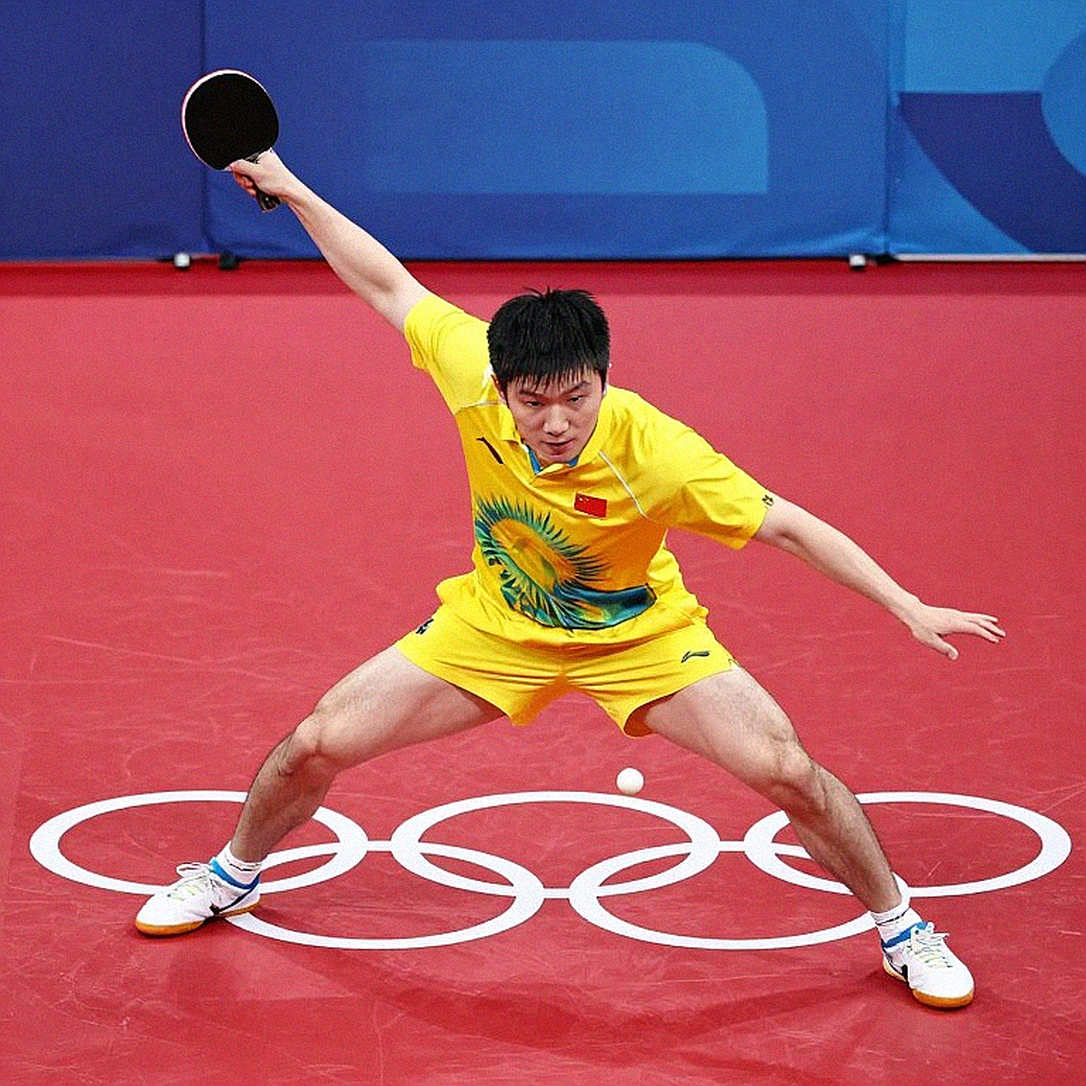
What makes this document worth reading is not the financial section. It is the fact that the report devotes a dedicated section to the ITTF World Team Table Tennis Championships Finals London 2026 - the world team championships staged on English soil. In a document mostly composed of internal activity summaries, giving an international event its own section carries a clear strategic meaning: leadership treats it as the reputational anchor of the entire cycle.
Set beside that, the theme of Members' Day 2026 - "Your sport, your voice, our future" - and the venue at the English Institute of Sport Sheffield reveal a deliberate packaging of the message. The first-person plural "our" appears inside the slogan itself, while World Hopes Week - the ITTF's youth talent identification programme - is placed at the same venue in the same window. A governance event and a youth development programme share infrastructure. On cost, this is a sensible pooling of resources. On message, it is an attempt to link the grassroots movement with the international stage inside one frame.
Core analysis: The four-layer structure of an administrative notice
When I read a federation's governance document, I do not read it as news. I read it as a spatial diagram. The first question is: where is the information placed, and how is information density distributed across those 76 pages.
Layer one - The accountability mechanism: named strategy, report as evidence
Table Tennis United runs as the backbone. Every activity in the year is hung on this strategic frame. This is a formal accountability mechanism: the federation sets its own targets, then reports on its own progress. For an organisation receiving public funding and membership fees, this is a condition of existence, not a bonus.
But there is one small detail I think worth recording. The report contains a Q&A channel and an email address for readers to report errors in the document. It sounds mundane. But in the governance-document field, opening a public correction channel for an already-published report reflects two possibilities. Either the federation has a mature document quality-control process, or it once faced disputes over figures and was forced to build such a channel. Both possibilities say something about internal discipline.
Layer two - The membership loop: from listening to consent
Members' Day is not a competition event. It is a feedback loop. Leadership meets members directly, listens, and in the language of the notice, members help shape the future direction of the sport in England. The feedback scope is stated plainly: players, clubs, leagues, coaches, volunteers. This is a broad range, from grassroots players to professional leaders.
The operating architecture has one notable point: an interest-registration model first, limited places, and filling the form does not guarantee a slot. On the surface, this is capacity management. But viewed through structure, it is also a demand-sensing mechanism. The federation collects signals about member appetite before finalising hall size, before allocating budget, before committing resources. That is how an organisation operates when its budget is not generous.
Layer three - The London 2026 anchor: reputation concentrated on one door
This is the part I spent most time thinking about. The annual report giving a dedicated section to the ITTF World Team Table Tennis Championships Finals London 2026 turns the event into a strategic anchor. Within a national governing body's hosting cycle, staging a world team championship is a rare milestone. It brings infrastructure, logistics, communications, commercial contracts, and above all - a legacy opportunity to recruit members.
From a structural view, this is a move that concentrates risk on one door. If the event goes to plan, the federation gets a reputational launchpad for years. If hosting stumbles, the loss concentrates at exactly one point. I have seen this pattern repeat across many national governing bodies: when a country no longer ranks among performance powers, its sporting identity shifts to host and market. English table tennis is walking precisely that road.
And looking at the bigger picture, I see a clear stratification. Countries dominating elite results cluster in a very narrow group. England's role inside the global system leans toward hosting events, developing markets and binding the movement. This is not failure. It is a shift of position within the value chain of the sport.
Layer four - Industry transmission: from infrastructure to grassroots
There is a transmission model I still use when analysing governance documents. The flow runs from upstream (equipment, youth development, coaching) through midstream (events, federations, clubs) to downstream (media, commerce, derivative markets). In this document, upstream carries a signal from World Hopes Week; midstream carries Members' Day and London 2026; downstream carries the hosting-economy opportunity around the Sheffield area and the club system.
The clearest transfer sits in the midstream, over a medium-term horizon. The equipment segment is nearly neutral, since the document does not touch technical content or products. Coaching and grassroots benefit at a small-to-medium level, through two channels: the youth talent identification programme and the membership recruitment channel. The event commercial segment has medium impact over the medium term, tied to London 2026 hosting.
Layer five - Pipeline: a weak but directional signal
On personnel and talent pipeline, the document provides no data. No athlete names, no age structure, no conversion figures between cohorts. But there is one weak signal worth recording: World Hopes Week running at the same venue as Members' Day shows the federation engages with the ITTF's global talent identification programme and places it beside grassroots engagement activity. Strategically, this is a way to link the youth conveyor with the community in one physical space.
I once spent an entire season tracking only signals of this kind across different federations. What I learned: when a federation publishes no youth athlete names but only speaks generically of the world's most promising players, it is placing weight on driving registrations rather than on professional assessment. That is a communications choice, not a data error. But it also means an outside analyst cannot build a performance model from this document.
Contrarian angle: The execution blind spot sits where the crowd is thickest
The easiest thing to miss in an administrative notice is the gap between the language of invitation and the access-control mechanism. The slogan puts first and second person first - your sport, your voice. That language creates a sense of openness, of room for everyone. But the actual mechanism says the opposite: limited places, no guarantee, register in advance.
This is not a communication trick. It is a sign of a federation operating with constrained infrastructure. But precisely because of that, the risk sits on the member-expectation side. People read the slogan first, the conditions last, and conditions usually sit at the end of the document. When demand exceeds capacity, the gap between invitation and actual outcome becomes a source of dissatisfaction. The gap is not on the diagram; it lies between people.
The second risk is subtler: the consultation-theatre effect. When a federation stages a member listening day, the natural expectation is that feedback becomes action. If no document afterwards shows member opinion shifting strategic priorities, trust erodes. In the opposite direction, if the federation publishes a feedback summary and points to where it shaped decisions, internal credibility rises significantly right in the London 2026 preparation window - the moment they most need members on their side.
The third risk is systemic: concentrating reputation on one hosting event. I once tracked another national governing body that tied its entire legacy story to a single major event. When logistics slipped, the loss was not financial but in member trust. English table tennis is building a similar story around London 2026, differing only in that they already hold the Table Tennis United strategic frame to spread the story across more anchors.
The point I want to stress: the biggest risk for a federation in the host role is not sporting failure. It is treating the event as a communications hook while forgetting to convert it into enduring organisational capability. With England, I lean toward them getting it right. But this is a variable to watch through the end of 2026.
Takeaway: A question to verify over the next twelve months
As the 2026/26 annual report closes, what matters is not the figures inside the document but the rhythm of three channels: London 2026 preparation progress, the member-feedback summary after 16 October, and the list of young athletes taking part in World Hopes Week. The rhythm of these three channels will answer a larger question: whether a federation choosing to exist through host identity has enough depth to hold that position across multiple cycles. The gap is not on the diagram; it lies between people.