
Trang chủTable TennisLowri Hurd and Rob Davies secure para table tennis gold for Great Britain in Murcia
Lowri Hurd and Rob Davies secure para table tennis gold for Great Britain in Murcia
Core answer: Lowri Hurd (18, class 9) và Rob Davies (class 1) giành huy chương vàng cho đội tuyển Anh tại ITTF World Para Future ở Murcia, Tây Ban Nha, trước thềm giải vô địch thế giới tại Thái Lan. Key facts: - Hurd 18 tuổi thắng Mirjana Lucic, hạng 7 thế giới, ở chung kết đơn nữ class 9. - Davies vô địch class 1, thắng Adam Urlauber, hạng 13, trong trận chung kết. - Davies vô địch hai giải liên tiếp gần nhất: Pháp và Tây Ban Nha. - Nhiều tay vợt Anh nhóm class 4-5 nam thua Filip Nachazel và Boris Travnicek. Source: Table Tennis England (ngày xuất bản không xác định theo tư liệu). Related Q&A: - Hurd có dự giải vô địch thế giới tại Thái Lan? Hurd từng suýt giành vé ở mùa giải para đầu tiên, nhưng thông tin tuyển chọn năm nay chưa được công bố. - Davies có phải ứng viên vô địch class 1? Với hai tấm vàng liên tiếp và thành tích toàn thắng trước Urlauber, Davies nằm trong nhóm ứng viên hàng đầu. - Vì sao World Para Future quan trọng? Giải đấu thuộc hệ thống phát triển của ITTF, dùng để kiểm tra phong độ và thử nghiệm trước các giải lớn.
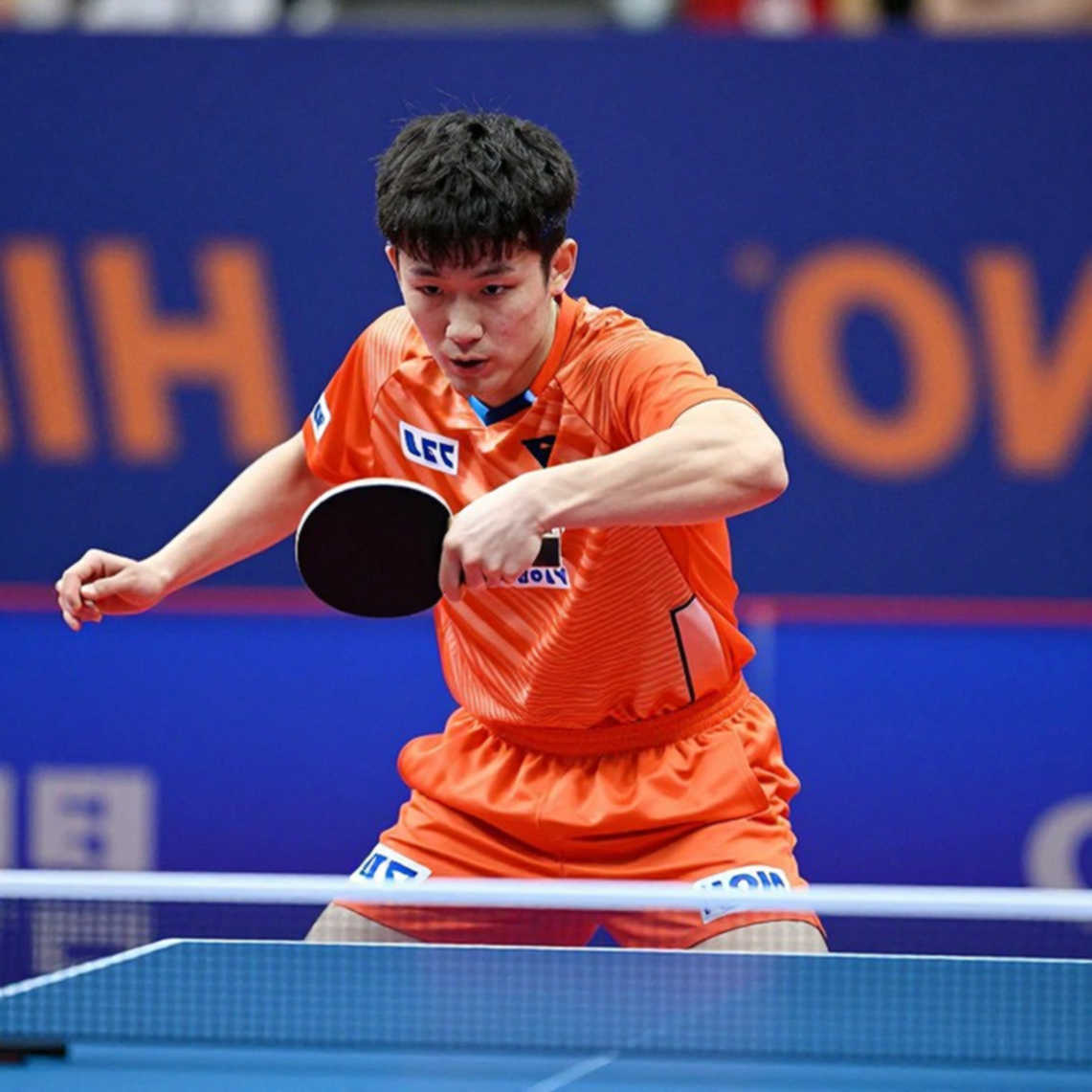
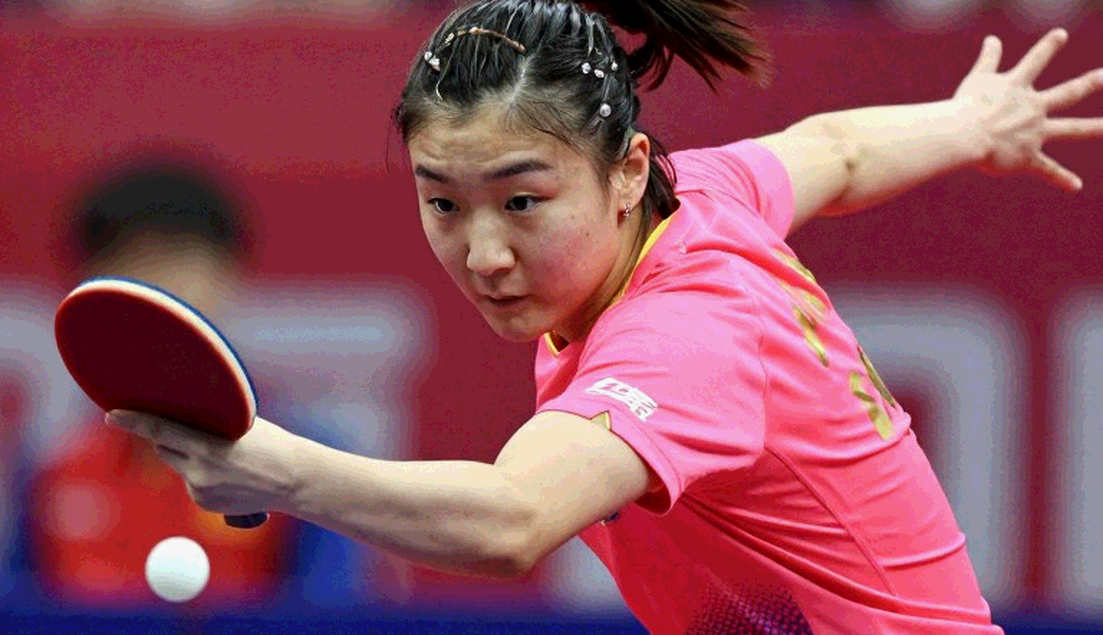
The night before the final, Lowri Hurd did not practice new serves. She sat with coach Ross Wilson, dissecting the game of Mirjana Lucic, the world No 7 from Croatia, and built a tactical plan. The next morning, on a table in Murcia, Spain, the 18-year-old who had just been promoted to Great Britain's Performance squad executed exactly what they had discussed. She won gold in the women's class 9 event at the ITTF World Para Future. On the same day, Rob Davies, the European champion, added gold in the men's class 1 event. Two generations, two gold medals, but their meanings are completely different.
World Para Future is a development-series event run by the International Table Tennis Federation (ITTF), designed for players moving towards bigger stages such as the World Championships and Paralympics. It is not where a season is decided; it is where things are tested. For Great Britain, Murcia mattered because it came right before the World Championships in Thailand. The team selection reflected that strategy: from a young Pathway athlete such as Max Flint to experienced competitors like Davies. Spreading entries across many classes showed that British para table tennis is not putting all its eggs in one basket.
For Lowri Hurd, this gold had a particular taste. She had just moved to Sheffield to train full-time with the national squad after being promoted to the Performance list. In her first para season, she narrowly missed qualification for the World Championships. That miss haunted her for months. So beating Mirjana Lucic was not simply a winning result; it was a psychological test. Hurd passed it in the most convincing way: taking the deciding set 12-10 on her fourth match point.
What stood out was that Hurd did not dominate any set. Her sets against Lucic all finished within two or three points, one going to 16-14. She won not through superior power but through better play at the key moments. She stayed calm, used good body language, and followed the plan Ross Wilson had built the night before. Hurd admitted she had struggled psychologically at recent events. She also said she felt tired and unwell during her second match. That makes the gold more valuable, but it also reveals a concern: if fitness and emotion have to be managed by willpower, the road ahead is full of obstacles.
Rob Davies does not have that worry. At a mature age, the Welsh player is in the most stable phase of his career. He won the European Championships, then an event in France, and then gold in Murcia. Two consecutive gold medals within weeks is a clear message to his class 1 rivals. However, his path was not smooth. In the semi-final, Papirer of France, the world No 12, pushed him to a deciding set. Davies admitted the opponent was tougher than he expected. That is worth noting before the World Championships.
In the final, Davies faced Adam Urlauber of Hungary, the world No 13. He produced his most controlled performance of the tournament. This was not surprising given that Davies had never lost a set to Urlauber in four previous meetings. But his start to the event was different. He admitted struggling to read the tables and the hall, and he dropped early sets. The deeper he went, the better he adapted. That is the difference between a true champion and a player who only peaks at the right moment: the ability to adjust from match to match.
But not everything was bright for Britain in Murcia. The class 4-5 men's group exposed a major problem. Jack Hunter-Spivey lost to Filip Nachazel of Czechia 1-3. Joshua Wicks, the 21-year-old Welshman playing only his second tournament in class 4-5, lost to Nachazel 0-3. He also lost to Boris Travnicek of Slovakia 0-3, as did Hepburn. Several British players losing to the same two opponents is not randomness. It shows a specific tactical ceiling for this group. Nachazel is world No 8 and Travnicek world No 9; the gap is only a few details in shot selection, but with a best-of-five format, those details are enough to create a clear gap on the scoreboard.
This raises a bigger question. Does the British team have a specific plan for Nachazel and Travnicek before the World Championships in Thailand? A World Para Future event cannot give the final answer. But it exposes the issue clearly. If Hunter-Spivey, Wicks and Hepburn cannot find a way past these two rivals, they may keep going out early in Thailand, no matter how well they play against other opponents.
Observers may be distracted by two gold medals and forget one fact: this is a development-tier event, with a level of competition lower than the World Championships. The top seeds in Murcia were ranked between world No 7 and No 13, the middle band of the para rankings. They are not easy opponents, but they do not represent the peak of each class. So the success of Hurd and Davies in Murcia should be read as a checkpoint, not as a final statement.
The way Hurd won is the most thought-provoking point. She won through clutch play in tight sets, not through total dominance. At 18, the ability to convert at the most tense moments is a rare asset. But it is double-edged. When fitness drops or the mind wavers, that strength can become a weakness. Hurd admitted she was tired and unwell during this event. She also spoke about recent psychological struggles. That means the coaching staff around her still have an unfinished problem to solve.
Davies shows the value of stability. He does not need to win with dramatic margins; he wins with experience, with court reading, and with rhythm control. The final against Urlauber was the proof. He played without rushing, made no errors at key moments, and made the opponent follow his game. Two gold medals before the World Championships are a vital psychological foundation for a veteran like Davies.
So before the World Championships in Thailand, the real question is not whether Britain can win medals. It is whether Hurd can stay calm when she faces opponents who do not let the match become tight; whether Davies can reproduce his adaptability against a stronger Papirer in the knockout rounds; and whether the class 4-5 men can find an answer to Nachazel and Travnicek. Murcia answered one third of that question. One third is not enough.
Cầu thủ liên quan
Bài đề xuất
Table Tennis Lacks a Data Pipeline, Not Numbers2026-09-15
Data is Brick, Context is Mortar: Re-excavating Young Talent in the Data Era2026-09-09
World Table Tennis Enters the 2026 Cycle: Three Cracks Beneath China's Throne and Vietnam's Unfilled Gap2026-09-12
England Hopes U11: When the Girls' Title Was Decided by Exactly One Match2026-09-15
When the Data Table Is Empty: The Limits of Table Tennis Analysis and the Trap of Trusting Names2026-09-16
43 out of 56 Medals: A Small Miracle in Katy and a Big Question No One Has Answered2026-09-19
The Ten-Year Curve: What Youth Table Tennis Rankings Cannot Measure2026-09-12
Table Tennis and the Art of Analysis: When Data is the Key2026-09-11
Bài đề xuất
Lowri Hurd and Rob Davies secure para table tennis gold for Great Britain in Murcia2026-10-08
WTT Feeder Linz 2026: England and the Cross-Association Doubles Gamble2026-09-25
Pilsen 2026: When European Youth Table Tennis Plants Seeds From Age 132026-10-08
WTT Feeder Chennai 2026: Inside the Seeding Board and India's Home-Soil Ambition in Table Tennis2026-10-06
Data is Brick, Context is Mortar: Re-excavating Young Talent in the Data Era2026-09-09
The Gap After 10-12: Why India's Singles Exits Deserve a Second Reading2026-09-10
Milton Keynes Ladies Charity Table Tennis: £650 raised, 100+ bras collected, and the quieter power of a community event2026-09-08
Pilsen 2026: Mapping Europe's Youth Table Tennis Power Through a Seeding List2026-10-08
Bài đề xuất
England Hopes Challenge: Nine Matches, One Ticket, and the Runner-Up Who Deserves More Ink2026-09-14
U.S. Youth Table Tennis Sweeps All 14 Golds at ITTF Americas U11 & U13 in Katy: Regional Map and the Over-Extrapolation Trap2026-09-20
Pilsen 2026: When European Youth Table Tennis Plants Seeds From Age 132026-10-08
Table Tennis and the Art of Analysis: When Data is the Key2026-09-11
43 out of 56 Medals: A Small Miracle in Katy and a Big Question No One Has Answered2026-09-19
Worthing TTC and the Junior Team 1 Star: The Missing Rung Beneath England's Table Tennis Pyramid2026-09-18
When the Data Table Is Empty: The Limits of Table Tennis Analysis and the Trap of Trusting Names2026-09-16
Pilsen 2026: Mapping Europe's Youth Table Tennis Power Through a Seeding List2026-10-08