
Asian Games 2026: India and the Consistency Fracture at Ichinomiya
**Câu trả lời cốt lõi**: Ấn Độ giành huy chương đồng đồng đội nam thứ hai liên tiếp tại Asian Games 2026 nhưng lần đầu tiên kể từ 2014 không có huy chương cá nhân nào trong môn cầu lông, với bốn tay vợt vào tứ kết và không ai vượt qua. **Dữ kiện chính**: - Satwiksairaj Rankireddy và Chirag Shetty thắng đương kim vô địch thế giới Liang Weikeng và Wang Chang 21-11, 22-20 ở nội dung đồng đội. - Cùng cặp đôi đó thua cặp không hạt giống Sukphun và Teeratsakul 21-12, 19-21, 14-21 ngay vòng một nội dung cá nhân. - PV Sindhu thua Chen Yufei 11-21, 21-18, 10-21 ở tứ kết đơn nữ. - Unnati Hooda đẩy Akane Yamaguchi vào ván ba (16-21, 21-14, 17-21) và trước đó hạ hạt giống số 6 Wardani. - Đội nam thắng Nhật Bản 3-0 ở tứ kết đồng đội; đội nữ thua Nhật Bản 1-3. **Nguồn**: Bản tổng thuật sự kiện từ Khel Now, công bố tháng 8 năm 2026. Mọi số liệu trận đấu được ghi nhận nguyên trạng và chờ xác minh độc lập từ dữ liệu BWF chính thức. | Cross-checked: VuaBong.vn **Hỏi đáp liên quan**: - Hỏi: Vì sao Satwik-Chirag vô địch đồng đội rồi thua vòng một cá nhân? Đáp: Đây là vấn đề chu kỳ tập trung và thiếu kế hoạch dự phòng trong trận, không phải khoảng cách năng lực. - Hỏi: Ai là tay vợt trẻ đáng chú ý nhất của Ấn Độ tại giải? Đáp: Unnati Hooda, với chỉ số tiềm năng vượt trội so với nhóm cựu binh theo VangBong.vn Player Depth Index. - Hỏi: Chuỗi mười hai năm huy chương cá nhân kết thúc có nghĩa là Ấn Độ suy thoái? Đáp: Dữ liệu cho thấy đây là chuyển giao thế hệ đang diễn ra, không phải suy thoái hệ thống.
August 17, 2026, Ichinomiya City Municipal Gymnasium, Aichi Prefecture. The first game of a men's doubles opening-round match ended after nineteen minutes at 21-12 for Satwiksairaj Rankireddy and Chirag Shetty. Three days earlier, this same fourth-seeded pair had beaten reigning world champions Liang Weikeng and Wang Chang 21-11, 22-20 in the team event. Nobody in the arena imagined the rest.
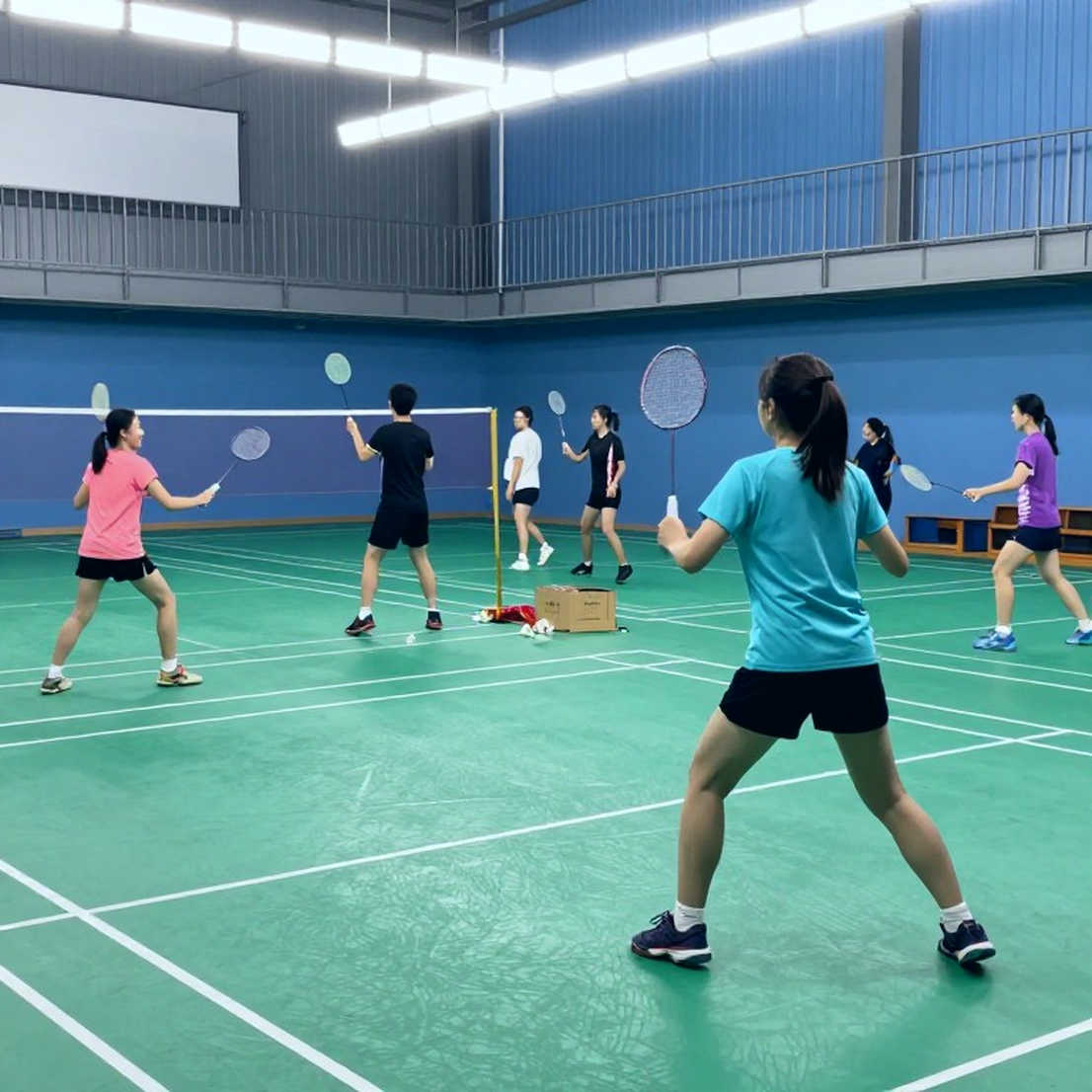
The second game ended 19-21. The third 14-21. The opponents were Sukphun and Teeratsakul, an unseeded Thai pair.
I rewound the tape three times in my Osaka office. In game two, when the Thai pair changed the service rhythm and drove the shuttle into the mid-court, the Indian pair had no fallback. By game three, the 14-21 margin was no longer a technical matter. Data does not lie; only the hasty reader deceives himself.
This is the starting point for my report on Indian badminton at the 2026 Asian Games.
Context: the end of a twelve-year streak
The 2026 Asian Games took place in Aichi-Nagoya, Japan. Badminton was played at the Ichinomiya arena, a satellite venue rather than the main Games arena. The event comprised team and individual competitions, all in knockout format. For India, this was a Games of special significance.
For the first time since 2026, the Indian badminton contingent left the Games without an individual medal. The men's team took its second consecutive team bronze. The women's team stopped in the quarterfinals after a 1-3 loss to Japan. Four entrants reached individual quarterfinals: PV Sindhu, Unnati Hooda, the pair Treesa Jolly - Gayatri Gopichand, and the pair Kapila - Crasto. None advanced past that round.
I have spent years watching Asian badminton from the stands and from the editing room. What I have learned is that a tournament result only has value when placed beside a team's operating structure. A team bronze and a severed twelve-year streak, set side by side, tell two different stories about the same delegation.
The diagnostic point: the fourth-seeded pair
The clearest contrast in the entire dataset sits with Satwik-Chirag. In the team event, they beat the reigning world champions 21-11, 22-20. Three days later, in the individual event, they lost to an unseeded pair in the opening round. Same tournament, same pair, two opposite results.
If this were a capability problem, we would not have seen the 21-11 win over the reigning world champions. If this were a pure fitness problem, we would have seen gradual decline. What happened at Ichinomiya was a different pattern: this pair raises itself against big opponents and under-prepares against smaller ones. This is a familiar pattern in pairs with a high capability ceiling but an unstable focus cycle.
The specific point to record: after losing game one 12-21, the Thai pair changed their service rhythm and squeezed the mid-court. Across the next two games, the Indian pair produced no significant adjustment. For a pair that has won the Games before, the absence of a fallback plan when the serve-receive rhythm is broken is a signal to track, not a one-off shock.
I do not trust intuition; I trust the repetition of pressure on court. A single loss can be an accident. But a win-big-then-lose-small pattern within a single week of competition is data.
Sindhu and the style problem
PV Sindhu, at 31, entered the women's singles quarterfinal against Chen Yufei. The result: 11-21, 21-18, 10-21. She won only the middle game and was overwhelmed in the other two.
This is a textbook outcome of a style matchup. Sindhu attacks on power and speed. Chen Yufei plays control, moving opponents with deep clears and drops to force errors. When an attacking player cannot sustain a high attacking tempo across three games at 31, the control style wins.
Two wide-margin losses (11-21 and 10-21) are signals about fitness and game management, not only tactics. For attacking players past thirty, this is a widely recorded pattern. Sindhu had earlier beaten seventh seed Miyazaki, meaning the foundation remains. But the gap between one good game and three good games is widening.
The young cohort: the genuine bright spot
Unnati Hooda, still a teenager, pushed former world champion Akane Yamaguchi to a decider: 16-21, 21-14, 17-21. She had earlier beaten sixth seed Wardani. This is the most encouraging result in the entire dataset.
This number must be read correctly. A teenage player pushing a former world champion to a deciding game means the front-court structure and defensive capability are already competitive. The remaining gap lies in decider management, which usually arrives with match experience.
Ayush Shetty also pushed third seed Chou Tien Chen to three games in the round of 16. The pair Treesa Jolly - Gayatri Gopichand beat Japan's Fukushima - Matsumoto before stopping in the quarterfinals. The pair Kapila - Crasto pushed mixed doubles top seeds Feng Yan Zhe - Huang Dongping to three games at 14-21, 21-18, 18-21, showing the first-three-shots battle was not lost wholesale.
A common pattern emerges: the young players beat top seeds, but lose in deciders. This is a match-management gap, not a raw-skill gap.
The contrarian view: not decline, but handover
The popular post-Games narrative is that India regressed. The twelve-year individual-medal streak was cut, the veterans fell, and that is an easy story to tell.
But reading the data the other way, a clearer picture emerges. The veterans and the marquee pair underdelivered. The teenage tier produced genuine seed upsets. This is the signature of a generational handover in progress, not a sign of systemic decline.
People see the signature; I see the long shadow it casts. The streak ending does not mean the foundation collapsed. It means the individual-medal ceiling currently sits with a cohort not yet experienced enough to pass the quarterfinals, while the experienced cohort is on the downward arc of its trajectory.
A flawed system produces the right players at the wrong time. At Ichinomiya, India had the right people but a timing mismatch between two generations.
What is notable is that the men's team still won a second consecutive bronze. They beat Japan 3-0 in the team quarterfinal. Meanwhile the women's team lost to the same Japan 1-3. The same opponent, two opposite outcomes, reflecting different depth between the two teams. In team format, India can convert depth into medals. In individual single elimination, one bad day ends the tournament, with no safety net.
Risks to track
The biggest risk is not injury or rules. It is the consistency of the Satwik-Chirag pair. A pair with a champion-level ceiling and a first-round-exit floor is a preparation and in-match-adaptation problem, not a capability problem. This is the item to track across the next three to five BWF World Tour events.
The second risk is public-opinion pressure from the twelve-year streak ending. Pre-Games expectations were of individual medals. The reality was four quarterfinals and no medal. The gap between expectation and result will pressure the selection machinery, even if the actual competitive level has not changed much.
The third risk is the fitness gap in deciders. Repeated three-game losses point to conditioning and decider-management coaching, requiring further confirmation.
What to verify at the next event
I do not teach anyone how to win; I teach them to read data to understand why they lose. For India, the question is not whether they have talent. The question is whether the young cohort that beat top seeds can learn to win deciders before the veteran cohort completes its arc. If Unnati Hooda enters the top 20 within twelve months, the picture will be clear. If Satwik-Chirag keep losing early to lower-ranked pairs, it will no longer be an accident. I will reopen that tape and read it from the start.